
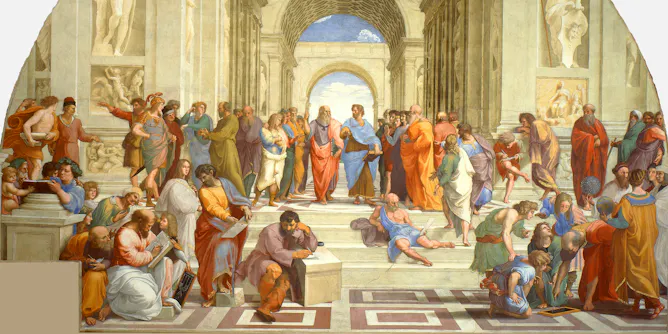
Are we all political animals? Aristotle thought so. Politics, he believed, was the art of the possible, but extremes of wealth could harm democracies.
Articles on Philosophy
Displaying 61 - 80 of 754 articles

Eternity is not truly about a love that could last forever. It is about the way that love, real ordinary love, involves more than happiness.

Can one person change the world? At a time of pessimism and populism, a new book suggests how we can achieve social change.

One of the most critically acclaimed playwrights of our age, Tom Stoppard, has died at 88. He assumed his audience was as well read and inquisitive as he was.

Parents and policymakers want job security for graduates, but in the AI and automation era, careers may depend as much on curiosity and initiative as on credentials.

The technology that has helped propel the simulation theory may be new, but the questions it explores are ancient.
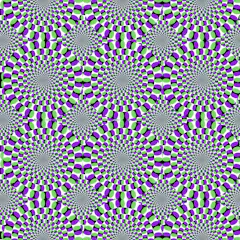
Is time real, or an illusion? The best answer may be neither: Both physics and philosophy suggest that time is a projection of the mind onto a timeless reality.

Tia Billinger’s viral stunt shows us the price women pay for power and influence.

Across both trilogies, two opposing views of Dust exist.

Students – and all manner of professionals – are tempted to outsource their thinking to AI, which threatens to undermine learning and credibility. A philosophy professor offers a solution.

The Protestant Ethic and the Spirit of Capitalism is neither a history of economics, nor a religious history. It borrows from both, but is stranger than either.

Kant’s 3 rules can offer a helpful check as to whether we are not only living well but thinking well.
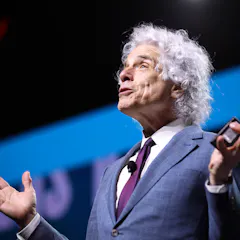
We believe things because doing so helps us belong and upholds a certain moral order, but not necessarily because they are true.

We need to understand what AI means for how knowledge is created.
Trying to change someone’s mind can seem futile. But there are approaches to political discourse that still matter, even if they don’t instantly win someone over.

Shame is a feeling we struggle to know what to do with, precisely because we always seem to have too much or too little.

Avoiding boredom means we are denying ourselves access to our whole selves.
How did speech rules developed and promoted by the left become tools that could be wielded against it?

Western theories of consciousness tend to assume consciousness is about information.
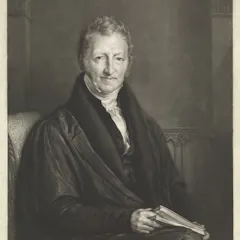
The English cleric and economist’s name is used to malign critics of progress. But historical context sheds a different light on Malthus’ ideas, a scholar argues.
Top contributors
-

Professor in Philosophy, Australian Catholic University
-
Associate Professor of Philosophy, Deakin University
-
Associate Professor of Philosophy of Education, University of Birmingham
-
Professor of Philosophy, La Trobe University
-
Senior Lecturer in Philosophy and Education; Curriculum Director, UQ Critical Thinking Project, The University of Queensland
-
Deputy Director, Institute for Ethics, Governance & Law, Griffith University
-
Associate Lecturer, University of Notre Dame Australia
-
Honorary Associate in Philosophy, University of Sydney
-
Professor, Philosophy of Science, The University of Melbourne
-
Professor of Philosophy, University of Pretoria
-
Senior Lecturer in Philosophy and Ethics, Nottingham Trent University
-
Assistant Professor in Philosophy and History, Bond University
-
Researcher, UQ Critical Thinking Project, The University of Queensland
-
Associate Professor in Philosophy, University of Nottingham
-
Lecturer in Philosophy, Queen's University Belfast