

Plutarch’s practical ethics propose two ways we can live happier, more serene lives.
Articles on Philosophy
Displaying 21 - 40 of 754 articles
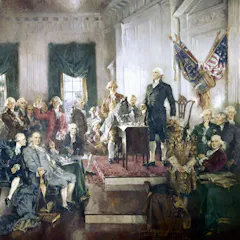
Montesquieu shaped how Americans understood liberty, and his warning about a ‘tyranny of opinion’ speaks to today’s polarization.
According to one study, 75% of respondents believe chatbots are conscious.

I’ve been researching the myriad triggers of travel anxiety, inspired by my own experience of Generalised Anxiety Disorder. These are my favourite tips.

Before asking whether inclusion is good for business, we should ask whether it is the right thing to do, two scholars argue.
For the Greeks, sophrosyne was an ideal second to none. It’s just as important today, in an age of internet addiction and misinformation – but harder to come by.

It’s one thing to pull for your national team when patriotism feels uncomplicated. It’s quite another when you aren’t feeling very proud to be an American.

Not all deceptions are equal.

Although Jimmy Donaldson might have you think otherwise, exploiting people for entertainment can’t be morally offset by doing good elsewhere.

The soul and body splitting event of childbirth – and the profound experience of becoming a mother – have been sidelined by philosophy for centuries.

It’s a perfect quick moral apocalypse for a doomscrolling public.

Everyone likes being told they’re clever, even if it’s coming from an AI chatbot. But their sycophancy has serious consequences for truth and trust.

The strange alliance between demagogues and despots ought to puzzle and worry every thinking person, and it needs to be understood.

Just war theory, developed over centuries, focuses on six criteria for assessing whether a conflict is justified.

Environmental solutions that come in the guise of technological progress may harbour dangers we can’t fully fathom or control.

AI bots promise limitless companionship – but limits are what makes human relationships meaningful, a philosopher argues.

It may seem like a paradox, but it takes good friends for someone to really understand themselves – and grow in virtue, as Aristotle argued.

While direct evidence of multiple universes is hard to come by, indirect evidence raises intriguing possibilities.

Habermas was unshakeable in his conviction that people have minds of their own and are free to hope for a better future.
The information your eyes takes in is only half the story.
Top contributors
-

Professor in Philosophy, Australian Catholic University
-
Associate Professor of Philosophy, Deakin University
-
Associate Professor of Philosophy of Education, University of Birmingham
-
Professor of Philosophy, La Trobe University
-
Senior Lecturer in Philosophy and Education; Curriculum Director, UQ Critical Thinking Project, The University of Queensland
-
Deputy Director, Institute for Ethics, Governance & Law, Griffith University
-
Associate Lecturer, University of Notre Dame Australia
-
Honorary Associate in Philosophy, University of Sydney
-
Professor, Philosophy of Science, The University of Melbourne
-
Professor of Philosophy, University of Pretoria
-
Senior Lecturer in Philosophy and Ethics, Nottingham Trent University
-
Assistant Professor in Philosophy and History, Bond University
-
Researcher, UQ Critical Thinking Project, The University of Queensland
-
Associate Professor in Philosophy, University of Nottingham
-
Lecturer in Philosophy, Queen's University Belfast