

Almost all of us have either had it, or can look forward to getting it in our lifetime. In fact, somewhere between about a tenth to a third of us have back pain right now. So is back pain just something…
Articles on Pain
Displaying 241 - 260 of 269 articles

Pain is one of the most powerful weapons of war. Western Front soldier and poet Siegfried Sassoon dubbed war a “sausage machine” because it tore through and crushed tissues and organs, and dismembered…

It’s a commonly held belief that women are better able to tolerate pain than men. The reasoning behind this is often that women are built to withstand pain because of how frequently they experience pain…

Surprisingly for such a universal experience, pain is profoundly misrepresented by common myths about what it is and what it means. These are rooted in dualistic models: the body as a simple machine and…

A computer system has been developed that can tell whether facial expressions of pain are real or fake – with possible implications for those of us who fake the occasional “sickie”. A study, published…

We now know that there’s much more to pain than simply what is happening in the painful body part, and attention has turned to the role of the brain. But not even this mysterious organ can tell us everything…
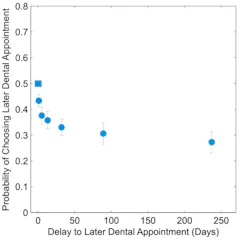
For most people, a chocolate today is better than one tomorrow. Economists refer to this as “future discounting”, where we prefer to have nice things now rather than wait and unpleasant things later rather…

If you’re anything like me, your medicine cupboard is chockers with various non-prescription pain remedies: liquids, pills, capsules, children’s painkillers, formulations that are “gentle on the stomach…

It’s long been a household debate: who really is the stronger sex, men or women? It’s no secret that physically, men often outperform women. But women have long argued that the gruelling experiences of…

Deliberately inflicting pain or injury by cutting oneself or some other form of self-mutilation seems incomprehensible to many people. But it’s a common, typically secretive, experience for about 8% of…

For many years physicians and scientists have been studying people with congenital analgesia, a rare genetic disorder that means they don’t feel pain. People with the condition may have a sense of touch…
Merely witnessing the pain of another person can trigger the same pain in an observer. Dr Melita Giummarra presented her…

Taking a marijuana pill is more effective at relieving pain than smoking the drug, a new US study of daily marijuana smokers has shown, but the authors warn the findings may not translate to non-regular…
Scientists have found a means to objectively quantify pain. University of Michigan researchers have found the brain’s signature…
Researchers have developed a technique for measuring pain using magnetic resonance imaging. Over four studies they identified…

In an evolutionary sense, memory of pain serves an important purpose. Pain indicates a threat to our safety or our life, and human survival depends on us avoiding things that are going to kill us. Historically…

Researchers have mapped the genes that control pain perception in fruit flies, mice, and potentially humans. The map consists of gene pathways that help flies and mice sense pain and set pain thresholds…

So we have a problem for you. Take a moment to steady yourself, maybe sharpen your pencil. Don’t unpack your calculator, and leave your phone to one side. This one will be purely mental – a spot of addition…
Researchers have published a paper on a new approach to treating pain caused by inflammatory conditions, such as rheumatoid…
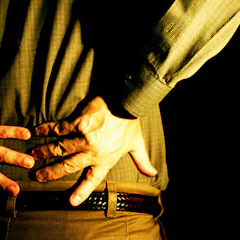
Australians living with back problems are 2.5 times more likely to experience a depressive disorder than the wider population, according to a report released today by the government’s Australian Institute…
Top contributors
-

Conjoint Clinical Associate Professor, Deakin University School of Medicine and Specialist Pain Medicine Physician, Deakin University
-
Associate Professor of Physiotherapy, University of Technology Sydney
-
Bradley Distinguished Professor, Adelaide University
-
Associate Professor at NICM Health Research Institute, Western Sydney University
-
Professor of Psychology, University of Bath
-
Professor of Medical and Feminist Anthropology, Birmingham City University
-
Professor in Neuroimmunopharmacology, Adelaide University
-
Reader in Clinical Health Psychology & Science, Medicine & Society Network, UCL
-
Associate Professor and Psychologist in Pediatric Pain, University of Calgary
-
Assistant Professor, University of Connecticut School of Nursing; Assistant Director, UCONN Center for Advancement in Managing Pain, University of Connecticut
-
Associate Professor of Anesthesiology, University of Colorado Anschutz
-
Lecturer in the School of Physiology, Faculty of Health Sciences, University of the Witwatersrand
-
Senior Research Officer, Neuroscience Research Australia
-
Clinical pharmacist and Scientia Associate Professor at the National Drug and Alcohol Research Centre, UNSW
-
Honorary Senior Research Fellow, University of Oxford