
War has caused chaos for airlines in the Middle East, stranding tens of thousands of passengers.
Articles on Insurance
Displaying 21 - 40 of 227 articles
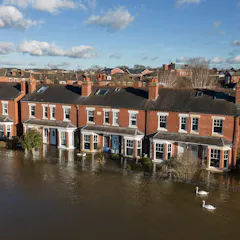
A nationwide scheme known as Flood Re is only a temporary fix.
And the cost of new cars may not even come down.

Bushfires disproportionately expose disadvantaged communities, and a one‑size‑fits‑all recovery can deepen those inequalities.
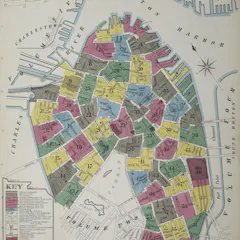
Hundreds of thousands of Sanborn maps mapped the fire risk of every US city with over 1,000 people in the 20th century.
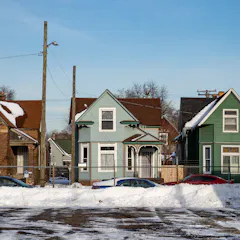
Detroit seniors pay more in homeowner’s insurance, utilities and property tax, and those on fixed incomes can struggle to make ends meet.

Climate disasters are rising and insurance costs are, too. Canada’s poorest are caught in the middle.

People could take a genetic test to gauge their future risk of disease without worrying their life insurers would penalise them.
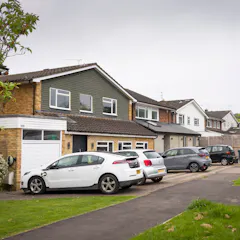
Leaving more green space at the front of the house reduces flooding risk.
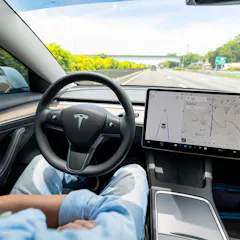
Cars that mostly drive themselves – but where a human is required to continuously supervise – fall between the cracks of existing law.

This week, The Conversation UK’s environment and business teams join forces to look into how we as consumers can make our money greener.
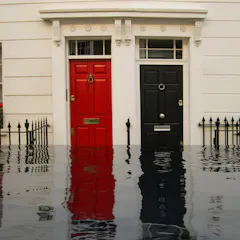
Climate change is undermining insurance markets, especially for the households that need coverage most.
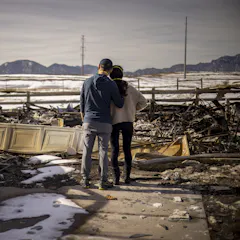
Paying attention to the sticker price doesn’t always result in the best insurance coverage.
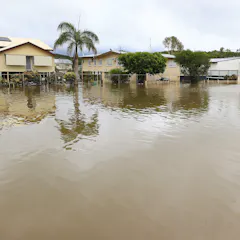
Nearly eight in ten homes facing severe to extreme flood risk are now not insured. We need to rethink how to keep communities safe.
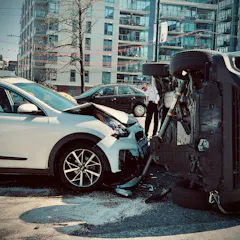
In this age of algorithms, personalized insurance is encountering legal limits, especially the ban on discrimination. Can we balance accurate pricing, solidarity, and fairness?

Australia has a comprehensive national database on property-level flood risk. But it is currently proprietary, meaning the public can’t access this valuable information.
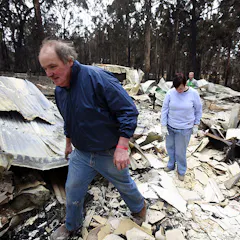
The California approach promises to keep home insurance prices stable, ensure coverage in high-risk areas, and make homes safer as climate change worsens.

Those signs about surprise insurance charges are intended to keep patients informed – but new research points to a negative side effect.

Medicaid improves access to care for low-wage workers who cannot survive on bare-bone benefits offered by their employers.

Forecasters already patch together very rough estimates, and ending NOAA’s ‘billion-dollar disasters’ list means less access to insurance data. Texas’ state climatologists explain why that matters.
Top contributors
-

Associate Professor of Human Geography, University of Tasmania
-
Professor in Strategic Management, The University of Queensland
-
Postdoctoral Research Fellow, The University of Queensland
-
Professor Emeritus of Risk Management and Insurance, Georgia State University
-
Chair in Insurance and Professor, Finance, Wilfrid Laurier University
-
Lecturer and Research Fellow, School of Geography, Planning, and Spatial Sciences. Coordinator, Education for Sustainability Tasmania, University of Tasmania
-
Senior Lecturer in Financial Economics, Loughborough University
-
Managing Director, Institute for Catastrophic Loss Reduction, Western University
-
Holcim (US) Professor of Sustainable Enterprise, Ross School of Business, School for Environment & Sustainability, University of Michigan
-
Senior Lecturer in Finance and Insurance, Te Kunenga ki Pūrehuroa – Massey University
-
Adjunct Professor, Victoria University
-
Research Fellow, The University of Queensland
-
Lecturer in Financial Planning, James Cook University
-
Professor, Risk Management and Insurance, University of Calgary
-
Honorary Associate Professor, Australian National University