
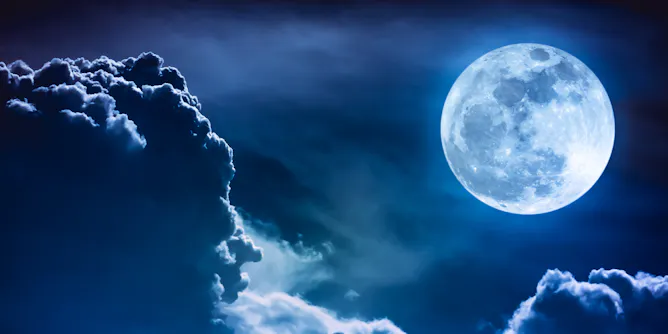
We’ve only travelled into space in the last century, but humanity’s desire to reach the moon is far from recent.
Articles on History of science
Displaying 121 - 140 of 157 articles

The journal initially only published articles by European physicians. But in the 20th century a number of Indonesians, who became founders of respected medical institutions, published there too.

An obscure technology from the past has the potential to change the world’s future.

771,945 have been infected.
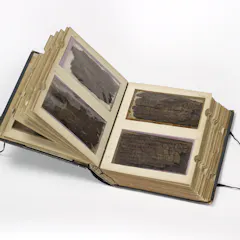
High school students can blame ancient India for quadratic equations and calculus.
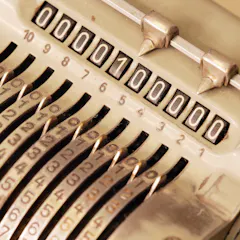
Turning zero from a punctuation mark into a number paved the way for everything from algebra to algorithms.
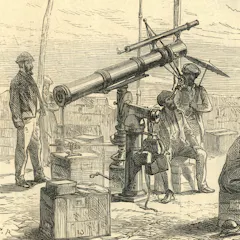
For centuries, scientists have known when and where eclipses will be visible. They pack their bags, head for the line of totality and hope for the best – which doesn’t always happen.

On the trail of the men of Britain’s Royal Aircraft Factory, who gave their lives to help create the world’s first air force.
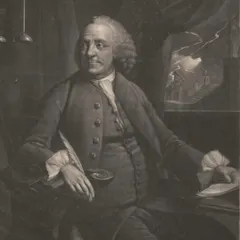
Franklin advanced a scientific – not supernatural – understanding of astronomical events such as eclipses. His satirical character ‘Poor Richard’ mocked those who bought into astrological predictions.
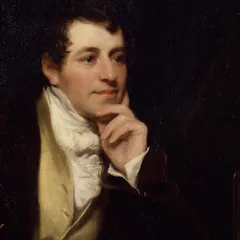
The likes of Charles Darwin and Humphry Davy weren’t always seen as the powerful, authoritative heroes they’re portrayed as today.
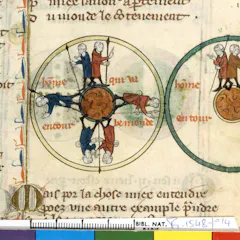
The case for neoclassicism in science.
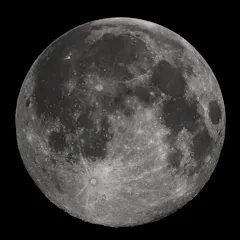
Scientists first started disagreeing about whether the moon should be a planet in Galileo’s day.
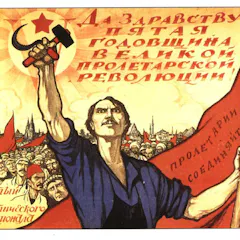
When politics meddles with science, it can lead to tragedy, as was the case with Stalin’s favourite agricultural biologist Trofim Lysenko and his rival Nikolai Vavilov.
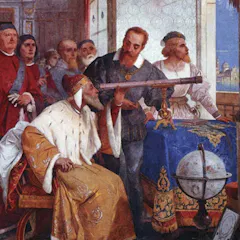
People have always known science would advance faster with various incentives and rewards. As modern experimental science took off, these took the form of gifts and favors to and from wealthy elites.
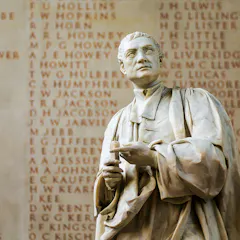
Research shows that students feel motivated when they learn more about the struggles and failures of the world’s greatest scientists.

Many of us feel that technology threatens our relationships and ‘usual’ modes of human interaction. But so did the Victorians.

We take our understanding of the solar system for granted, but it took centuries to figure out. The original writings of Ptolemy, Copernicus, Galileo and others show how they sparked a revolution.
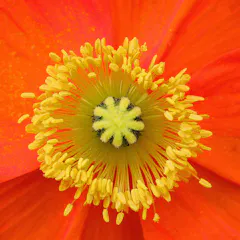
The relentless pursuit of showy flowers for garden display – as seen at Chelsea Flower Show – has seen some odd uses of radiation and chemicals .
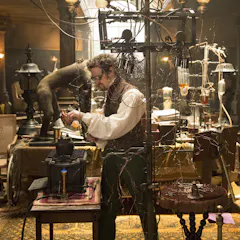
Mary Shelley’s diaries reveal that in 1814 she attended a lecture that Andrew Crosse, “thunder and lightning man”, delivered in London.
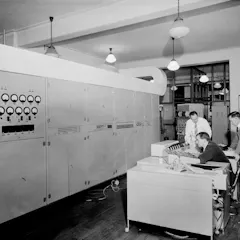
It may have been big, slow and lacking in much memory but almost seven decades on we have a lot to thank the creators of Australia’s first programmable computing machine.
Top contributors
-

Chancellor's Professor of Medicine, Liberal Arts, and Philanthropy, Indiana University
-
Professor of Nuclear Physics, Michigan State University
-
Professor of Natural Philosophy in the Department of Physics, University of York
-
Associate Professor of Science, Technology and Society, Rochester Institute of Technology
-
Professeur émérite, chercheur en physique des particules, spécialiste des neutrinos, Université Paris Cité
-
Assistant Professor of Physics, Rutgers University - Newark
-
Associate Professor in Experimental Psychology (Perception), University of Oxford
-
Professor in Philosophy of Science, Durham University
-
Lecturer in South Asian History, University of Reading
-
Professor in High Medieval History, Durham University
-
Visiting Lecturer of History, Georgia State University
-
Distinguished Professor of Physics and Astronomy, Purdue University
-
Professor of Advanced Technology Transitions, Arizona State University
-
Professor of Science Communication and Chemistry, University of Hull
-
Timothy J. Jorgensen is a Friend of The Conversation.
Director of the Health Physics and Radiation Protection Graduate Program and Professor of Radiation Medicine, Georgetown University