
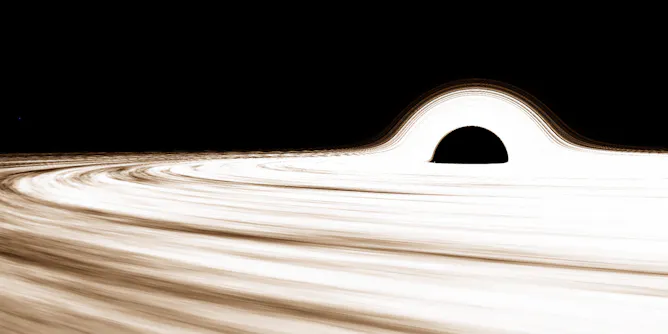
The crucial phase of our discovery of black holes took place in a suitably dark period of human history – World War II.
Articles on History of science
Displaying 101 - 120 of 157 articles
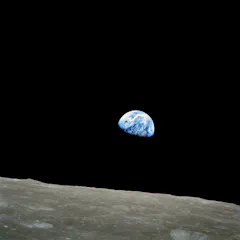
Apollo 8 was the moment that humanity realised a dream conceived in our cultural imagination over two millennia ago.
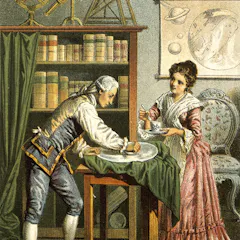
Uncovering forgotten history can help explain why science still has a masculine bias today.

Religion has helped science, as well as hindered it.
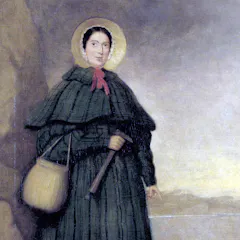
Fossil hunter Mary Anning didn’t get the recognition she deserved during her lifetime. Now her home town wants to raise a statue in her honour.
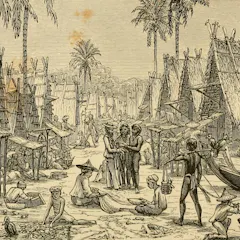
More than a thousand local people helped Alfred Russel Wallace in his eight year voyage collecting specimens of animals in the Malay archipelago.
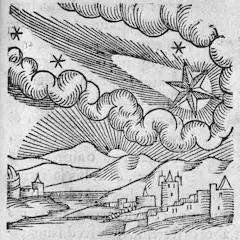
Science fiction has been around for centuries.
Climate science in the computer age is the pursuit of elite scientists. A historian of science sees an upside to the popular, participatory approach of studying changes to the climate from the 19th century.

Once associated with mind-control experiments and counter-cultural defiance, psychedelics now show great promise for mental health treatments and may prompt a re-evaluation of the scientific method.
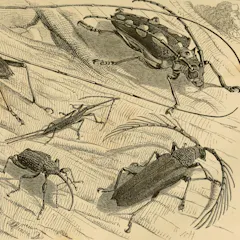
An evolutionary biologist visits the remote jungle mountaintop where a little-known naturalist wrote his insightful paper about the mechanisms of evolution that spurred on a rivalrous Charles Darwin.
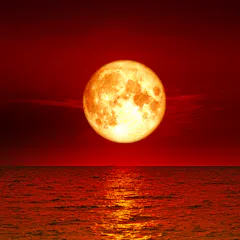
The blood moon myths are many and varied, but, at the end of the day, it’s just an eclipse.
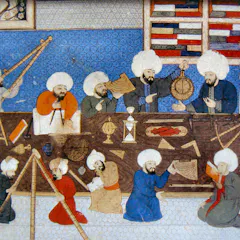
CC BY-ND23.6 MB (download)
This episode of the In Depth Out Loud podcast outlines the importance of finding a way to remove the inequalities promoted by modern science.
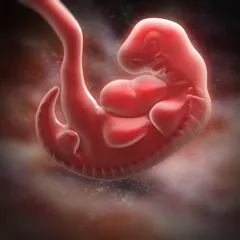
From human ‘gills’ to reproducing rock, evidence hasn’t always pointed scientists in the right direction.
The 19th-century British anatomist Richard Owen downplayed the role of colonial contributors and largely ignored the importance of Aboriginal testimony and knowledge in describing the marsupial lion.

A long read on how science’s dark imperial past still shapes research today – and what to do about it.
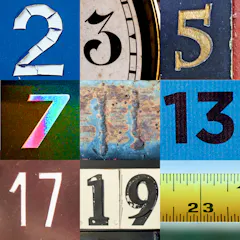
Prime numbers are the biggest and oldest data set in mathematics. Why have they captivated mathematicians for millennia?

From a certain perspective, we’re already on the road to practicing a ‘progressive eugenics’ not a million miles away from what was imagined historically.
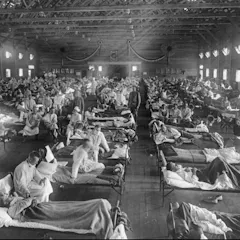
Don’t believe these 10 common myths about the 1918 Spanish flu.
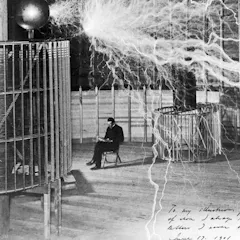
Scientist Nikola Tesla led a rags-to-riches to rags life. The eccentric inventor had an amazing intellect and set the stage for many modern technologies.

Women, rejoice. The speculum is getting a friendly makeover.
Top contributors
-

Chancellor's Professor of Medicine, Liberal Arts, and Philanthropy, Indiana University
-
Professor of Nuclear Physics, Michigan State University
-
Professor of Natural Philosophy in the Department of Physics, University of York
-
Associate Professor of Science, Technology and Society, Rochester Institute of Technology
-
Professeur émérite, chercheur en physique des particules, spécialiste des neutrinos, Université Paris Cité
-
Assistant Professor of Physics, Rutgers University - Newark
-
Associate Professor in Experimental Psychology (Perception), University of Oxford
-
Professor in Philosophy of Science, Durham University
-
Lecturer in South Asian History, University of Reading
-
Professor in High Medieval History, Durham University
-
Visiting Lecturer of History, Georgia State University
-
Distinguished Professor of Physics and Astronomy, Purdue University
-
Professor of Advanced Technology Transitions, Arizona State University
-
Professor of Science Communication and Chemistry, University of Hull
-
Timothy J. Jorgensen is a Friend of The Conversation.
Director of the Health Physics and Radiation Protection Graduate Program and Professor of Radiation Medicine, Georgetown University