
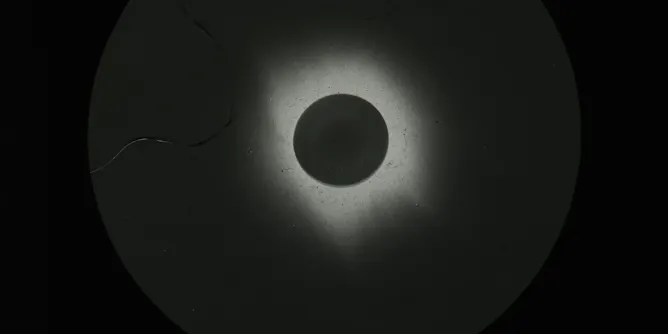
A total eclipse that travelled the full width of Australia in 1922 offered astronomers the chance to confirm Einstein’s theory of general relativity - and for the community to enjoy a rare spectacle.
Articles on History of science
Displaying 61 - 80 of 157 articles
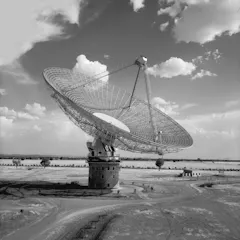
After six decades during which it tracked lunar missions, spotted distant pulsars and quasars, and even expanded our concept of the size of the Universe, the Parkes telescope is still going strong.
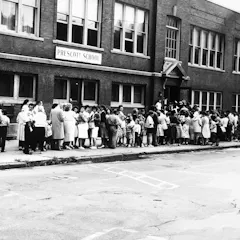
Public health experts know that schools are likely sites for the spread of disease, and laws tying school attendance to vaccination go back to the 1800s.
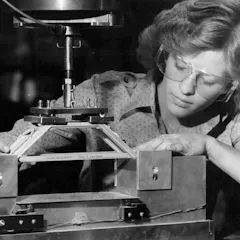
A survey of 251 women engineers who graduated from college in the 1970s sheds light on the experiences of these professional pioneers.
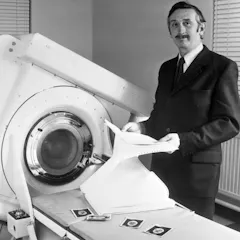
On Oct. 1, 1971, Godfrey Hounsfield’s invention took its first pictures of a human brain, using X-rays and an ingenious algorithm to identify a woman’s tumor from outside of her skull.

Depending on who you ask, the northern lights may, very occasionally, sound like ‘rustling silk’ or ‘two planks meeting flat ways’.
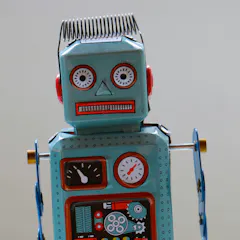
When people think about how AI might ‘go wrong’, most probably picture malevolent computers trying to cause harm. But what if we should be more worried about them seeking pleasure?

The results of Foote’s simple experiments were confirmed through hundreds of tests by scientists in the US and Europe. It happened more than a century ago.

A biomedical engineer explains the basic research that led to the discovery of insulin and its transformation into a lifesaving treatment for millions of people with diabetes.
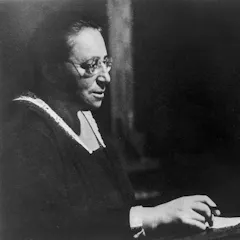
More than a century after publishing major papers in theoretical mathematics, German-born Emmy Noether continues to challenge and inspire mathematicians with her story and mathematical legacy.

The history of UFOs weaves together public fascination, government secrecy and cultural phenomena. Recent news and shifts in the government’s stance on UFOs are giving new life to the mystery.
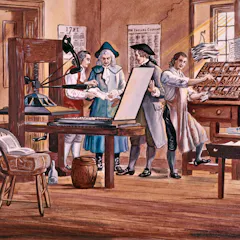
When Bostonians in 1721 faced a deadly smallpox outbreak, a new procedure called inoculation was found to help fend off the disease. Not everyone was won over, and newspapers fed the controversy.

Two tongue tips are better than one – an evolutionary biologist explains why snakes have forked tongues.
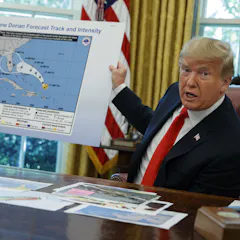
Politics always influences what questions scientists ask. Their intertwined relationship becomes a problem when politics dictates what answers science is allowed to find.

Van Leeuwenhoek, who discovered bacteria, is one of the most important figures in the history of medicine, laying the groundwork for today’s understanding of infectious disease.
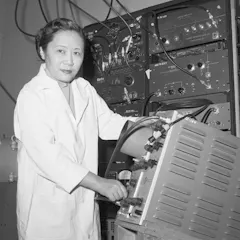
Chinese American physicist Wu worked on the Manhattan Project and performed groundbreaking experiments throughout her long career.
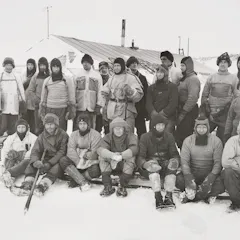
Antarctic research has historically been a bastion of men from Europe and North America. Only now is the field opening up to women and people of colour. And there’s a way to go yet.
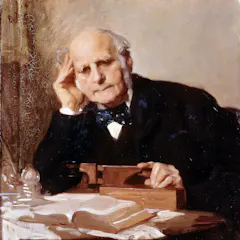
Smart people can have really bad ideas – like selectively breeding human beings to improve the species. Put into practice, Galton’s concept proved discriminatory, damaging, even deadly.

Driven by a desire to eliminate pain, some people have shockingly advocated taking the rest of nature with us.

Science communication succeeds when it takes community knowledge seriously, works with other belief systems, and expects researchers to contribute to society.
Top contributors
-

Chancellor's Professor of Medicine, Liberal Arts, and Philanthropy, Indiana University
-
Professor of Nuclear Physics, Michigan State University
-
Professor of Natural Philosophy in the Department of Physics, University of York
-
Associate Professor of Science, Technology and Society, Rochester Institute of Technology
-
Professeur émérite, chercheur en physique des particules, spécialiste des neutrinos, Université Paris Cité
-
Assistant Professor of Physics, Rutgers University - Newark
-
Associate Professor in Experimental Psychology (Perception), University of Oxford
-
Professor in Philosophy of Science, Durham University
-
Lecturer in South Asian History, University of Reading
-
Professor in High Medieval History, Durham University
-
Visiting Lecturer of History, Georgia State University
-
Distinguished Professor of Physics and Astronomy, Purdue University
-
Professor of Advanced Technology Transitions, Arizona State University
-
Professor of Science Communication and Chemistry, University of Hull
-
Timothy J. Jorgensen is a Friend of The Conversation.
Director of the Health Physics and Radiation Protection Graduate Program and Professor of Radiation Medicine, Georgetown University