
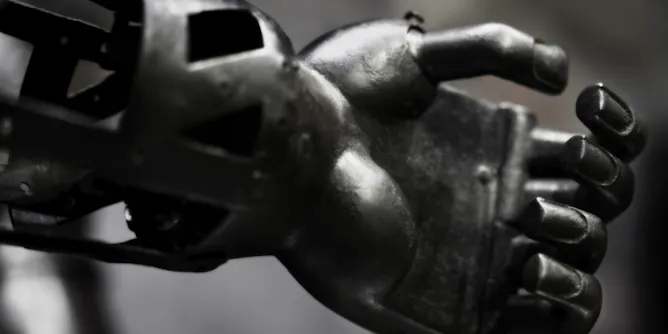
Gunpowder warfare kicked off a new era of invasive surgery and prosthetic technology in Western medicine.
Articles on History of medicine
Displaying 21 - 40 of 106 articles
Among her 5 decades of accomplishments, Nightingale founded the world’s first nursing school and advocated health care for all.
Early modern societies in Latin America and Spain saw a convergence of traditional medical knowledge and the professionalization of medicine. The resulting differences in access to care endure today.

In medieval Japan, healing might mean taking medicine, undergoing an exorcism or sidestepping harm in the first place by avoiding inauspicious days.

For as long as trans medicine has been around, so has its opposition. The tactics of prior waves of anti-trans policies are still in play today.

The health care world has changed a lot in 40 years, but Medicare hasn’t. Here are three areas for radical forms to the system that will achieve its aims of universal health care for all Australians.
Your doctor’s MD emerged from the Dark Ages, where practicing rational “human medicine” was seen as an expression of faith and maintaining one’s health a religious duty.
Insomnia is torture, literally, and getting enough sleep a modern obsession. Here’s why.

‘The doctor will see you now.’ Except they probably won’t.
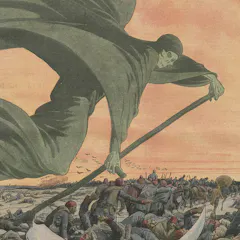
No matter how much we believe our knowledge and our technological capabilities have evolved, pandemics prove we are still at the mercy of the natural world.
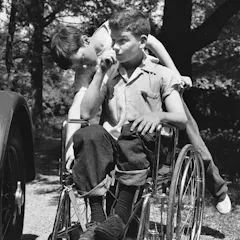
Polio vaccines have been a massive public health victory in the US. But purely celebratory messaging overlooks the ongoing threat if vaccination rates fall.
The first transgender medical clinic opened in the US in the 1960s. But cisgender and intersex children began receiving similar treatments even earlier – often without their consent.
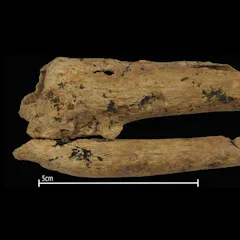
An astonishing discovery from the oldest known grave in Southeast Asia has revised medical history – the previous known amputation surgery was just 7,000 years ago.
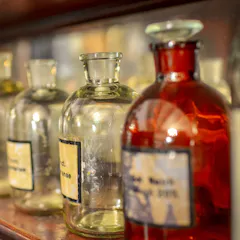
Each of these five drugs have brought some incredible benefits. But they’ve usually also come with a legacy of complications.
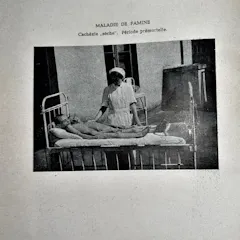
The story behind the research can be as compelling as the results. Recording the effects of starvation, a group of Jewish doctors demonstrated their dedication to science – and their own humanity.
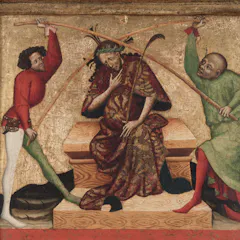
The idea that Europeans brought new diseases to the Americas and returned home with others has been widely accepted. But evidence is mounting that for syphilis this scenario is wrong.

This illustrated health manual dating back to the 13th century provides a glimpse of daily life in aristocratic households during the Middle Ages.
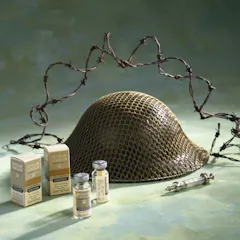
Albert Alexander was the first known person treated with penicillin. While his ultimately fatal case is well known in medical histories, the cause of his illness has been misattributed for decades.
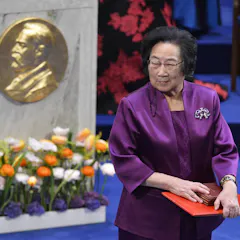
Discover the stories of five trailblazing women – Tharp, Nice, Tu, Noether and Wu – who worked in STEM during the 20th century.
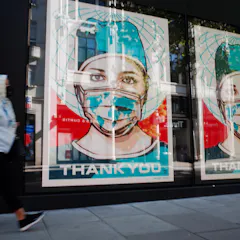
None of our authors can see the future, but many do have expertise that offers insights about what’s reasonable to expect.
Top contributors
-

Lecturer - Women's Health; Pharmacology, School of Biomedical Sciences, The University of Western Australia
-
Assistant Professor of History, University of Pittsburgh
-
Associate Professor of History, Roanoke College
-
Chancellor's Professor of Medicine, Liberal Arts, and Philanthropy, Indiana University
-
Pediatric Infectious Diseases Fellow, University of Pittsburgh
-
Associate Professor of History, Auburn University
-
Lecturer in English Literature, University of Reading
-
Affiliate, College of Medicine and Public Health, Flinders University
-
Lecturer in History, University of Leicester
-
Research Affiliate, Discipline of History, University of Sydney
-
Associate Professor of History, Rutgers University - Newark
-
Visiting Lecturer of History, Georgia State University
-
Professor Emerita, Classical Studies, The Open University
-
Assistant Director of the Center for the History of Medicine, University of Michigan
-
Lecturer in Classics and Ancient History, The University of Western Australia