

Climate Council CEO Amanda McKenzie told Q&A that heatwaves were ‘worsening’ in Australia and ‘hot days’ had doubled in the last 50 years. Let’s take a look at the evidence.
Articles on Heat
Displaying 221 - 240 of 254 articles

Schools need to have a formal policy in place for how to deal with heatwaves effectively and keep children cool and well.

Some people swear by cold showers to cope with a long, hot summer. Here’s why they’d be better off taking a warm one.

Our cities are getting hotter. Luckily, as a built environment, we can actually do something about it.

2016 is the third consecutive hottest year on record. How can we adapt?

Sprinters may be able to power through, but endurance athletes could suffer from hyperthermia and dehydration.
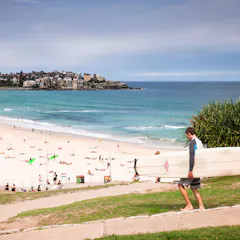
Autumn 2016 was Australia’s hottest, beating the previous record set in 2005.
Another month, another broken temperature record. Scientists are already confident 2016 will be the hottest year ever, a record only set in 2015.
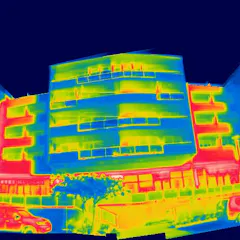
Hot spots occur at the scale of where people live – the building, the street, the block – which means urban design and building materials have profound implications for our health and well-being.

How well does the ‘smart’ city respond to the devastating scale and impact of urban heat threats such as bushfires and heatwaves?
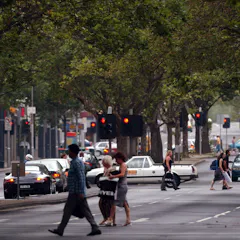
Six years after Black Saturday, it’s worth remembering that heatwaves kill more people than bushfires do, so shade can be a life-saver. But tree cover and shade are not evenly distributed in cities.
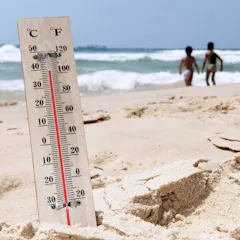
Africa must find ways of dealing with extreme heatwaves or suffer a range of health problems, including fatalities.

We all love a shady courtyard, but it’s tough to know just how effective trees are at beating the heat.

Heating your home using electricity is not just cheaper, it’s more efficient and can be considered renewable.

Heat should be valued, preserved and put to use

High temperatures have been found to have a negative effect on learning, so how are schools in northern Australia coping?

If you work in an office, chances are you or the person sitting next to you has grumbled about it being too hot or cold.

Heat cost Australia nearly A$7 billion in 2014, which is bad news given climate forecasts of hotter and more frequent heatwaves.

Sound waves are made of particles called phonons. New research shows they’re affected by magnetic fields, with researchers able to steer heat magnetically.

Fever indicates a problem, but is there anything wrong with feeling excessively cold rather than actually being cold?
Top contributors
-

Honorary Associate Professor in Environmental Health, Australian National University
-
ARC Future Fellow and Associate Professor in Climate Science, ARC Centre of Excellence for 21st Century Weather, The University of Melbourne
-
Professor of Heat & Health; Director of Heat & Health Research Incubator; Director of Thermal Ergonomics Laboratory, University of Sydney
-
Professor of Intelligent Engineering Systems, Nottingham Trent University
-
Professor of Physiology, Kinesiology and Human Performance, Penn State
-
Ph.D. Candidate in Exercise Physiology, Penn State
-
Senior Lecturer, Department of Architecture, Federal University of Technology, Akure
-
Duncan Mitchell is a Friend of The Conversation.
Honorary Professorial Research Fellow, University of the Witwatersrand
-
Postdoctoral Researcher in Kinesiology, Penn State
-
Geographer-climatologist and Postdoctoral Fellow, Penn State
-
Presidential Distinguished Professor of Energy Policy and City Planning, University of Pennsylvania
-
Purple House Medical Advisor. Honorary ANU., Australian National University
-
Senior Lecturer in Exercise and Environmental Physiology, University of Hull
-
Professor, Emerging Technologies Research Lab, Monash University, Monash University
-
Professor Emeritus, University of Washington