
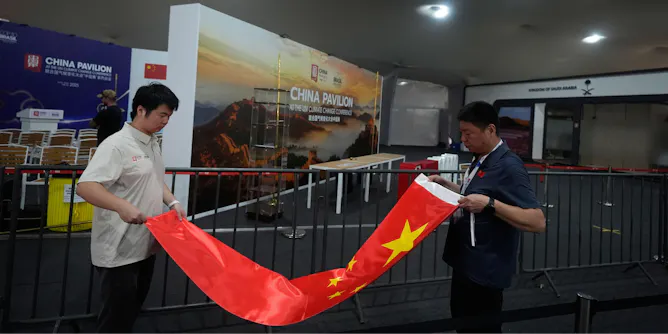
China is hesistant about taking over financial leadership over the global fight against climate change. Here’s why.
Articles on Greenhouse gas emissions (GHG)
Displaying 41 - 60 of 838 articles

Engineering microbes to soak up more carbon, boost crop yields and restore former farmland is appealing. But synthetic biology fixes must be done thoughtfully

Cimate scientists are more certain than ever that humans are changing the climate – but there are signs of hope on the horizon.
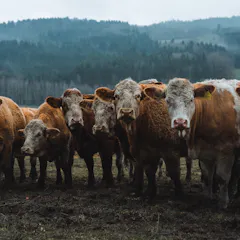
Removing so-called ‘short-lived climate pollutants’ from the atmosphere could reduce global warming – fast.
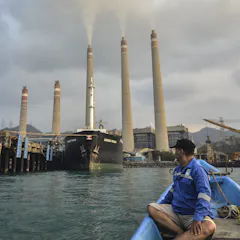
Nearly a third of all countries worldwide have pledged to phase out their unabated coal-burning power. But China and India are still adding coal plants – for now.
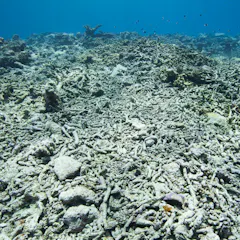
Dangerous climate tipping points will threaten food, water and coastlines. They’re irreversible and only radically accelerated climate action can stop them now.
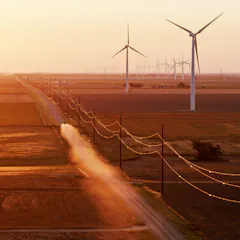
A fast drop in coal use played a big role, but there was more, as these charts show.
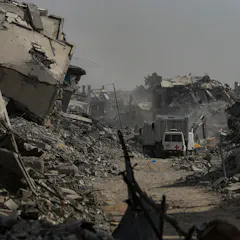
International law is starting to reflect a growing global consensus on the need to recognise the climate effects of armed conflicts.

Men are more likely than women to eat offal, new research suggests.

For decades, banks have presented themselves as leaders in sustainability. Yet, their outsized digital carbon footprints tell a different story.

Satellites can be used to independently monitor emissions, helping to better understand emissions in regions where ground-based or other data are lacking.

A review of countries’ new climate pledges shows who is leading efforts to protect the climate their economies were built on and who is sliding.
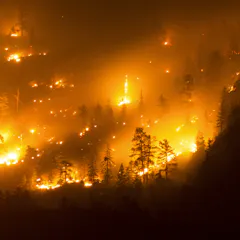
Climate action no longer seems to be a priority for Prime Minister Mark Carney, despite his previous activism. This is bad news for Canadians and the climate.

Health care is responsible for up to 7% of Australia’s greenhouse gas emissions. Reducing the use of disposable products could reduce this footprint.

The Net-Zero Banking Alliance, intended to curb lending to carbon-intensive sectors, wasn’t effective and more importantly never made much business sense.

To cut emissions fast, the Australian government will have to dial back its command-and-control approach – and put a price on carbon.

An analysis finds that fewer electric vehicles will also mean less investment to clean up the electricity sector.
Solar on rooftops and EVs on the roads can give a false sense of progress. But it will take much more to actually end reliance on fossil fuels.
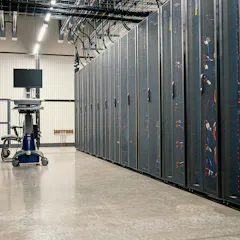
Stored data contributes to greenhouse gas emissions by needing power for servers and cooling systems.
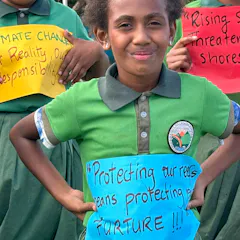
Countries have wide-ranging obligations to adequately tackle climate change, the International Court of Justice has found. Those who don’t could be legally liable.
Top contributors
-

Chief Research Scientist, CSIRO Environment; Executive Director, Global Carbon Project, CSIRO
-
ARC Future Fellow and Associate Professor in Climate Science, ARC Centre of Excellence for 21st Century Weather, The University of Melbourne
-
Research Group Leader, CSIRO
-
Associate Professor, The University of Western Australia
-
Senior Researcher, Center for International Climate and Environment Research - Oslo
-
Royal Society Research Professor of Climate Change Science, University of East Anglia
-
Director, Queen's Institute for Energy and Environmental Policy, Queen's University, Ontario
-
Professor of Physical Climate Change; Director of the Priestley Centre for Climate Futures, University of Leeds
-
Senior Research Fellow and Associate Professor, Melbourne Climate Futures initiative, The University of Melbourne
-
Honorary Fellow, CSIRO
-
Professor, School of Economics, The University of Queensland
-
Professor, Crawford School of Public Policy and Director, Centre for Climate and Energy Policy, Australian National University
-
Professor, Department of Earth System Science, and Chair of the Global Carbon Project, Stanford University
-
Research Associate, Institute for Climate Risk and Response, UNSW
-
Professorial Fellow, School of Geography, Earth and Environmental Sciences, University of Birmingham