
The Climate Policy Monitor report found a trend of backsliding by one country in particular, but there are signs of hope at the global level.
Articles on Greenhouse gas emissions (GHG)
Displaying 21 - 40 of 838 articles

Removing the worst-case climate future for Earth isn’t failed science, as climate sceptic Donald Trump claims. It’s a sign climate action has made a difference.
Wealthy nations will need to help fund clean energy, green industrial growth and mineral processing.

There are ways to reduce emissions without sacrificing yield. A new study shows how, and looks at a technique billed as ‘climate-friendly’ that makes emissions worse.
Some countries are calling for the elimination of a process known as “investor-state dispute settlement”.

Wars release massive emissions, and they are being generated with no formal mechanism to record them, and no accountability for the climate costs that affect people in conflict zones and far beyond.
Extreme heat is a huge threat to health, work and food security across southern Africa.

If global healthcare were a country, it would be one of the world’s top five greenhouse gas emitters.
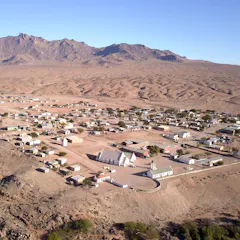
By 2100, rural African dwellers will be exposed to dangerous levels of heat nearly twice as high as those in urban areas.

The answer has to do with the air we breathe and that bright white snowpack, as an atmospheric scientist in Colorado explains.

Solar cycles, sea ice and rising electricity use all play a role. So does an unhealthy surprise that has been quietly hiding a large amount of global warming – until now.

Behind the long-term climate projections that affect our lives sits one of the most remarkable scientific achievements of the modern era.
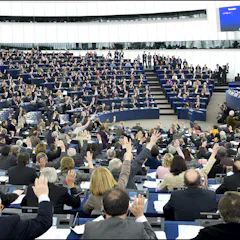
Policy frameworks shaping farming in the EU and beyond are suffering from funding misalignment and fragmented priorities, resulting in ineffective global climate efforts.

Huge efficiency gains are available to airlines, without any new technologies – new study.

Some tout wetland drainage as providing numerous benefits, including reducing emissions. This assertion is not supported by science.
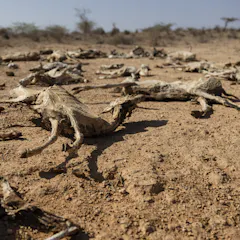
Without rapid cuts to fossil fuels and a shift to clean energy, climate change could drive over a billion into hunger by 2100, hitting Africa hard.
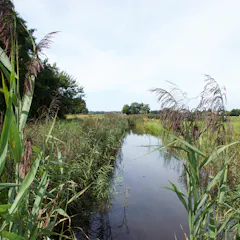
Ditches and canals can be climate heroes.

South Africa and Nigeria promised to reduce greenhouse gas emissions from oil and coal. But instead they’re planning to increase production of fossil fuels.

Dog feeding is a substantial part of the food system, not a side issue.

There are better ways for teams to cut their climate impact.
Top contributors
-

Chief Research Scientist, CSIRO Environment; Executive Director, Global Carbon Project, CSIRO
-
ARC Future Fellow and Associate Professor in Climate Science, ARC Centre of Excellence for 21st Century Weather, The University of Melbourne
-
Research Group Leader, CSIRO
-
Associate Professor, The University of Western Australia
-
Senior Researcher, Center for International Climate and Environment Research - Oslo
-
Royal Society Research Professor of Climate Change Science, University of East Anglia
-
Director, Queen's Institute for Energy and Environmental Policy, Queen's University, Ontario
-
Professor of Physical Climate Change; Director of the Priestley Centre for Climate Futures, University of Leeds
-
Senior Research Fellow and Associate Professor, Melbourne Climate Futures initiative, The University of Melbourne
-
Honorary Fellow, CSIRO
-
Professor, School of Economics, The University of Queensland
-
Professor, Crawford School of Public Policy and Director, Centre for Climate and Energy Policy, Australian National University
-
Professor, Department of Earth System Science, and Chair of the Global Carbon Project, Stanford University
-
Research Associate, Institute for Climate Risk and Response, UNSW
-
Professorial Fellow, School of Geography, Earth and Environmental Sciences, University of Birmingham