
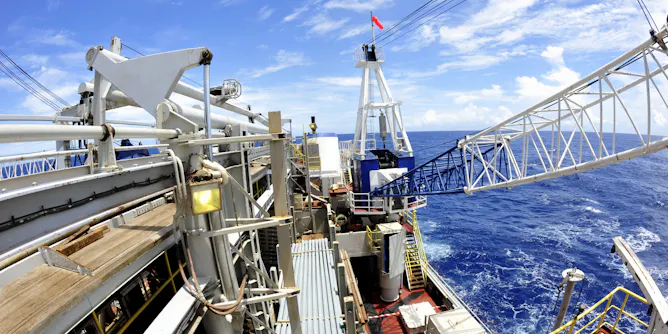
The National Science Foundation says that the JOIDES Resolution has become too costly to fund. But scientists say its $72 million annual budget pales compared with discoveries the ship has enabled.
Articles on Geology
Displaying 101 - 120 of 461 articles
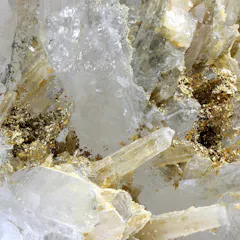
Gold nuggets grow much bigger than they should – and electricity produced by earthquakes may be the reason why.
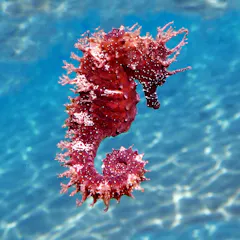
With 88% of its native fauna gone, the Mediterranean took 1.7 million years to recover from the worst extinction event in its history.
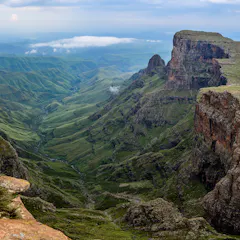
Motion deep in the Earth called a mantle wave can lift up the toughest parts of our planet.
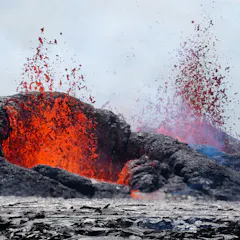
We don’t generate power directly from volcanoes, but their presence is a sign that there are good geothermal resources underground that can be tapped.
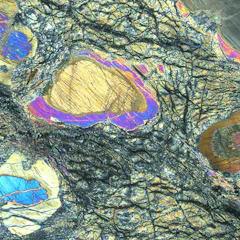
New research that offers valuable insights into the Earth’s mantle.
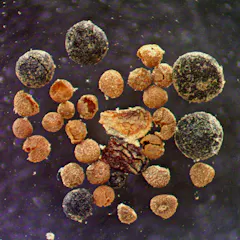
Our discovery of a tundra ecosystem, frozen under the center of Greenland’s ice sheet, holds a warning about the threat that climate change poses for the future.
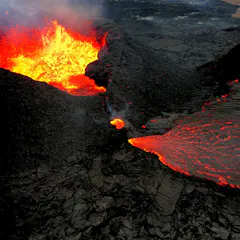
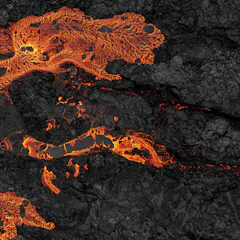
The eruptions that began in 2021 in Iceland could last for centuries, which is bad news for Icelanders but good news for scientists seeking to understand how the inner Earth works.
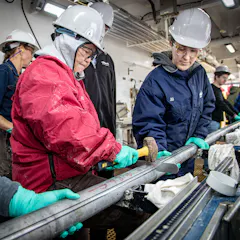
A newly discovered half-million-year-old layer of volcanic sediment beneath the Aegean Sea rewrites what scientists know about this area’s volcanic history – and potential future hazards.
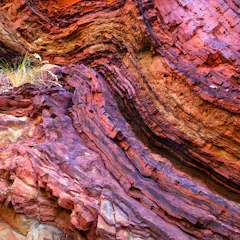
How did Australia end up with so much iron ore? What we discovered in Western Australia redefines how we think about iron deposits – and provides clues on how we might find more.
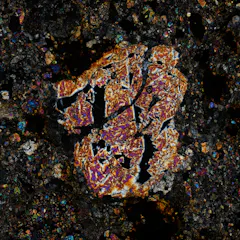
Vast amounts of space rocks litter our Solar System, and sometimes land on Earth’s surface. There are many things we can learn from them.

These rare rocks come in a few different types, which can tell geologists about Mars’ volcanic past and hint at its potential habitability.

Kids love digging and may not realize the dangers a hole in the sand can pose.
Life depends on Earth’s ancient continental crust – but there are only a few places where remnants of it can still be seen today.
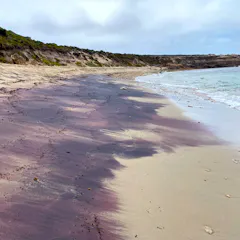
The hunt for the origin of garnet crystals found on South Australian beaches took researchers thousands of kilometres and half a billion years back in time to a hidden Antarctic mountain range.

Scientists with expertise in mud and peat were a key part of planning the Normandy landings in 1944.
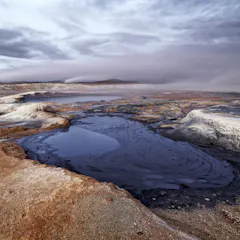
The very early Earth may not have been as inhospitable as scientists thought, with life perhaps starting more than 4 billion years ago.
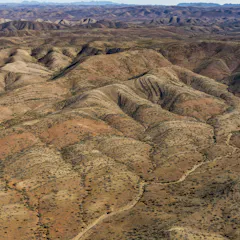
By detailing the landscape at the time of first humans’ migration into Australia, we can better understand how people travelled and where they settled.
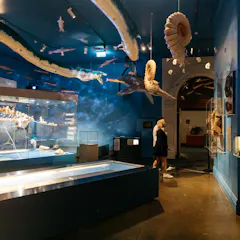
Experts say the ‘reimagining’ of the South Australian Museum will destroy its crucial contributions to science.
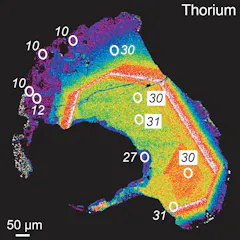
Measuring the concentration of radioactive elements in a single, sand-size crystal reveals the growth of the Himalayan mountain range over time.
Top contributors
-

Professor of Geochronology, Curtin University
-
Professor of Geology, Adelaide University
-
Professor of Palaeobiology, University of Leicester
-
ARC Future Fellow and Associate Professor in Igneous Petrology/Volcanology, The University of Queensland
-
Professor in Earth Sciences, Nanyang Technological University, Singapore, and Emeritus Professor of Mineral Physics, University of Cambridge
-
Professor of Earthquake Science, The University of Melbourne
-
Professor of Geophysics, University of Sydney
-
Associate Professor, Earth and Planetary Sciences, Curtin University
-
Professor of Planetary Geosciences, The Open University
-
Senior Curator of Geosciences, Museums Victoria Research Institute; Monash University
-
Professor in Earth & Climate Science, University of Southampton
-
Harold T. Stearns Professor of Earth Science, Wesleyan University
-
Adjunct professor, UNSW
-
Redmond Barry Distinguished Professor Emeritus, The University of Melbourne
-
Professor of Earth and Space Sciences, University of Washington