
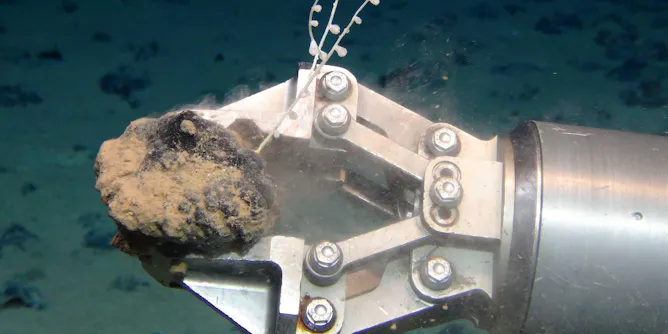
Critical minerals are found in several forms in the ocean, from potato-size nodules to brine pools. They are also in some of the least understood parts of our planet.
Articles on Geology
Displaying 41 - 60 of 461 articles
Hydrogen demand around the world is projected to grow significantly by 2050. Some of that supply could come from nature itself.
500 million years of fossils reveal how ‘escape routes’ along coastlines can decide who survives climate change.
New research reveals that Earth may not have been completely covered in ice.
Deep beneath the Rockies, a huge slab of crust ‘dripped’ into the mantle. It changed America forever.
Wildfire has been an important part of the Earth system for more than 400 million years.
After the fatal landslides at Mount Maunganui, attention has focused on recent tree removal from Mauao. But landslides rarely have simple causes.
Tragic slips in the Bay of Plenty highlight how geology, heavy rainfall and climate change are combining to amplify a largely hidden risk.
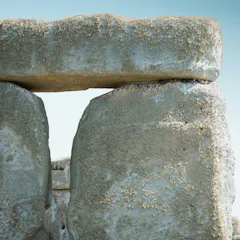
A new study shows the monument’s most exotic stones did not arrive by chance but were instead deliberately selected and transported.

Sinkholes are fairly common in Philadelphia due to aging water lines that leak or burst, causing the surrounding soil to wash away.
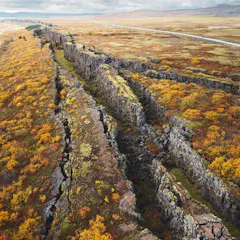
Earth has experienced many icehouse and greenhouse climates. A new study shows how they connect to plate tectonics.
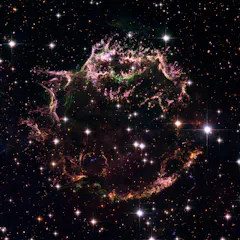
Vaporising crystals with a laser allows us to look deep into Earth’s past.
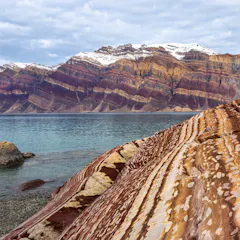
Greenland’s rare earth element deposits may be among the world’s largest by volume.
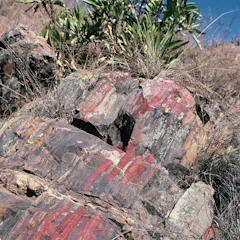
Young Earth was a blue planet covered in oceans, much like today. But the atmosphere was a lethal cocktail of gases, with no oxygen.
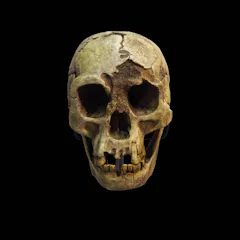
For a million years, one of humanity’s last cousins lived on an island in Indonesia. Why did they disappear?
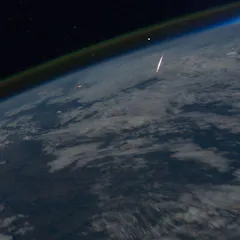
Hundreds of meteorites fall to Earth each year. If you’re lucky enough to find one, here’s what to do.
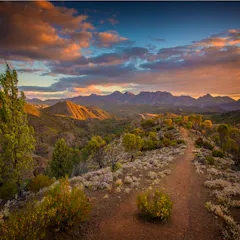
Ancient microbes built reefs in unusual places.

Highly detailed fossils are typically found in shale or other fine-grained sedimentary rocks. These ones? They’re made of iron.

Biosphere 2 isn’t just the site of a famous human experiment. Today, scientists there work to understand how life emerges in barren environments.
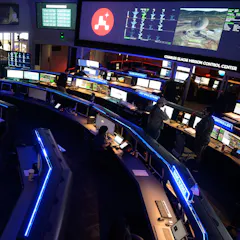
A planetary scientist walks through the sensors and systems that went into the recent detection of potential biosignatures.
Top contributors
-

Professor of Geochronology, Curtin University
-
Professor of Geology, Adelaide University
-
Professor of Palaeobiology, University of Leicester
-
ARC Future Fellow and Associate Professor in Igneous Petrology/Volcanology, The University of Queensland
-
Professor in Earth Sciences, Nanyang Technological University, Singapore, and Emeritus Professor of Mineral Physics, University of Cambridge
-
Professor of Earthquake Science, The University of Melbourne
-
Professor of Geophysics, University of Sydney
-
Associate Professor, Earth and Planetary Sciences, Curtin University
-
Professor of Planetary Geosciences, The Open University
-
Senior Curator of Geosciences, Museums Victoria Research Institute; Monash University
-
Professor in Earth & Climate Science, University of Southampton
-
Harold T. Stearns Professor of Earth Science, Wesleyan University
-
Adjunct professor, UNSW
-
Redmond Barry Distinguished Professor Emeritus, The University of Melbourne
-
Professor of Earth and Space Sciences, University of Washington