

Indigenous economic development corporations can generate income for communities and support the transition to clean energy.
Articles on Energy transition
Displaying 141 - 160 of 294 articles

In the fact of economic uncertainty, one question remains: Is it worth investing in a more sustainable Canada, or will it become just another economic burden?
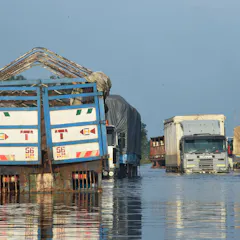
Nigeria’s new President Bola Ahmed Tinubu faces a number of challenges. But climate change cannot be ignored.

A new book investigates how investment money managers decide what is and is not ethical when it comes to socially responsible investing.
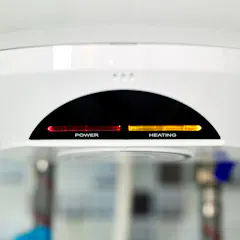
A heater with a 300-litre tank can store as much energy as a home battery at a fraction of the cost. Being able to store surplus solar energy at the right times helps grid stability and cuts emissions.

If we put green hydrogen plants next to green iron and steelmaking, we can clean up steelmaking and boost the hydrogen industry.
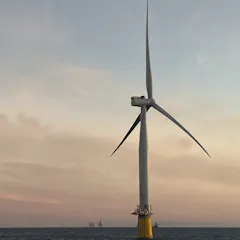
Offshore wind turbines are getting bigger and bigger – and many of them now float – here’s how we stop them drifting away.

Community batteries are popular. But that doesn’t mean they’re always the right tool for the job. We have to make sure they do what we want them to do

Solar power is growing at 20% a year. That simple fact could change the world for the better in under a decade

When people are involved in planning for climate transition that takes account of their other daily concerns, such as housing and jobs, they become more positive about transformative change.
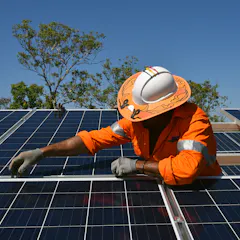
How can the Net Zero Authority help Australia make the most of this once-in-a-generation economic transformation?

Modernizing Canada’s fiscal arrangements is necessary to overcome considerable challenges that are impacting the country’s finances, including an aging population and climate change.
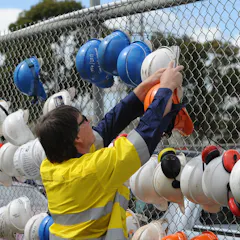
Smoothing the transition to clean energy for fossil fuel workers and their communities requires local leadership and the support of a new federal authority
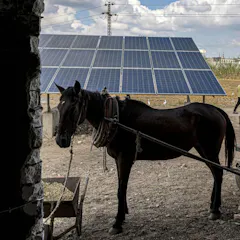
African policymakers need to access science-based information that can directly inform future planning.
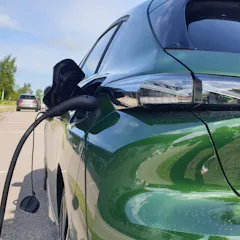
If electric cars are useful for the energy transition, they’re not without flaws and drawbacks and should not make us forget the need to reduce car use.
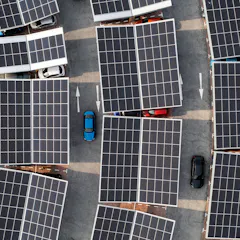
Two experts in policy and technology who were also co-authors of an international climate assessment see reasons for optimism.
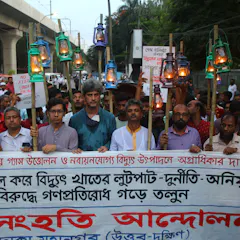
Russia tried to weaponize energy to keep European nations from opposing its war in Ukraine, but the real pain from Putin’s actions and Western sanctions has been felt far from Europe.
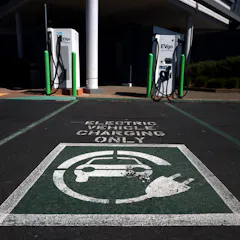
If the EV transition focuses exclusively on drivers in privately owned cars, it won’t meet many Americans’ mobility needs, particularly in underserved communities.

Proponents of mining in space often point to the potential benefits for Earth and its people. But this research casts doubt on many of them.

An alternate timeline that ends with a Nobel prize for Exxon’s CEO.
Top contributors
-

Professor of Engineering, Australian National University
-
Senior Fellow in Energy and Climate Change, Grattan Institute
-
Professor, Crawford School of Public Policy and Director, Centre for Climate and Energy Policy, Australian National University
-
Research Principal, Institute for Sustainable Futures, University of Technology Sydney
-
Professor of Law, Deakin University
-
Professorial Fellow, University of Canberra
-
Canada Research Chair in Urban Planning for Climate Change, Associate Professor of Geography and Civil Engineering, University of Victoria
-
Research Associate, Institute for Climate Risk and Response, UNSW
-
Professor, School of Economics, The University of Queensland
-
Professor of Economics, University of Pretoria
-
Professor and Director, Victoria Energy Policy Centre, Victoria University
-
Professor of Transport Technology and Sustainability, Swinburne University of Technology
-
Research Fellow, ANU College of Engineering and Computer Science, Australian National University
-
Professor of Public Policy, Crawford School of Public Policy, Australian National University
-
Senior Research Associate, Renewable Energy & Energy Systems Analyst, UNSW