
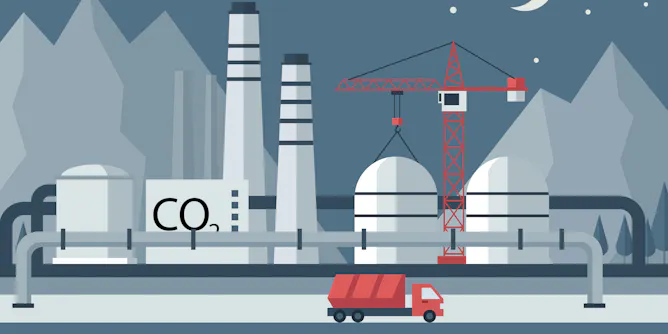
To reduce emissions put into the atmosphere, Google is using carbon capture and sequestration. But not all CCS projects are the same.
Articles on Data centers
Displaying 41 - 60 of 62 articles
The equipment needed to keep the grid running is hard to make, and materials are limited. And supply-chain bottlenecks are taking years to clear.
Analysis of the air quality data available for southwest Memphis finds that pollution has long been quite bad, but the turbines powering an xAI data center have not made it much worse.

AI’s burgeoning energy appetite is driving efforts to make more efficient computer chips. But chips are only part of the data center equation.

AI systems’ water usage can vary widely, depending on where and when the computer answering the query is running.

In 2024, one data center in Iowa consumed 1 billion gallons of water, enough to supply all the state’s residences with water for five days.
States take the lead on regulation of planning, site selection, leasing and other elements of offshore wind projects in the Great Lakes, though the federal government has a role as well.
Some technologies could rapidly cut emissions, while others do little to fight climate change. The House bill favors the latter while nixing support for the former.

If state regulators allow utilities to follow the standard approach of splitting the costs of new infrastructure among all consumers, the public will end up paying for data centers’ power.
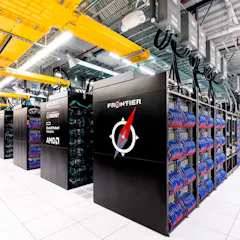
Today’s supercomputers are enormously powerful, but the work they do − running AI and tackling difficult science − is pushing them to their limits. Building bigger supercomputers won’t be easy.

When asked to suggest solutions for environmental challenges, chatbots reflected biases. This could have harmful effects on how we understand and communicate climate change.
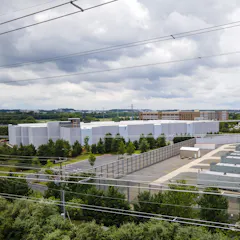
Utilities have options for addressing surging power demand from AI data centers, but there’s no silver bullet.
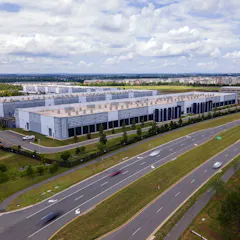
AI is everywhere these days, which means more data centers eating up more electricity. There’s no easy fix, but some combination of efficiency, flexibility and new technologies could ease the burden.

In sub-Saharan Africa, most governments welcome China’s investment in digital infrastructure.

People aren’t the only ones harmed by heat waves. The hotter it gets, the harder it is for machines to keep their cool.
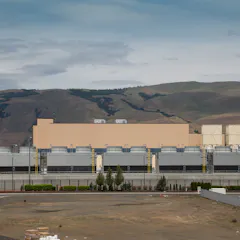
Generative AI, those astonishingly powerful language- and image-generating tools taking the world by storm, come at a price: a big carbon footprint. But not all AIs are equally dirty.

Vast amounts of digital data is stored on computer servers and never used.
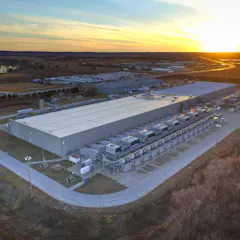
Training neural networks burns through a lot of energy. As the AI field grows, it’s working to keep its carbon foot print from growing with it.

Can developing countries get rich from data?

Greenhouse gas emissions from plastic production in the vinyl era is not a patch on the equivalent from running giant servers today.
Top contributors
-

Adjunct Professor of Law, Penn State
-
Ph.D. Candidate and Affiliated Researcher, Center for Climate Change Communication, George Mason University, George Mason University
-
Professor and Director of the Center for Water Policy, School of Freshwater Sciences, University of Wisconsin-Milwaukee
-
Professor of Management, University of North Carolina – Greensboro
-
Professor of Political Science, Grinnell College
-
Associate Professor of Public Policy and Administration, Penn State
-
Associate Professor of Computer Science, Boston University
-
Director of Energy Studies, University of Florida
-
Associate Professor of Economic Geography, University of South Carolina
-
Professor of Architectural Engineering, Penn State
-
Postdoctoral Fellow of Business, Georgia Institute of Technology
-
Associate Professor in Musicology, University of Oslo
-
Professor of Strategy, Loughborough University
-
Postdoctoral Associate, Massachusetts Institute of Technology (MIT)
-
Assistant Professor of Law, University of Dayton