
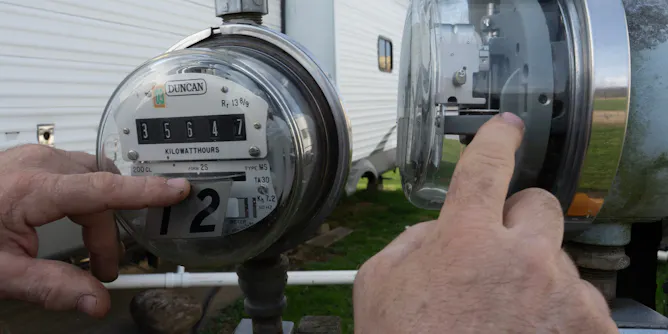
Setting a price for power might seem straightforward, but in reality it’s extremely complicated – and residential customers have very little influence in the decision.
Articles on Data centers
Displaying 21 - 40 of 62 articles
Data center proposals are often local controversies with significant underlying principles at stake.
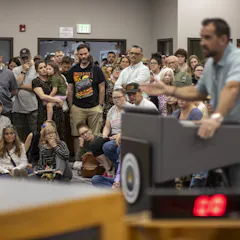
Local needs, political tensions and corporate power all get involved in the democratic processes by which Americans govern their communities.

Electric utilities don’t make money from selling power to customers, but instead profit from investments in power plants, wires, substations and other equipment.

A data center could get more solar power and be kept much colder in space, but it would be extremely difficult to repair and update.
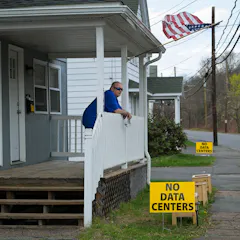
Communities across the state are demanding to know how proposed data centers would affect their electric and water bills, landscapes and quality of life.

Delivering on Ottawa’s AI for All strategy will require governments to build wraparound supports for workers, businesses and communities.
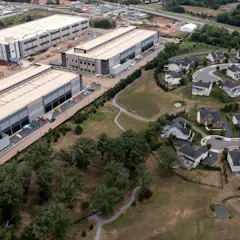
Even as they create and enable expansive virtual worlds, data centers are physical buildings in real communities around the nation and the globe.

Data centers need powerful chips, while smartphones need chips that are energy efficient. A supply chain scholar explains why chipmakers’ focus on the former comes at the expense of the latter.

Global digital infrastructure behind literally every modern service requiring data backup or authentification for example, is far more fragile than you’d think…
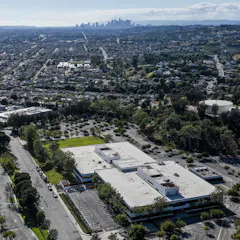
Two engineers explain how data center design, construction and operation can help the facilities support their communities.

The prospect of a massive IPO for OpenAI is about more than just a cash injection, it poses a broader ethical question: is market-driven AI a “safe” bet?

Commercial data centers have become critical infrastructure, supporting everything from financial transactions to government services. And critical infrastructure is often targeted in war.
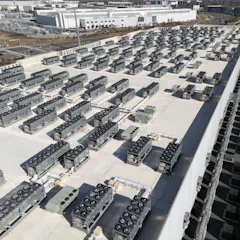
In Pennsylvania, new data centers could require enough electricity to power 11 million homes.

As AI data centers are added to Pennsylvania’s existing infrastructure, they bring the promise of economic growth − and a massive, 24/7 appetite for electricity.
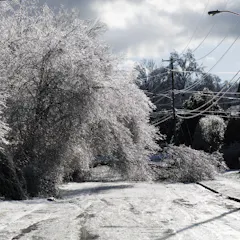
The government directed data centers to turn on backup generation in parts of the US. Expanding distributed generation could improve grid resilience.

Artificial intelligence systems have big environmental costs but are also finding ways to save energy and water, cut emissions and make businesses more efficient.
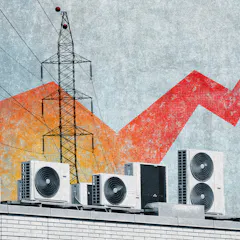
Energy projects are expensive and take a long time to build. Where to build them is often also a difficult, even controversial, question.
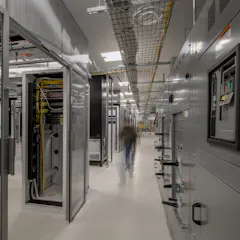
How many data centers will be built – and how much electricity they’ll need – is uncertain. Being prepared costs money, but so does being unprepared.

Google’s Project Suncatcher would need sophisticated collision avoidance capabilities to navigate a junk-filled landscape.
Top contributors
-

Adjunct Professor of Law, Penn State
-
Ph.D. Candidate and Affiliated Researcher, Center for Climate Change Communication, George Mason University, George Mason University
-
Professor and Director of the Center for Water Policy, School of Freshwater Sciences, University of Wisconsin-Milwaukee
-
Professor of Management, University of North Carolina – Greensboro
-
Professor of Political Science, Grinnell College
-
Associate Professor of Public Policy and Administration, Penn State
-
Associate Professor of Computer Science, Boston University
-
Director of Energy Studies, University of Florida
-
Associate Professor of Economic Geography, University of South Carolina
-
Professor of Architectural Engineering, Penn State
-
Postdoctoral Fellow of Business, Georgia Institute of Technology
-
Associate Professor in Musicology, University of Oslo
-
Professor of Strategy, Loughborough University
-
Postdoctoral Associate, Massachusetts Institute of Technology (MIT)
-
Assistant Professor of Law, University of Dayton