
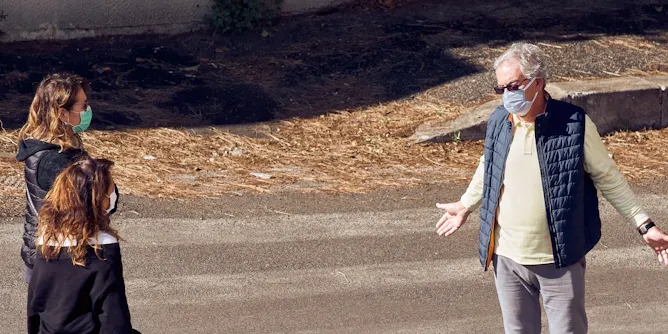
There’s now a 95% chance COVID-19 has been eliminated in NZ, according to our modelling. But as NZ prepares to remove limits on large gatherings, it increases the risk of a very large new outbreak.
Articles on COVID-19 pandemic
Displaying 261 - 280 of 362 articles
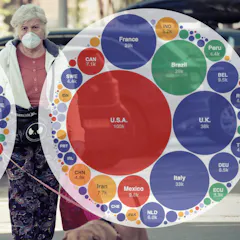
Australia is performing better than many other countries with comparable populations and geographies, a new COVID-19 data visualisation reveals.
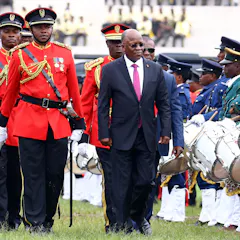
The president’s handling of the pandemic has been one of the more eccentric on the continent.

Distancing rules will make life very difficult for smaller bars, cafes and restaurants. Our streets can be modified quickly to help save an important part of the life of cities and their economies.
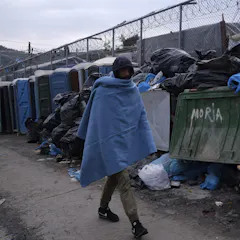
Based on how other diseases have moved through refugee camps, there is an urgent need to protect refugees in camps and informal settlements from COVID-19.
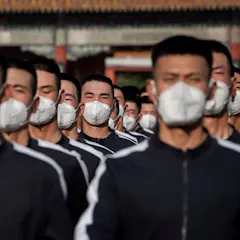
This week, our experts are looking at the major trends in post-crisis globalisation.

Re-imagining cities after COVID-19 is both a practical and philosophical task. People’s perceptions of places are changing. It is a time for planners and policymakers to plan with, not for, people.
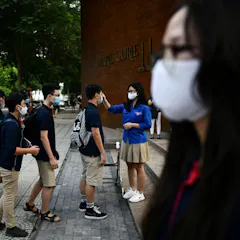
Vietnam is one of the poorest nations in Asia, yet it has had remarkably few Covid-19 cases. In part, the country’s limited resources led to a cautious, proactive approach.
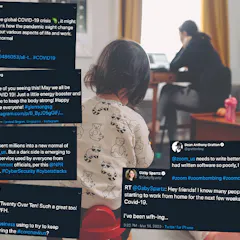
WFH? It seems a lot of people have quickly become used to it.

It’s human nature to try to insulate yourself from the unpleasant realization that death comes for all of us eventually.
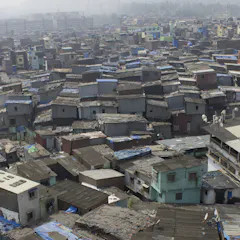
Long before the Indian government responded to the threat of COVID-19 with a lockdown, residents of Shivaji Nagar, with the support of a local NGO, were protecting and helping one another.
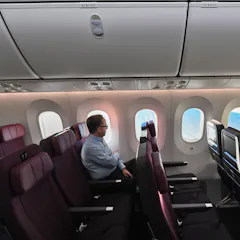
Aircraft cabins have been germ hotspots since long before this pandemic. More ‘microbiology literacy’ is needed among the general public for this to improve.
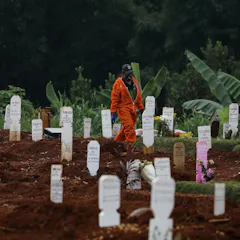
Southeast Asia’s largest economy, Indonesia, has again shown it prioritises the economy over its people during the COVID-19 pandemic.

The crisis has made recovery more difficult for those with substance use disorders. The inability to get to support group meetings, stress and illness are just some of the factors.
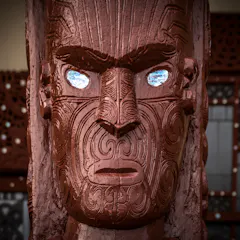
Māori knowledge, memory and cultural strength will only enhance New Zealand’s economic recovery planning – if they are listened to.

Only 51% of survey participants said they supported linking the number of COVIDSafe app downloads with an easing of lockdown restrictions.
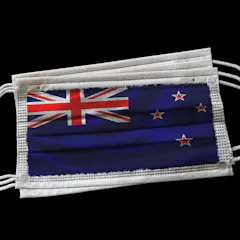
NZ$4.3 billion will go some way to patch up long-standing cracks in New Zealand’s health system. But COVID-19 has shown NZ’s regional approach to health isn’t good enough against a nationwide threat.
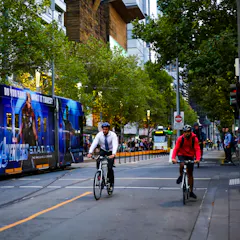
Before the pandemic, the country was making great strides towards creating more compact, sustainable and liveable cities.
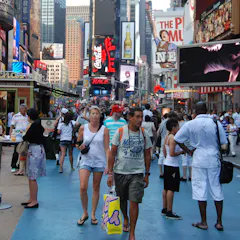
The internal density and layout of buildings are key factors in COVID-19 transmission risk. This is not an argument against high-density cities, some of which have successfully contained the virus.
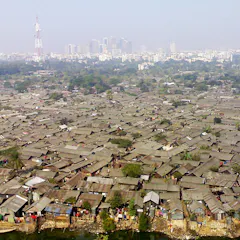
Many are speculating about the pandemic changing how we plan and use our cities. What they overlook is how many people live in unplanned settlements where it’s more likely to be business as usual.
Top contributors
-

Professor in Applied Mathematics, University of Canterbury
-
Professor of Public Health, University of Otago
-
Adjunct professor, Te Herenga Waka — Victoria University of Wellington
-
Associate professor, University of Canterbury
-
Professor of Public Health, University of Otago
-
Research assistant, University of Auckland, Waipapa Taumata Rau
-
Research Associate Professor of Public Health, University of Otago
-
Senior Lecturer, University of Auckland, Waipapa Taumata Rau
-
Professor and Director, Mitchell Institute, Victoria University
-
Associate Professor, Epidemiology and Environmental Health, University of Canterbury
-
Assistant Professor of History, University of Pittsburgh
-
University Professor of Sociology, Syracuse University
-
Professor of Biostatistics and Epidemiology, Adelaide University
-
Research scientist in mathematical modelling, Manaaki Whenua - Landcare Research
-
Research scientist, Manaaki Whenua - Landcare Research