

Albert Einstein declared time to be an illusion. Modern cosmologists disagree.
Articles on Cosmology
Displaying 1 - 20 of 170 articles
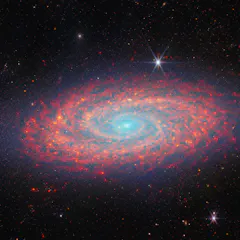
From the microscopic structure of particles and atoms, to the fate of black holes and the large-scale structure of the universe, the quantum ‘vacuum’ plays a role.
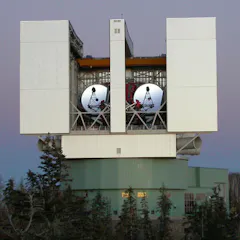
The early universe was kind of like a big game of musical chairs – scientists are figuring out how many particles were able to find ‘seats’ to understand the cosmos.
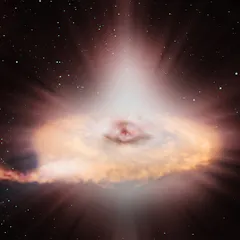
The expansion of the universe may not in fact be accelerating, calling dark energy into question.
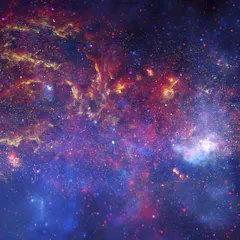
As a galactic archaeologist, my job is to reconstruct the past of our galaxy – and read the signs of its future.

While direct evidence of multiple universes is hard to come by, indirect evidence raises intriguing possibilities.
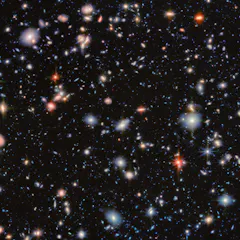
A mysterious anomaly challenges the most widely accepted vision of how the universe works.

Most of the universe is made up of dark matter and dark energy. The majority of everything else is dispersed throughout space as tiny particles.

The movement to protect the long-obscured sites allows communities to reckon with painful histories through healing, remembrance and ancestral connection.
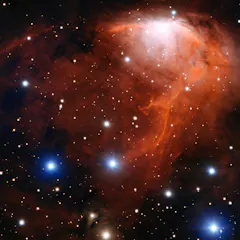
Two new studies challenge scientists’ previous theories on how the very first stars in the universe formed.
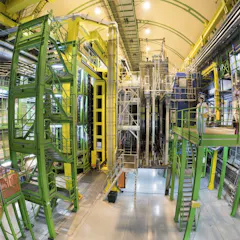
The finding could also open the door to the discovery of new particles.
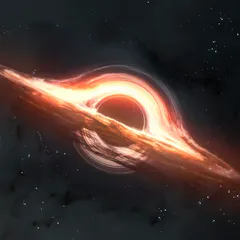
New theory makes testable predictions.
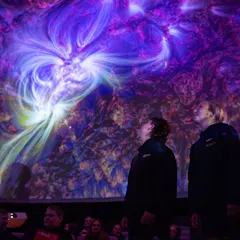
As the night sky became polluted with light from electrified cities, people built planetariums. Today, they’re more impressive than ever.
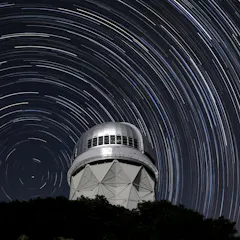
Scientists have conflicting theories on why the universe is expanding at an accelerating rate. New measurements from a massive collaboration complicate these ideas.
The universe’s expansion is accelerating, not decelerating. Our understanding of how the universe works may need an update.

A project to map galaxies across the universe may have spied cracks in the foundation of our understanding of the cosmos.
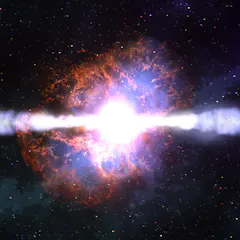
A new study on exploding stars has provided the first evidence for an alternative model of the universe, known as Timescape.
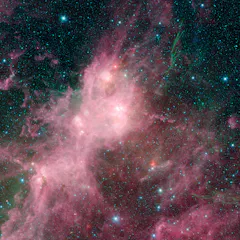
The universe is constantly expanding, but how do scientists think about what it’s expanding into?
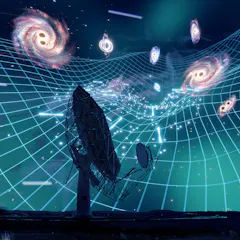
A new effort to map the rumblings in spacetime caused by enormous black hole collisions paints a surprisingly loud and lopsided picture of the universe.
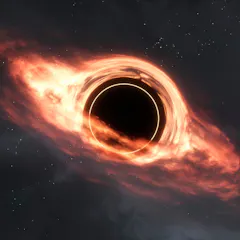
At a singularity, the laws of physics as we know them suffer a complete breakdown. So such objects really shouldn’t exist.
Top contributors
-

Professor of Astrophysics, University of Sydney
-
Pro Vice-Chancellor Flagship Initiatives, Swinburne University of Technology
-
Associate Professor in Astronomy, Monash University
-
Reader in Astrophysics, UCL
-
Lecturer and ARC DECRA Fellow, Queensland University of Technology
-
Cosmologist, University of Tasmania
-
John Curtin Distinguished Professor (Radio Astronomy), Curtin University
-
Professor (Astrophysics), University of Southern Queensland
-
Associate Professor in Archaeology and Space Studies, Flinders University
-
Pro-vice-chancellor, Professor, University of Birmingham
-
Australian Government Women in STEM Ambassador, Professor of Practice, UNSW
-
Emeritus Professor, ARC Centre of Excellence for Gravitational Wave Discovery, OzGrav, The University of Western Australia
-
Researcher at Research School of Astronomy and Astrophysics and the Research School of Earth Sciences, Australian National University
-
ARC Laureate Fellow, Swinburne University of Technology
-
Head of Research Data & Software, Macquarie University