
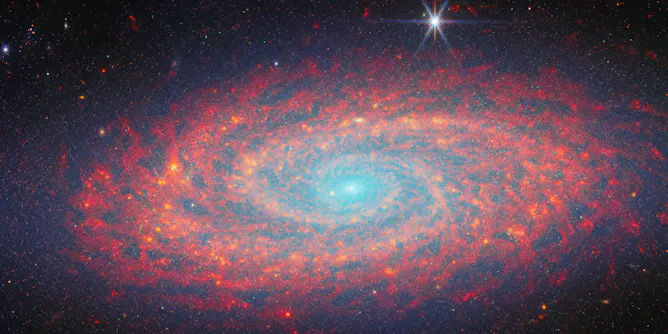
From the microscopic structure of particles and atoms, to the fate of black holes and the large-scale structure of the universe, the quantum ‘vacuum’ plays a role.
Articles on Atoms
Displaying 1 - 20 of 42 articles

Scientists recreated cosmic rays in a massive underground particle collider.
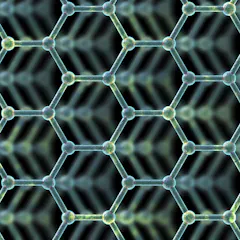
Turns out, changing the way atoms and molecules are arranged in a substance can give it new and fascinating properties.

The electron is the tiniest particle. Then there are neutrinos, which are as small but may weigh more.

Almost everything on Earth is made up of atoms, but where do these fundamental building blocks come from?

All the oxygen in your body is thanks to magic numbers of protons and neutrons in the nucleus.

Three scientists won the 2023 Nobel Prize in physics for their work developing methods to shoot laser pulses that only last an attosecond, or a mind-bogglingly tiny fraction of a second.

Remember building model molecules with balls and sticks in chemistry class? You have J. Robert Oppenheimer to thank for that, as a quantum chemist explains.

A biologist explains how researchers nail down the age of ancient fossils thanks to a physical process called radioactive decay.
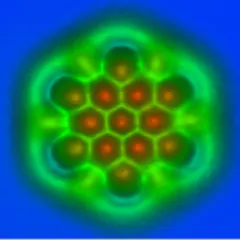
A physicist explains how atoms arrange themselves into molecules – and how scientists are able to image these tiny bits of matter that make up everything around you.

Nuclear isomers are rare versions of elements with properties that mystified physicists when first discovered. Isomers are now used in medicine and astronomy, and researchers are set to discover thousands more of them.
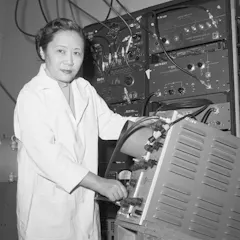
Chinese American physicist Wu worked on the Manhattan Project and performed groundbreaking experiments throughout her long career.

Physicists can use bright, hot lasers to slow atoms down so much that they measure -459 degrees Fahrenheit.
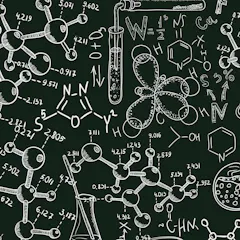
The laws and principles of chemistry seem pretty set in stone. But as a chemist explains, the field is always evolving, including such fundamental principles as what is a chemical bond.

The movies make it seem like someday we’ll be able to make people and objects grow really big or shrink really small. Whether this will be possible comes down to the smallest of things.

Electricity happens when electrons move from one atom to another.
Entanglement is the mysterious relationship between two connected atoms. This relationship is the basis of quantum physics, but what is it exactly?
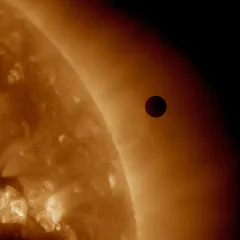
There are three ways heat can be shared: conduction, convection and radiation. Find out which one lets heat travel through space.
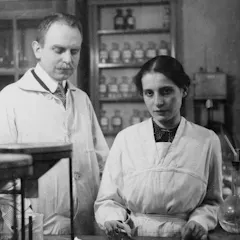
Left off publications due to Nazi prejudice, this Jewish woman lost her rightful place in the scientific pantheon as the discoverer of nuclear fission.
Alongside their famous dangers, radioactive materials have many beneficial uses. With as many more predicted as have already been discovered, nuclear physicists are searching for more isotopes.
Top contributors
-

Professor of Nuclear Physics, Michigan State University
-
Assistant Professor of Chemistry, Trinity University
-
Teaching fellow, University of Bath
-
Director, Heavy Ion Accelerator Facility, Australian National University
-
Research Fellow - School of Chemistry, University of Manchester
-
Research Professor and Director of the International Institute for Accelerator Applications, University of Huddersfield
-
Professor of Science Communication and Chemistry, University of Hull
-
Postdoctoral Associate in Physics, City College of New York
-
Team Leader, CSIRO
-
Honorary Research Fellow, Physics and Astronomy, University of Glasgow
-
Teaching Assistant in Physics, City College of New York
-
Associate Scientist in Theoretical Astrophysics at Fermi National Accelerator Laboratory and Associate Professor of Astronomy and Astrophysics, University of Chicago
-
Principle Lecturer, University of Maryland, Baltimore County
-
Timothy J. Jorgensen is a Friend of The Conversation.
Director of the Health Physics and Radiation Protection Graduate Program and Professor of Radiation Medicine, Georgetown University
-
McMaster University