

As AI agents begin shopping on our behalf, there’s a real risk cheaper products could put more pressure on vulnerable workers in global supply chains.
Articles on Artificial intelligence (AI)
Displaying 101 - 120 of 2971 articles

Canada’s new Responsible Data Centre Development Principles fail to address computer hardware alongside water and electricity usage.
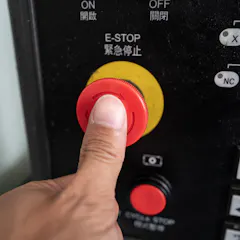
A kill switch to shut down dangerous AI systems is a seductive concept, but the metaphor hides how the models work – and how they get out of control in the first place.

To figure out what AI may be understood as replacing, we need to examine intelligence as a historical and dangerous idea — rather than as a biological fact.

The question is not whether Canada builds more data centres, but what it asks of them before they draw on public systems and local landscapes.

Photos of the face and tongue helped an AI identify heart disease with 98% accuracy, but screening the general public is a much harder task.

Children and teens often turn to artificial intelligence for advice on sensitive topics. But chatbots are not a substitute for human support.
Just as car makers have to report and pay to fix faulty airbags, AI companies should be legally responsible for their faulty products.

As we are bombarded with apocalyptic headlines about the future of artificial intelligence, the writer, farmer and environmentalist Wendell Berry can help bring us back to our earthly community.

Having a human “in the loop” overseeing when an AI makes a decision is important, but what happens to that responsible human over time when the AI gets it right over and over again?

Across three countries, people agree that teaching is centered on the teacher-student relationship. But they don’t agree on which profession teaching most resembles.

Technology that predicts when someone might experience intimate partner violence can undermine a survivor’s control over whether, when and how they share their abuse,

Paying attention to the creative and critical uses of AI is an urgent task for art museums today.
A study reveals how discriminated consumers are more likely to turn to AI-based recommendations rather than human advice to avoid judgement or what could be uncomfortable conversations.
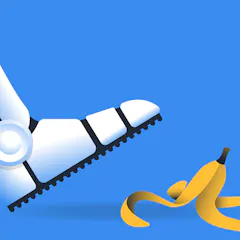
When an AI a business is using makes a mistake, the business tends to be on the hook, not the AI toolmaker.

As AI and its impacts become harder to avoid, other countries are setting rules for its use. New Zealand has some catching up to do.

Plato’s dialogues show that learning takes place through the to-and-fro of reflective thought – much of learning is finding out what we don’t know.

What’s not clear is how much of this AI boom is being driven by real, end-user demand — and how much might be a bubble.

Generative AI can make learning faster and easier, but that does not necessarily mean we are learning better.

The message in the film Annihilation is that disruption by AI needn’t be disastrous for humanity.
Top contributors
-

Professor of AI, Research Group Leader, UNSW
-
Professorial Fellow, University of Canberra
-
Associate Professor of Visual Communication & Digital Media, RMIT University
-
Adjunct Senior Lecturer, Applied Ethics and CyberSecurity, Griffith University
-
Professor of Information Systems, Michigan State University
-
Professor in Robotics, Queensland University of Technology
-
Adjunct Lecturer in Public Policy, Harvard Kennedy School; University of Toronto
-
Senior Research Fellow in AI Accountability, Queensland University of Technology
-
Professor of Philosophy and Director of Applied Ethics Center, UMass Boston
-
Director of Sydney Executive Plus, Business School, University of Sydney
-
Professor in Computational Intelligence, Australian Catholic University
-
Professor in Business Information Systems, University of Sydney
-
Guest Research Fellow, School of Computing and Information Systems, The University of Melbourne
-
Professor of Information Technology and Organisation, University of Sydney
-
Senior Lecturer, School of Engineering, Australian National University