

Using AI for cybersecurity without first investing in fundamentals is like deploying a robot guard dog to defend an unlocked door.
Articles on Artificial intelligence (AI)
Displaying 381 - 400 of 2971 articles

Understanding the coopetition mechanics behind Europe’s defence dilemma is vital and key for making much-needed headway.
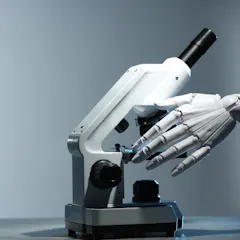
Several scientific fields rely on visual evidence to illustrate their claims. Inaccurate AI-generated images put the credibility of science at risk.
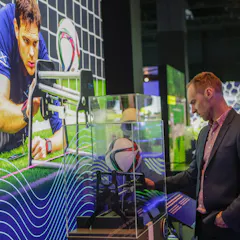
The football technology being showcased at the 2026 World Cup often has its origins in university research.

Writing prompts to generate images combines two literary tasks at once: the realist description of concrete things and the modernist evocation of atmosphere.

AI is often described as if it lives in the cloud. The persistent controversies regarding the Wonder Valley project in Alberta illustrate how false that is.
Meta’s just-launched Business Agent could mark a major shift in how companies of all sizes deal with customers. But what are the trade-offs?

According to one study, 75% of respondents believe chatbots are conscious.
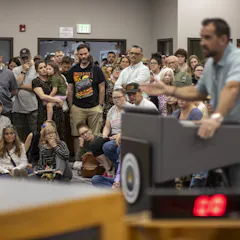
Local needs, political tensions and corporate power all get involved in the democratic processes by which Americans govern their communities.

Rest can feel uncomfortable when society treats effort as evidence of commitment.

The effects won’t be immediately visible. But many of these jobs are entry points for young graduates and early-career professionals: our future business leaders.

Sextortion is a form of online blackmail where a perpetrator coerces or tricks a victim into sending intimate images. New research shows it’s on the rise.

Canada is now investing billions to strengthen domestic AI capacity. But sovereignty is not simply about where the servers sit.
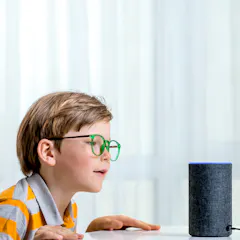
Adults need to guide kids’ interactions with AI, and teach the difference between talking to a machine and a human.

The risks of depending on US-based AI models are becoming clear.

We know not to leave lights on all day. We also know not to run an air conditioner with windows open. We need a similar mindset for AI.

Ordinary people, not just technical experts, need to set the moral standards for regulation of AI.

A data center could get more solar power and be kept much colder in space, but it would be extremely difficult to repair and update.

In tests, AI robot systems easily rejected directly malicious commands. But their safety filters collapsed when creative writing was used to instruct them.

AI schools try to tailor learning to match students’ abilities. But they can’t help young people learn who they are.
Top contributors
-

Professor of AI, Research Group Leader, UNSW
-
Professorial Fellow, University of Canberra
-
Associate Professor of Visual Communication & Digital Media, RMIT University
-
Adjunct Senior Lecturer, Applied Ethics and CyberSecurity, Griffith University
-
Professor of Information Systems, Michigan State University
-
Professor in Robotics, Queensland University of Technology
-
Adjunct Lecturer in Public Policy, Harvard Kennedy School; University of Toronto
-
Senior Research Fellow in AI Accountability, Queensland University of Technology
-
Professor of Philosophy and Director of Applied Ethics Center, UMass Boston
-
Director of Sydney Executive Plus, Business School, University of Sydney
-
Professor in Computational Intelligence, Australian Catholic University
-
Professor in Business Information Systems, University of Sydney
-
Guest Research Fellow, School of Computing and Information Systems, The University of Melbourne
-
Professor of Information Technology and Organisation, University of Sydney
-
Senior Lecturer, School of Engineering, Australian National University