
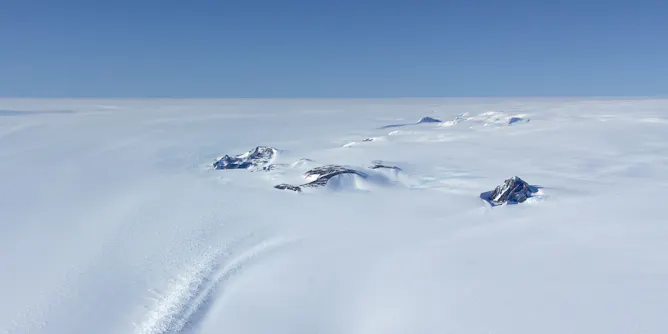
Buried beneath kilometres-thick slabs of ice are rivers and huge lakes - some of which are teeming with microbes that thrive in a world without light or oxygen.
Articles on Antarctica
Displaying 281 - 300 of 417 articles

Australia and China both have a keen interest in the frozen continent. And while they don’t agree on everything, there is great scope for scientific collaboration.
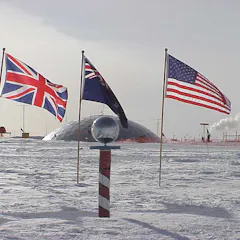
It’s one of the remotest places on Earth and yet is still claimed by six nations – including Australia.

What the Montreal Protocol has done for the ozone hole threat other international accords could do for climate change – if we all agree.
Vote Leave claims the EU is the slowest growing area in the world. Are they right?
New study supports the idea that an asteroid, rather than climate changes, caused the mass extinction that wiped out the dinosaurs.

A warming Earth could see invading species arrive in Antarctica via the floating “taxi service” of the sea. That could be a threat to the southern continent’s delicate ecosystem.
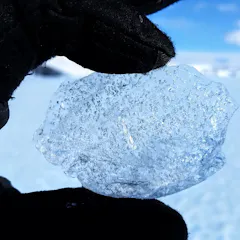
What gaps have the CSIRO cuts left in climate research?

New mapping shows how Antarctica’s huge Totten Glacier has retreated far inland, raising sea levels by more than a metre. Rising temperatures could trigger it to do so again.
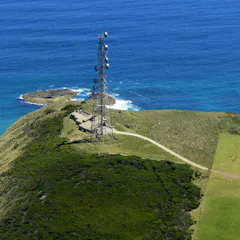
Atmospheric carbon dioxide measurements at Tasmania’s Cape Grim and Antarctica’s Casy Station have now officially passed 400 parts per million and are likely to stay above that for decades to come.
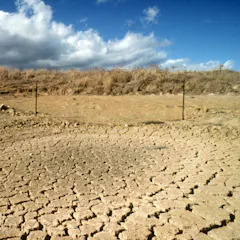
A new millennium-long record reveals that Australia has suffered longer droughts and wet periods than those recorded in the past century’s weather observations.
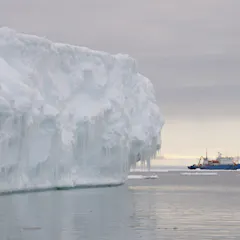
In an atmosphere of declining government funding for science, researchers can drum up excitement and funding in other ways, just as they did in Edwardian times.
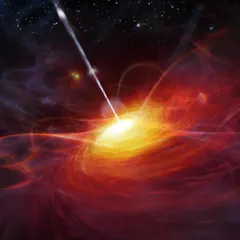
A burst of neutrinos detected deep under the Antarctic ice may have originated from a distant quasar on the edge of the visible universe.
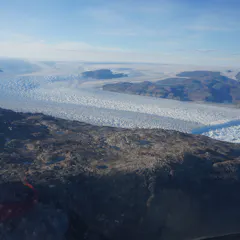
Could sea levels really rise by several metres this century. Probably not, although this century’s greenhouse emissions could potentially set the stage for large rises in centuries to come.
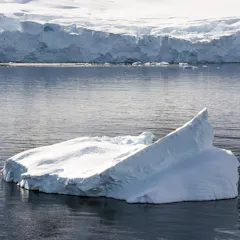
As the world warms, Antarctica’s melting ice will likely reach the point of no return.

Antarctica’s blue whales all feed in the same place. But a new genetic analysis suggests they are actually three separate populations that breed in different parts of the globe.

Ice cores tell us vital information about how the world’s climate has changed - and how it will change in the future.
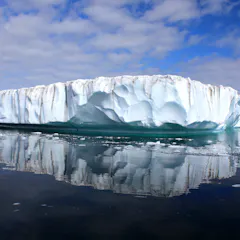
The Paris agreement has given us some solid targets to aim for in terms of limiting global warming. But that in turn begs a whole range of new scientific questions.
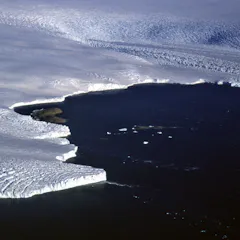
The way ice sheets respond to global warming may be more predictable than previously thought
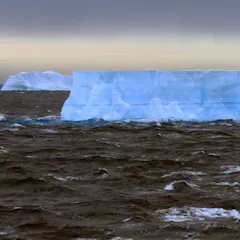
Iron and nutrients from Antarctica’s bedrock are carried into the oceans – nourishing entire food webs.
Top contributors
-

Adjunct Professor, Institute for Marine and Antarctic Studies, University of Tasmania
-
Professor of Antarctic Studies, School of Humanities, University of Tasmania
-
Pro Vice-Chancellor of Research, University of Technology Sydney
-
Director of the ARC Centre of Excellence for Our Future Oceans and Scientia Professor in Oceanography, UNSW
-
Professor of Astrophysics, UNSW
-
Adjunct Senior Lecturer, University of Tasmania
-
Professor in Ocean Physics, University of Auckland, Waipapa Taumata Rau; Earth Sciences New Zealand
-
Chief Scientist, Australian Antarctic Division and Professor of Climate Science, Australian National University
-
Assistant Professor of History, Texas Tech University
-
Senior lecturer, Institute for Marine and Antarctic Studies, University of Tasmania
-
Australian Laureate Fellow, Distinguished Professor, Deputy Director of ARC Securing Antarctica's Environmental Future (SAEF), University of Wollongong
-
Honorary Senior Fellow in Ecology, University of Wollongong
-
Professor of Polar Geodesy and ARC Laureate Fellow, University of Tasmania
-
Antarctic Law Researcher, Institute for Marine and Antarctic Studies and the Antarctic Climate and Ecosystems CRC, University of Tasmania
-
Director, Securing Antarctica's Environmental Future and Professor of Biological Sciences, Monash University