
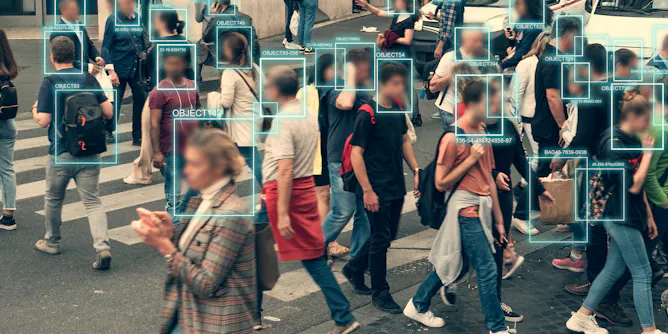
Without more transparency about AI use, it will be difficult for people to challenge biased decisions against them.
Articles on Algorithm
Displaying 81 - 100 of 295 articles

Twitter uses an AI-powered centrally managed algorithm to moderate what you see. On Bluesky, you have control over the algorithm that selects what you see through so-called ‘composable moderation’.

Metaphorical black boxes shield the inner workings of AIs, which protect software developers’ intellectual property. They also make it hard to understand how the AIs work – and why things go wrong.

As social media becomes more prevalent in our lives, a career as an influencer may seem enticing. But those interested in this new career should be aware of the challenges.

The aggressive efforts of social media platforms to police language have spawned a new lexicon meant to evade censors.

Machine learning is becoming an indispensable tool in astronomy by sorting through enormous datasets from telescopes.

An investigation has revealed that French tech firms, seeking to create an AI “à la française”, have turned to one of the country’s former colonies, Madagascar, for low-cost labour.
The political content in our personal feeds not only represents the world and politics to us. It creates new, sometimes “alternative”, realities.

Addiction to social media can affect the emotional well-being of adolescents and young adults. But staying offline — even for only a few hours a day — can help.

The explosive viral spread of the grainy but dramatic footage shows the limits of mainstream media ethics.

In a loosely regulated industry, followers shouldn’t necessarily buy what these influencers are selling.

Bacterial infections are a growing global challenge. This is due to antibiotic-resistant bacteria, and researchers are turning to AI to develop new drugs.

AI’s ability to identify ‘technosignatures’ missed by classical algorithms is an exciting step forward for radio astronomers.

In the age of AI, people might wonder if there’s anything computers can’t do. The answer is yes. In fact, there are numerous problems that are beyond the reach of even the most powerful computers.
The intersection of content management, misinformation, aggregated data about human behavior and crowdsourcing shows how fragile Twitter is and what would be lost with the platform’s demise.

Having the ability to decide either to do something or not, and to act accordingly, is a basic definition of freedom. Smart buildings challenge this freedom.

How are Wikipedia pages about contentious events put together? Heather Ford discovered a hotbed of passion, a rotating pack of editors and a struggle for power behind its mirage of neutrality.

There are ways in which platform workers can resist the rise in job insecurity and poor working conditions brought on by digital labour platforms.

Behind the planning process sits an opaque system of automated decision-making. It rests on a generated plan, called a ‘typical support package’.

Online personalities like Andrew Tate are using social media to amplify their misogynist and anti-woman rhetoric. Social media companies deplatforming them can cut them off from followers and revenue.
Top contributors
-

Professor of Informatics and Computer Science, Indiana University
-
Professor of Information Systems, Michigan State University
-
Professor of Data Science; Director, Adelaide Data Science Centre, Adelaide University
-
Senior Research Associate in Media and Communications, University of Sydney
-
Professor in Business Information Systems, University of Sydney
-
Senior Lecturer in Public Policy and Politics, UNSW
-
Scientia Professor of Evolution, UNSW
-
Associate Professor in Digital Media, Queensland University of Technology
-
Head of Art and Design, University of Hertfordshire
-
University of Hertfordshire
-
Professor, Real Estate, Université du Québec à Montréal (UQAM)
-
Lecturer in Computer Science/Co-founder Women Leading in AI, Keele University
-
Professor of Computer Science and Director of the Art & AI Lab, Rutgers University
-
Professor of Strategic Design, Queensland University of Technology
-
Visiting researcher, Alan Turing Institute