

President Lula’s spectacular reelection sends a clear warning to the global far right after seven conservative presidential wins in Latin America in 18 months.
Articles on Algorithmic bias
Displaying 1 - 20 of 86 articles
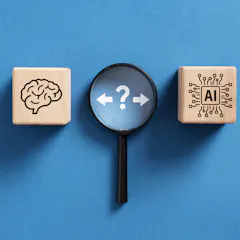
A study reveals how discriminated consumers are more likely to turn to AI-based recommendations rather than human advice to avoid judgement or what could be uncomfortable conversations.
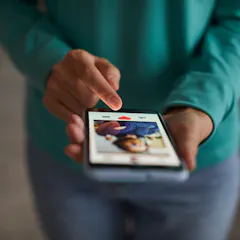
There is a reason why algorithms make love at first swipe hard to come by. New research offers strategies for using dating apps wisely and breaking the “swipe cycle”.
Political parties might choose their election ads but increasingly it’s tech companies’ algorithms that decide who sees them.
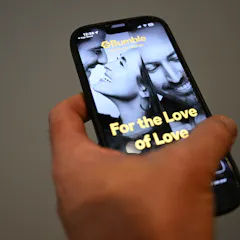
Before the end of the year, dating app Bumble will be getting rid of the swipe and introducing an AI powered dating assistant.

Voice-operated technology can’t cope with non-mainstream varieties of English.

Some of the marginalized groups most likely to be harmed by AI are also most wary of it. A new study’s findings raise questions about equity and consent in technology design.
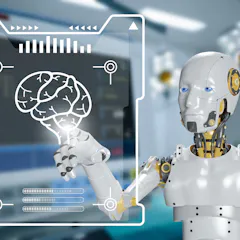
Privacy and bias concerns and integration challenges are brakes on the pace of health care systems adopting the technology.

Health insurance companies use AI to decide which health care treatment to cover. State laws and federal agencies are now moving toward regulating these algorithms.
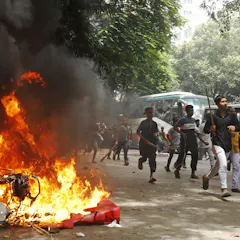
Google’s search engine fields 6.3 million queries every second. But the results it dishes up are far from perfect.

If you need to access social services, you deserve to know whether the provider is using artificial intelligence in any way.

The findings raise suspicions as to whether Musk has tweaked the X’s algorithm to increase the reach of his posts in advance of the US presidential election.

Understand the risks of using AI recruitment tools and discover practical, actionable strategies to harness AI’s potential while promoting diversity and inclusion in hiring.
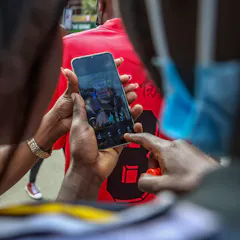
Users must learn to understand and navigate digital environments critically.
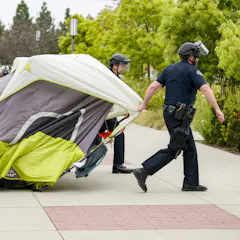
Framing dissent and poverty as a menace to public order can threaten fundamental rights, particularly when it’s used to justify the deployment of predictive technology.
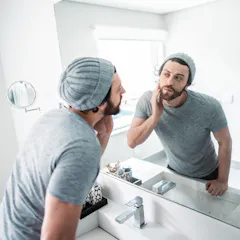
People are better able to see and correct biases in algorithms’ decisions than in their own decisions, even when algorithms are trained on their decisions.

Tools used in the criminal justice system predict the risk of crime – but the scores are based on factors completely out of our control.
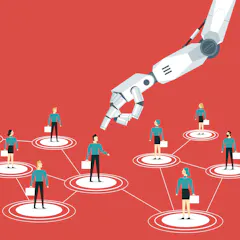
Bias in AI has been getting a lot of attention lately, but it’s just one aspect of the larger – and thornier – problem of fairness in AI.
Whether artificial intelligence leads to more or less energy use will depend on how we adapt to using it.
Using technology to screen job applicants might be faster than reading CVs and face- to-face interviews but the most suitable candidate could be overlooked.
Top contributors
-

Professor of Information Systems, Michigan State University
-
Professor of Information Science, University of Washington
-
Professor of Informatics and Computer Science, Indiana University
-
Professor of English, Macalester College
-
Senior lecturer in Law, Brunel University of London
-
Assistant Professor of Communication, University of Arizona
-
Adjunct Associate Professor, School of Social Sciences, Linguistics, The University of Western Australia
-
Postdoctoral Researcher in Data Science, University of Oxford
-
Kyle Webster has just completed an internship in the Office of the Prime Minister’s Chief Science Advisor, focussing on Artificial Intelligence. , University of Auckland, Waipapa Taumata Rau
-
Senior Lecturer in Philosophy, University of the Witwatersrand
-
Associate Professor of Industrial & Manufacturing Engineering and Computer Science & Engineering, Penn State
-
Senior Research Fellow, Applied Ethics Center, UMass Boston
-
Ph.D. Student in Linguistics & Germanic, Slavic, Asian and African Languages, Michigan State University
-
Professor, Real Estate, Université du Québec à Montréal (UQAM)
-
Professor of Information Technology and Organisation, University of Sydney