
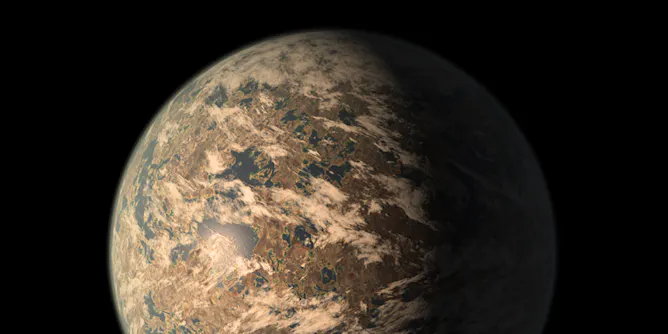
Life on Earth has dramatically changed the chemistry of the planet. Astronomers will measure light that bounces off distant planets to look for similar clues that they host life.
Articles on Algae
Displaying 41 - 60 of 100 articles
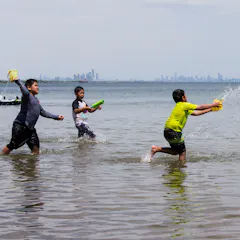
Cleaning up the Great Lakes was a big job when the US and Canada undertook it in 1972. Today it’s far more challenging.
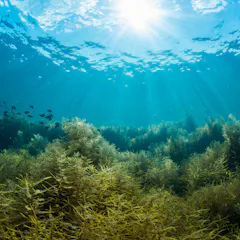
Substances found in algae, squid and fish all have potential antiviral properties.

Rivers are among the most embattled ecosystems on Earth. Researchers are testing a new, inexpensive way to study river health by using eDNA to count the species that rivers harbor.
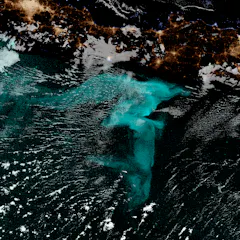
When conditions are just right in some parts of the Indian Ocean, a type of bacteria will multiply and start to glow. Satellites are helping scientists study these milky seas for the first time.
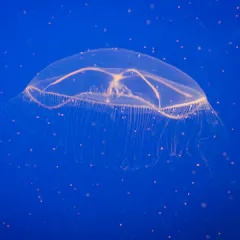
Three pioneering technologies have forever altered how researchers do their work and promise to revolutionize medicine, from correcting genetic disorders to treating degenerative brain diseases.
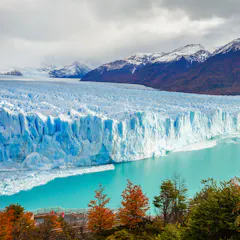
Glaciers aren’t sterile wastelands – they’re chock-full of microscopic life.

Invisible to the eye, the microbial life in the air around us can vary depending on our environment.

Harmful algae blooms are an increasing problem in Florida. Once nutrients are in the water to fuel them, little can be done to stop the growth, and the results can be devastating for marine life.
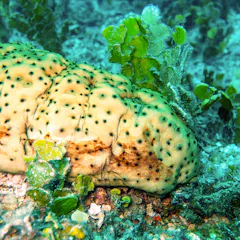
We are only just beginning to understand the importance of this deep and hidden area of the inter-reef that supports a rich diversity of marine life.
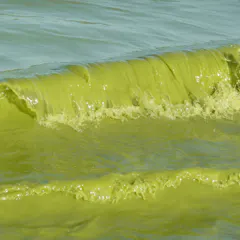
Warmer waters, heavier storms and nutrient pollution are a triple threat to Great Lakes cities’ drinking water. The solution: Cutting nutrient releases and installing systems to filter runoff.
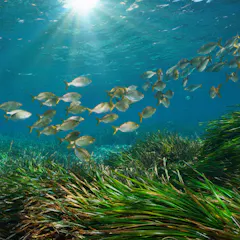
Oxygen produced by these plants helps animals boost their metabolism to match the heat.
In the days before scuba technology, the celebrated photographer sought to capture the beauty of the reef by placing corals in an aquarium and shooting them. But under stress, they released algae.
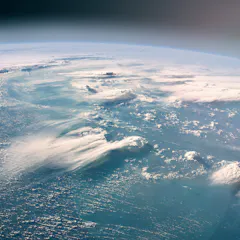
Oxygen flooded the atmosphere for the first time and then … nothing. Or so we thought.
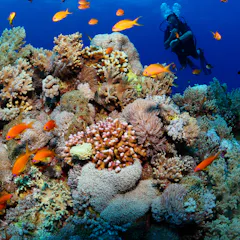
Researchers have just discovered a new species of bacteria that cranks out a deadly toxin. In a common arrangement in the marine environment, a slug and alga both use this toxin for their own defense.
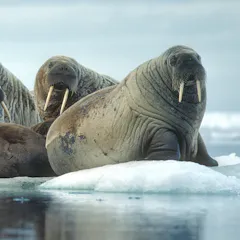
Algae at the bottom of the Arctic food chain relies on sea ice.
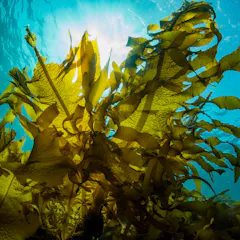
Feeding pigs seaweed could make them, us and the planet healthier without contributing to antibiotic resistance in bacteria.
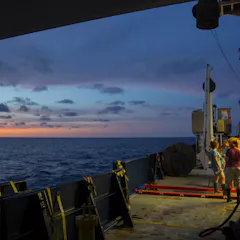
Tiny chemical clues in the ocean reveal how its role as a carbon store is changing.

Public confidence in the institutions in charge of the Murray Darling Basin has plummeted – with good reason.
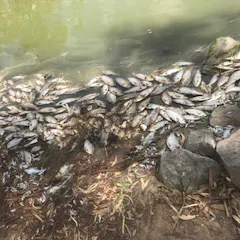
Hundreds of thousands of fish have died in low-oxygen water. Here’s what actually happened to the oxygen, and why we might see more deaths in the coming weeks.
Top contributors
-

Professor Emeritus of Environment and Sustainability, University of Michigan
-
Professor of Microbiology, University of Tennessee
-
Research Associate in Plant Biotechnology, University of Cambridge
-
Professor of Ecology, University of Southampton
-
Professor, Queensland University of Technology
-
Honorary Research Associate in Biological Sciences, University of Sydney
-
NRF-DST Research Fellow; Researcher, Department of Chemistry and Polymer Science, Stellenbosch University
-
Professor and Deputy Vice-Chancellor (Research), University of Sydney
-
Professor, Director of Florida Sea Grant, University of Florida
-
Professor, Department of Earth and Planetary Sciences, Weizmann Institute of Science
-
Professor of Ocean Biogeochemistry and Palaeoclimate, The Open University
-
Professor, Marine Biology, Adelaide University
-
Senior Lecturer in Geoenergy, Durham University
-
Associate Professor in Sustainability, University of Sydney
-
Lecturer, UNSW