

The time has come for developed nations to eliminate the large pockets of ignorance which exist in their societies about Africa and other peoples. Globalisation demands that people think differently.
Articles on African politics
Displaying 141 - 160 of 280 articles
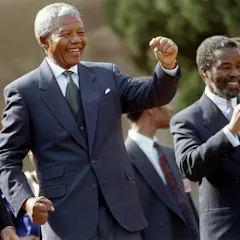
While Nelson Mandela’s cabinet made allies out of erstwhile adversaries, Jacob Zuma’s cabinet is making enemies out of former allies.
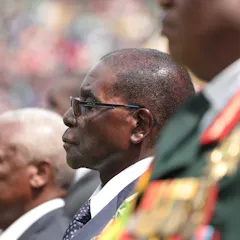
Technocrats across the African continent are battling to change the direction of corrupt, violent governments
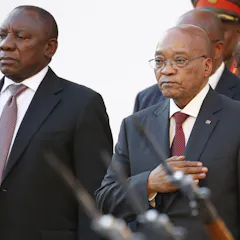
South Africa has reached a critical point. If patronage politicians win the battle within the ruling ANC and complete the capture of the state, the country will slip from stagnation into the abyss.
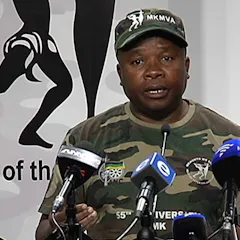
MK, the army of the then banned ANC, electrified millions of oppressed people to rise against the apartheid regime. Today, its veterans are being used in factional battles within the ruling party.
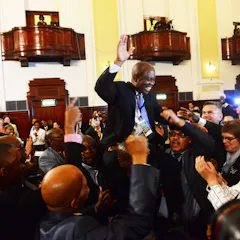
South Africa’s watershed local elections have resulted in upsets for the ANC in key metropoles. But will the new, minority coalition regimes live up to their mandate of providing basic services?
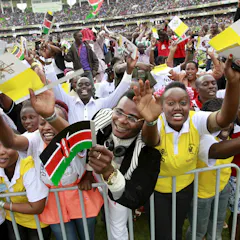
The African Union has identified youth as critical for development. But, a new survey reveals a wide gap between these aspirations and the reality of youth public engagement on the continent.
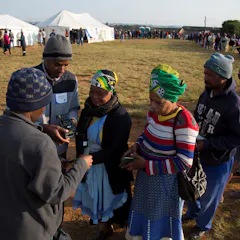
Many municipalities in the South Africa don’t function properly because of poor management and administrative capacity. They don’t have enough appropriately qualified and experienced staff.
Various commentators have wrongly over the last 22 years said that black people voted blindly for ANC governments. There’s no better example why the academy needs a dramatic post-colonial overhaul.
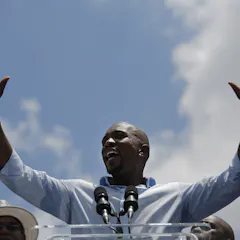
Patronage and clientelism is slipping away from the ANC and accruing to those who pledge their political futures to the Democratic Alliance. It will have to guard against incumbency arrogance.
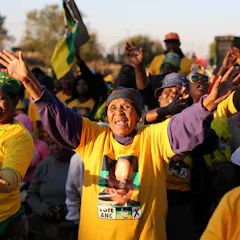
For more than 20 years the ANC’s electoral support has appeared unyielding to the obvious weaknesses of its performance in government. To fall below 60% is psychologically significant for the party.
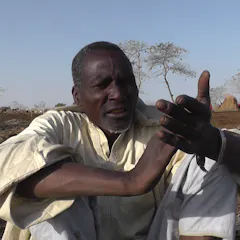
The marked increase in the number of Nigerian pastoralists fleeing Boko Haram terror in northeastern Nigeria last year reflects a trend that started three years ago.
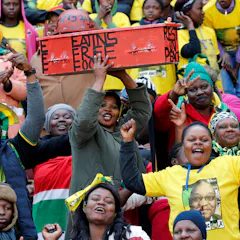
The ANC has faced an inexorable, gradual decline in support since 2004. There is no evidence that it has been able to reverse this trend.
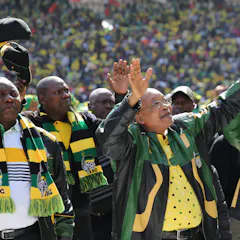
The ANC’s waning urban vote and growing support rural is not a political trend unique to South Africa. Many of Africa’s liberation-movements-cum-governing-parties now depend on rural support for political longevity.
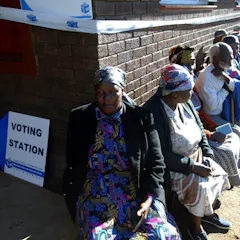
The opposition Democratic Alliance is hopeful that the African National Congress will fail to win a majority in three metros. This will open the door for it to rule in coalition with smaller parties.
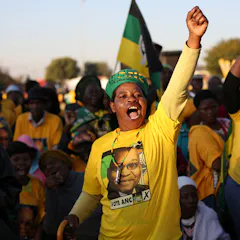
The Tripartite Alliance in South Africa has previously provided the governing African National Congress with diverse support, securing it victory at the polls. It is now riven with dissension.

In previous elections speculation in South Africa focused on the likely size of the ruling ANC’s majority. This time the question on people’s minds is: will the ANC win or lose Nelson Mandela Bay?
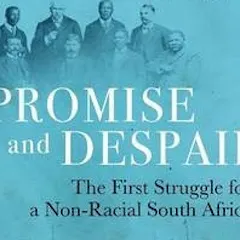
Britain’s acquiescence in the face of Afrikaner intransigence set the precedent for the progressive disenfranchisement of nonwhite South Africans and laid down the foundation for apartheid.
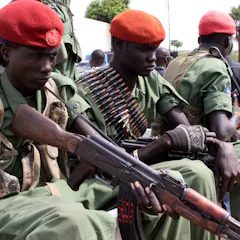
Betrayed by corrupt mismanagement and personalised leadership, the world’s youngest country is in danger of total collapse.
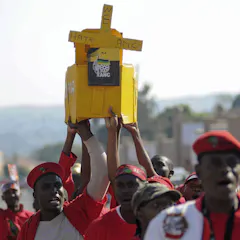
Unscrupulous politicians are adept at using regressive story lines that feed insecurities. That could be dangerous ahead of South Africa’s hotly-contested municipal elections.
Top contributors
-

Professor of World Politics, SOAS, University of London
-
Extraordinary Professor, Department of Political Sciences, University of Pretoria
-
Professor of Public Affairs, Tshwane University of Technology
-
Political Scientist, University of the Western Cape
-
Professor of Democracy, University of Birmingham
-
Honorary Professor of International Relations, University of the Witwatersrand
-
Professor in Political Science, University of South Africa
-
Visiting Professor and Professor Emeritus, University of the Witwatersrand
-
Professor and Head of Department of Political and Conflict Studies, Nelson Mandela University
-
Professor, Department of Political Sciences, University of South Africa
-
Steinberg Postdoctoral Fellow in International Migration Law, Centre for Human Rights and Legal Pluralism, Faculty of Law, McGill University
-
Yarik Turianskyi is Manager of the Governance and African Peer Review Mechanism Programme at the South African Institute of International Affairs and guest lecturer in African Governance and Eastern European Politics, University of Pretoria
-
Emeritus Associate Professor in Public Law, UCT. Visiting Adjunct Professor, WITS School of Governance; Director, Africa Programme, University of Cambridge Institute for Sustainability Leadership, University of Cambridge
-
Lecturer in Politics and International Relations, University of Leicester
-
Lecturer, Nelson Mandela University