
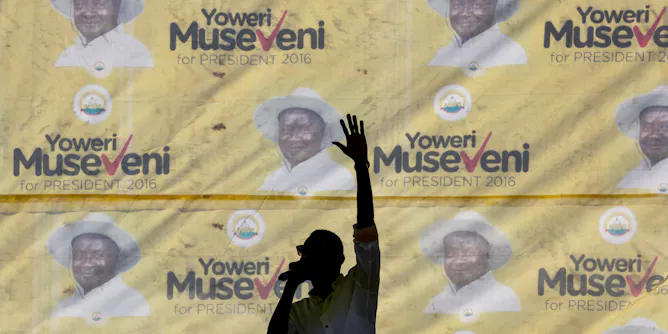
Uganda’s president has ruled for three decades – and the opposition is getting stagnant too.
Articles on African politics
Displaying 201 - 220 of 280 articles
Finance minister Pravin Gordhan would need President Zuma’s undivided support to drive bold economic reforms. But, signs suggest that he does not have such support and is undermined by the president.

South Africa’s finance minister means well, especially in his bid to cut public sector expenditure. But his success requires strong leadership and strategic alignment across the entire public sector.
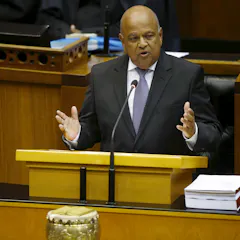
South Africa’s finance minister delivered a good mix of macro and micro-economic strategies to ensure the country survives economic uncertainty, restores confidence and achieves some growth.
Apartheid South Africa started a war in which it could not maintain a strategic advantage. It misread the quest for national liberation and international opinion that undermined its effectiveness.
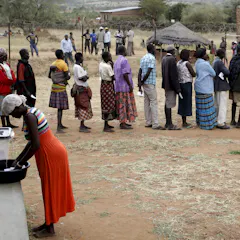
The Ugandan police refuse to ‘hand over power to the opposition to destabilise the peace we fought for’.

Robert Sobukwe developed the philosophy of African nationalism to even higher intellectual heights. The lesson for humanity was his ideological stand that there is only one race - the human race.
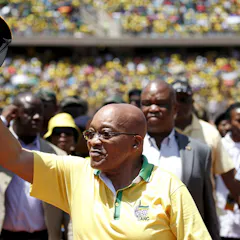
It is unlikely President Zuma will announce a structural changes in his State of the Nation Address. This, despite education being in dire need of fundamental restructuring and an economy in decline.
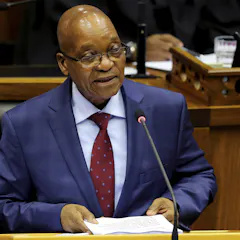
The general loss of faith in the economy is the most important issue President Zuma must address. More radical social and economic transformation, with emphasis on land reform will be most critical.
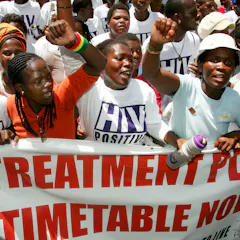
One of the remarkable achievements of South Africa’s Constitutional Court has been its role in improving the quality of the internal democratic processes within the governing ANC.
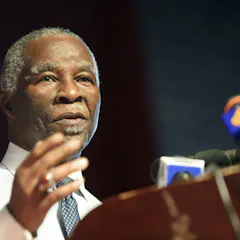
Former President Thabo Mbeki’s critique of South African historiography, and his concomitant attempt to correct this body of work, has set off a significant public discussion.
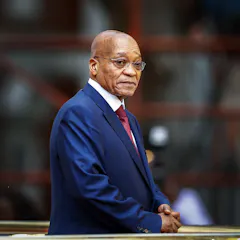
Jacob Zuma has backtracked on two major decisions in under two months – first after he fired his finance minister; now he says he’ll pay back public money spent on his lavish Nkandla homestead.
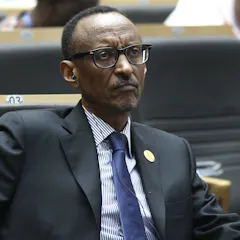
The reality of Rwanda is that there is no viable alternative to President Paul Kagame, within or outside his ruling RPF. Political rivals have died, are jailed, or have fled the country.
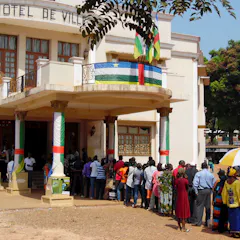
One of the world’s poorest and most unstable countries is in the midst of a remarkably hopeful election campaign.
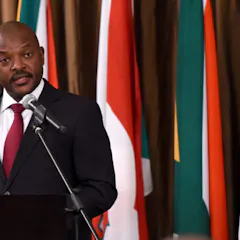
As concerns rise about the risk of genocide in Burundi, the country could still avoid the worst thanks to its social structure. But time is limited.
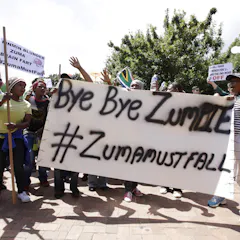
South Africa’s president is direly unpopular and his government on the ropes – but protests against him are just empty symbolism.
Recent changes to the Rwandan constitution appear to have been tailor-made for the current president. This does not bode well for the country’s future constitutional base.

Unlike the third-term fever afflicting the Great Lakes region, Rwanda is not mired in corruption and stagnation. Rwandans were fearful and anxious about what might happen after 2017 without Kagame.
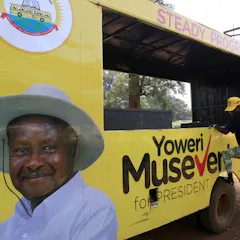
Regular changes of government through free and fair elections that reflect the wishes of the majority of citizens are a critical component of democratisation. But how significant are polls in Africa?
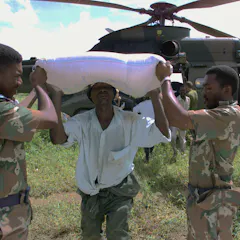
The South African military’s capabilities for socio-economic development are questionable, even in its own country. The force is in critical decline, but is expected to aid humanitarian efforts.
Top contributors
-

Professor of World Politics, SOAS, University of London
-
Extraordinary Professor, Department of Political Sciences, University of Pretoria
-
Professor of Public Affairs, Tshwane University of Technology
-
Political Scientist, University of the Western Cape
-
Professor of Democracy, University of Birmingham
-
Honorary Professor of International Relations, University of the Witwatersrand
-
Professor in Political Science, University of South Africa
-
Visiting Professor and Professor Emeritus, University of the Witwatersrand
-
Professor and Head of Department of Political and Conflict Studies, Nelson Mandela University
-
Professor, Department of Political Sciences, University of South Africa
-
Steinberg Postdoctoral Fellow in International Migration Law, Centre for Human Rights and Legal Pluralism, Faculty of Law, McGill University
-
Yarik Turianskyi is Manager of the Governance and African Peer Review Mechanism Programme at the South African Institute of International Affairs and guest lecturer in African Governance and Eastern European Politics, University of Pretoria
-
Emeritus Associate Professor in Public Law, UCT. Visiting Adjunct Professor, WITS School of Governance; Director, Africa Programme, University of Cambridge Institute for Sustainability Leadership, University of Cambridge
-
Lecturer in Politics and International Relations, University of Leicester
-
Lecturer, Nelson Mandela University