
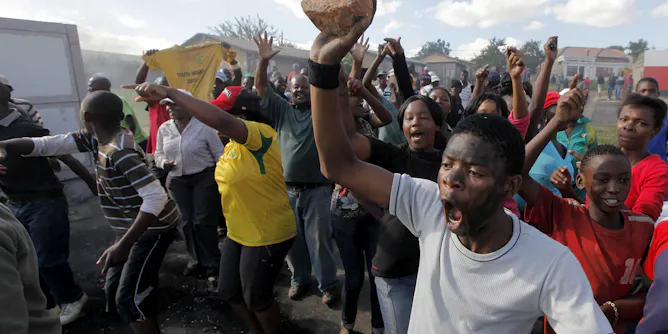
The advent of democracy in South Africa in 1994 is often hailed as peaceful and smooth. But, there are lingering problems. Dissent over unmet expectations has resulted in an increase in protests.
Articles on African politics
Displaying 221 - 240 of 280 articles
Martin Luther King’s legacy must be contextualised within a larger global struggle against racism and hatred. Africans should revisit the values he espoused and continue with the anti-racism crusade.
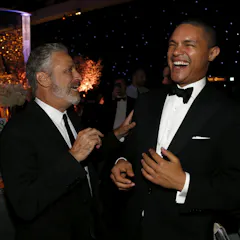
The Trevor Noah phenomenon speaks to an influential comedic revolution that is happening in South Africa. Its comics operate in an increasingly complex, high-risk and conflict-intense society.
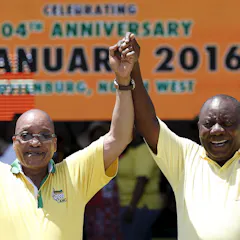
The ANC will be judged by its ability to deliver on its promises to provide basic services and good governance, practise sound financial management and combat corruption this election year.
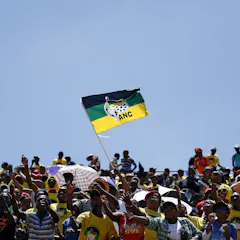
For more than 100 years South Africa’s ruling ANC and its leaders have often been able to speak to and for the nation with resonance and moral authority, their words matching actions. Not any more.
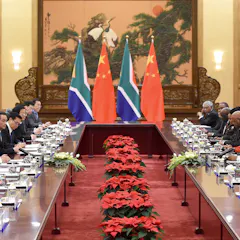
When it comes to the global political economy, no one “talks left and walks right” more than China, a dominant player in global capitalism. South African and Chinese aspirations have much in common.
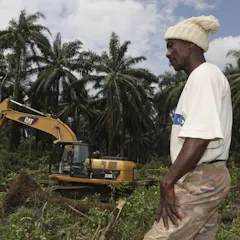
International development banks are supposed to ensure adherence to human rights in the projects they fund. Instead, their practices provide fertile ground for human rights abuses.
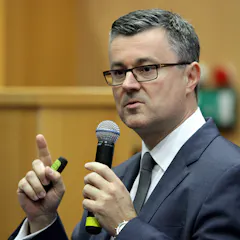
Months after an inconclusive election, Croatia has at last picked an almost unknown figure to be its new prime minister: Tihomir Orešković, chief financial officer of a Canadian generic pharmaceutical…
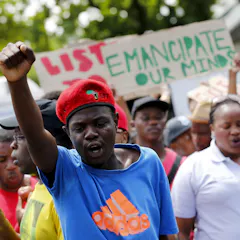
Many works published on decolonisation originate from Ngugi wa Thiongo’s idea of decolonising the African mind. Imperialism, he writes, has left its mark on the minds of the previously colonised.
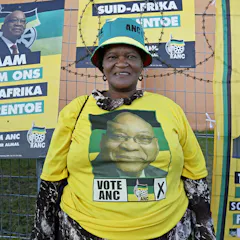
The annulment of the Tlokwe byelection results is a blow for the governing ANC. It has had a torrid 2015 and faces difficult local government elections early next year.
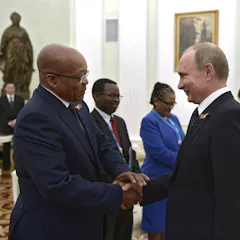
President Jacob Zuma’s era has been characterised by a high turnover, not only of cabinet members, but also senior public officials and executives in state-owned enterprises.
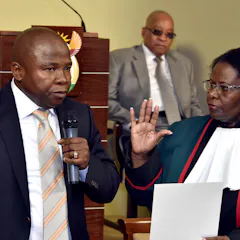
The sudden expulsion of the finance minister makes it hard not to be pessimistic about the South African government’s ability to manage the difficult challenges it might face in 2016.
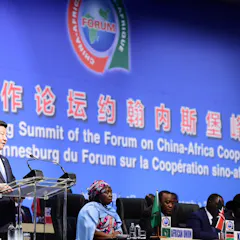
For the grand plans unveiled at the China-Africa summit to succeed, Africa will have to cooperate more extensively. The larger and more successful nations need to become sub-regional leaders.
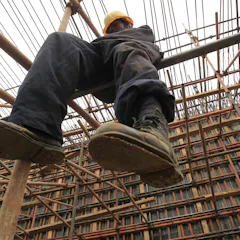
China offers an alternative to traditional donors and investors in low- and middle-income countries. Adding to its appeal is its focus on infrastructure projects.
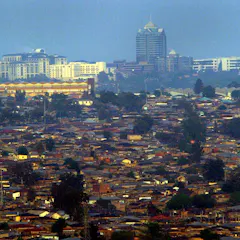
Decolonising education should be about ensuring that students learn more about other fellow South Africans who might be different to them.
The Open Government Partnership promotes transparency, public accountability and civic participation in government to combat corruption. It is hoped South Africa will help it grow in Africa.
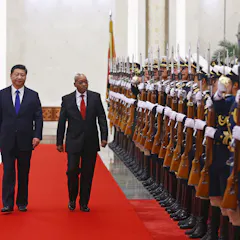
The Africa-China summit will provide an opportunity to get a feel for how Chinese President Xi Jinping is responding to democratic developments in Africa.
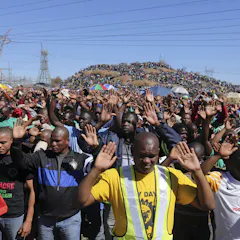
The reporting of the Marikana massacre was characterised by embedded journalism, sensationalism and polarisation of views. The media became a loudspeaker for powerful political and economic interests.

The world is generally not safe for women. But some projects in North Africa provide a glimpse of hope as the world marks the UN’s International Day for the Elimination of Violence against Women.
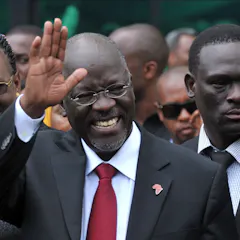
Tanzania’s new president, John Pombe Magufuli, needs to change the country’s lukewarm attitude to the EAC and regional integration, which has cast a shadow over the future prospects of the region.
Top contributors
-

Professor of World Politics, SOAS, University of London
-
Extraordinary Professor, Department of Political Sciences, University of Pretoria
-
Professor of Public Affairs, Tshwane University of Technology
-
Political Scientist, University of the Western Cape
-
Professor of Democracy, University of Birmingham
-
Honorary Professor of International Relations, University of the Witwatersrand
-
Professor in Political Science, University of South Africa
-
Visiting Professor and Professor Emeritus, University of the Witwatersrand
-
Professor and Head of Department of Political and Conflict Studies, Nelson Mandela University
-
Professor, Department of Political Sciences, University of South Africa
-
Steinberg Postdoctoral Fellow in International Migration Law, Centre for Human Rights and Legal Pluralism, Faculty of Law, McGill University
-
Yarik Turianskyi is Manager of the Governance and African Peer Review Mechanism Programme at the South African Institute of International Affairs and guest lecturer in African Governance and Eastern European Politics, University of Pretoria
-
Emeritus Associate Professor in Public Law, UCT. Visiting Adjunct Professor, WITS School of Governance; Director, Africa Programme, University of Cambridge Institute for Sustainability Leadership, University of Cambridge
-
Lecturer in Politics and International Relations, University of Leicester
-
Lecturer, Nelson Mandela University