

More women are making appearances in the news media, and this is due to the coronavirus pandemic. This is not all good news: women are interviewed about the effects of the pandemic on their lives.
Articles on Women in politics
Displaying 61 - 80 of 129 articles
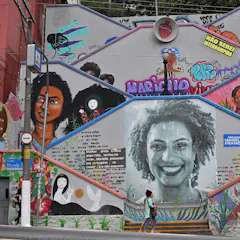
The 2018 murder of Rio city councilwoman Marielle Franco inspired record numbers of Black women to get involved in politics. Winning proved harder – but it isn’t the only point of their campaigns.
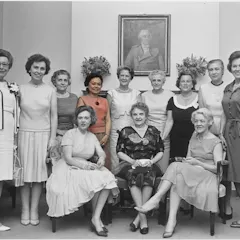
Mink, the first woman of color in Congress, brought a racially and historically aware brand of feminism into lawmaking and ran for president in 1972. But women’s history largely overlooks her.
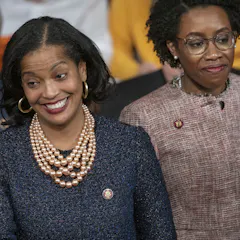
Women made gains in Congress this election cycle, but they are still underrepresented compared to their share of the population.
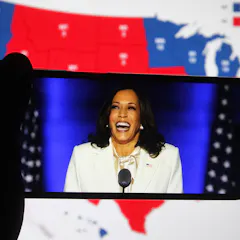
Ever heard of Shirley Chisholm? What about Charlene Mitchell and Lenora Fulani? They are among the many African American women who’ve run for president despite enormous political barriers.
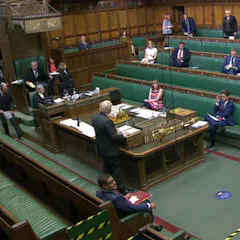
New research shows politicians experience high levels of emotional labour, which not only falls more heavily on women but also impacts their mental wellbeing.
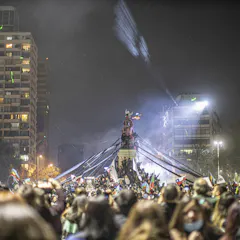
After a year of unrest Chileans voted decisively on Oct. 25 to replace their constitution, a relic of the military dictator Pinochet. Civilians, half of them women, will write the new constitution.
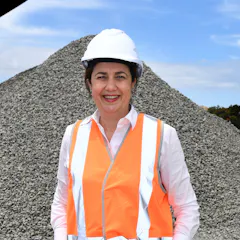
Neither Labor’s Annastacia Palaszczuk, nor the Liberal National Party’s Deb Frecklington appear to be interested in highlighting the needs and perspectives of women ahead of October 31.
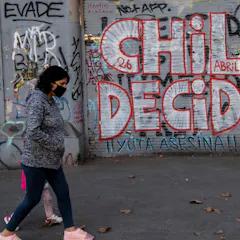
On Oct. 25 Chile will decide whether to replace its dictatorship-era constitution with a new one written wholly by the Chilean people. The vote shows how protests can change the course of a nation.

Researchers posed as constituents and emailed 3,685 legislators in 11 countries in Europe and Latin America to ask for help. Responsiveness varied by gender by up to 13 percentage points.
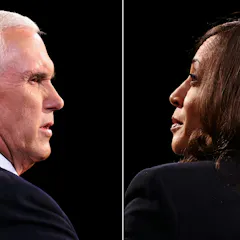
The seemingly different debate styles of President Trump and Vice President Pence are examples of the same thing, what a political communication scholar calls ‘authoritarian white masculinity.’

Women in visible leadership positions are subject to personal attacks as less competent and reliable than their male colleagues. Acknowledging this double standard is the first step in addressing it.

Women are increasingly taking more visible senior roles in leadership. This reflects their ability to effectively manage difficult situations, as demonstrated by Chrystia Freeland and Kamala Harris.
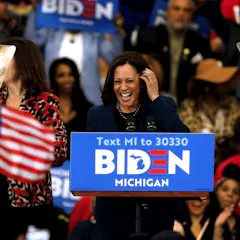
Many African American women have run for president of the US, despite the enormous barriers facing both Black and female candidates. Biden’s pick puts a Black woman much closer to the Oval Office.

Sexist slandering has been used not just to describe Grace Mugabe, but to denigrate any women who aspire to political positions.
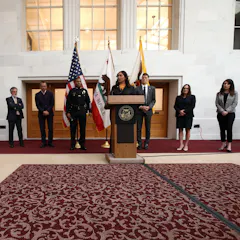
Four decades after Ellen Craig-Jones of Urbancrest, Ohio, became the US’s first Black woman mayor, seven of the nation’s largest cities are lead by Black women. And what a time to be in charge.
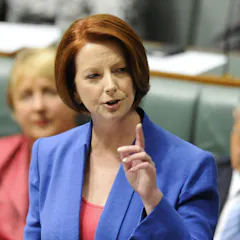
“What would Julia do?” Julia Gillard smashed a glass ceiling as Australia’s 27th prime minister. She also transformed the way we talk and think about women in politics.
In Mauritius there’s been little change in cultural norms and values to genuinely support gender egalitarianism.
The good news is that one party has more women than men now. The bad news is it’s not the party of government.
Scholars say a ‘critical mass’ of representation is necessary to overcome ‘token’ status. That’s exactly what we saw at the Democratic debate in Atlanta.
Top contributors
-

Professor of Politics, Queen Mary University of London
-
Professor of Political Science, University of Florida
-
Associate Senior Lecturer in Gender Studies, Lund University
-
Professor of Political Communication; Director CAJII, The University of Melbourne
-
Associate Professor of Politics, Occidental College
-
Professor of Political Science; Associate Dean of the College of Liberal Arts and Human Sciences, Virginia Tech
-
Associate Professor of Political Science and Director of the Center for Mexican American Studies, University of Texas at Arlington
-
Senior Lecturer/Associate Professor in Leadership, University of the West of Scotland
-
Assistant Professor of Political Science, University of Texas at Arlington
-
Emeritus Professor, School of Politics and International Relations, Australian National University
-
Professor of Political Communication, Leadership and Public Opinion, Universidad de Buenos Aires
-
Senior Advisor to the Dean of the Faculty of Arts + Labour Management Relations, Toronto Metropolitan University
-
Lecturer in Comparative Politics, Queen Mary University of London
-
Professor, Department of Political Science and International Affairs, Wake Forest University
-
Professor of Politics, Griffith University