
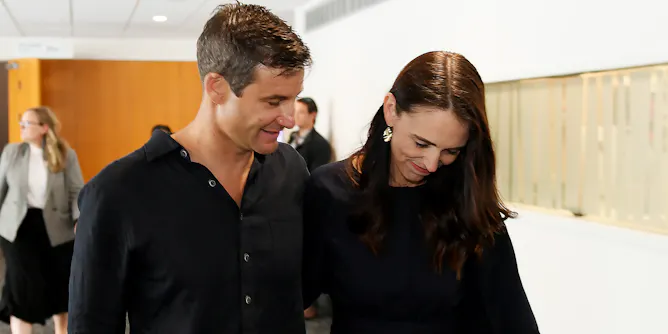
Female leaders tend to open people’s perceptions of what is possible for other women in politics – but the job is also still fraught with double standards and unique risks.
Articles on Women in politics
Displaying 41 - 60 of 129 articles
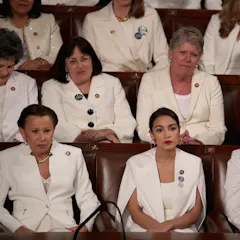
For decades, there were growing numbers of Democratic and Republican women in Congress, but the number of Republican women has stalled.
Why age and gender are such prominent mechanisms of exclusion in parliaments and governments.

It looks as though the House of Representatives will have at least 57 women, making 38% of the chamber female.
Labour’s deputy leader was forced to justify her own response to comments made about her.
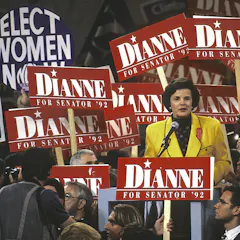
Concerns are growing about Dianne Feinstein’s ability to finish out her Senate term. That won’t dim the accomplishments of her extraordinary career, writes a scholar of San Francisco politics.

Extreme abuse directed at Jacinda Ardern is part of a wider problem of sexism and misogyny in politics. Research suggests it may be on the increase.

The country’s political landscape is muddied by sexist language that glorifies the belittling of women in leadership.
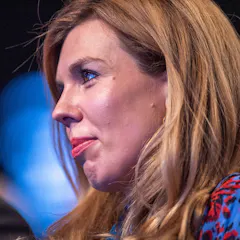
Whether Boris Johnson’s wife did something wrong can be debated – but placing her at the centre of the ‘partygate’ story is to let the Prime Minister off the hook.

As young children learn about politics and political figures, they internalize the idea that politics is a man’s world, which ultimately means political representation is heavily skewed toward men.
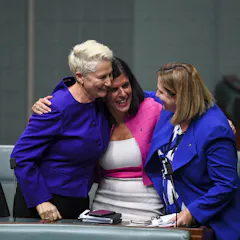
Parties strive for gender equality in preselecting candidates. But if they select more women than men in marginal seats, this isn’t true equality — it’s ticking a box.
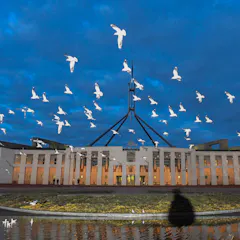
Research charting women’s political careers from the moment they are first interested shows they experience abuse at each stage — and this forces some to abandon their ambitions.

Men give more money than women to candidates in high-level statewide elections. Money can equal political influence, so that may lead candidates to be less interested in women’s issues once elected.
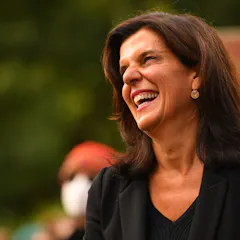
From Enid Lyons, to Julia Gillard and Kate Ellis, memoirs have become a critical way to highlight the ongoing problems faced by women in politics.

A new study finds egalitarian nations have had fewer COVID-19 deaths than individualistic ones like the US, a new study finds. But women’s leadership may have something to do with their success, too.
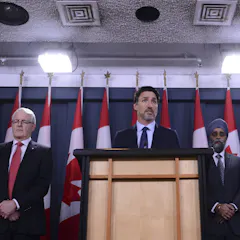
If we are to transform the culture of Canadian political institutions, we must take immediate, deliberate and intentional action by engaging more women, BIPOC and marginalized people.

In December 2020, the Senate became gender-equal, offering up the promise that women’s interests will be represented in the upper chamber.
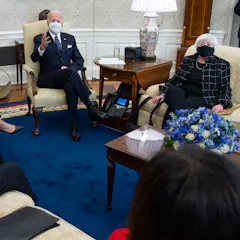
Research shows that when one country – particularly a powerful one – puts more women in power, other nations tend to follow suit.
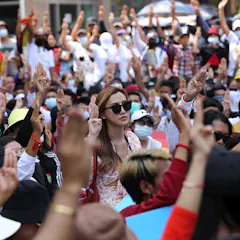
Despite having a woman leader, women are largely excluded from key positions of influence and leadership in Myanmar — a situation that helped the country’s military succeed in its recent coup.
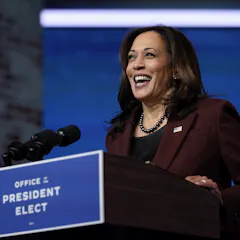
Gender parity leads to collaboration and a blending of visions, and paves the way for the adoption of more comprehensive and inclusive solutions than if they’re conceived from only one perspective.
Top contributors
-

Professor of Politics, Queen Mary University of London
-
Professor of Political Science, University of Florida
-
Associate Senior Lecturer in Gender Studies, Lund University
-
Professor of Political Communication; Director CAJII, The University of Melbourne
-
Associate Professor of Politics, Occidental College
-
Professor of Political Science; Associate Dean of the College of Liberal Arts and Human Sciences, Virginia Tech
-
Associate Professor of Political Science and Director of the Center for Mexican American Studies, University of Texas at Arlington
-
Senior Lecturer/Associate Professor in Leadership, University of the West of Scotland
-
Assistant Professor of Political Science, University of Texas at Arlington
-
Emeritus Professor, School of Politics and International Relations, Australian National University
-
Professor of Political Communication, Leadership and Public Opinion, Universidad de Buenos Aires
-
Senior Advisor to the Dean of the Faculty of Arts + Labour Management Relations, Toronto Metropolitan University
-
Lecturer in Comparative Politics, Queen Mary University of London
-
Professor, Department of Political Science and International Affairs, Wake Forest University
-
Professor of Politics, Griffith University