
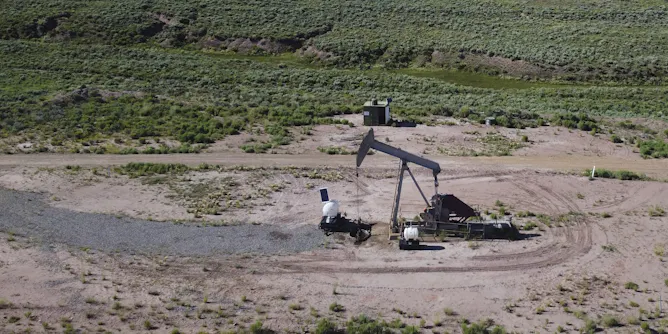
For lawyers, industry, advocates and the courts, environmental review after the Eagle County decision is not just a new ballgame. It is a new sport.
Articles on US Supreme Court
Displaying 161 - 180 of 958 articles

The Trump administration isn’t resorting to official censorship. Instead, it’s using less blatant – and more effective – ways to suppress dissent.
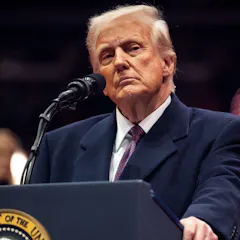
Trump’s ambition to extend the powers of the president has prompted national ‘no kings’ protests.

An education law professor unpacks what the Supreme Court’s 4-4 order does and doesn’t say.

The Supreme Court’s order has blocked this particular charter school, but similar issues could emerge in future cases.
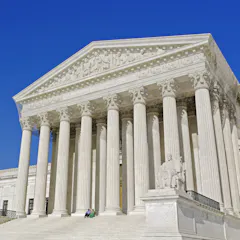
Arguments before the US Supreme Court on birthright citizenship – awarded to those born in the US – actually focused on the power of federal judges to impose nationwide injunctions.
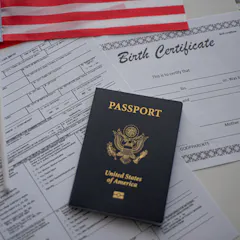
Three federal judges have struck down Trump’s executive order on birthright citizenship since he signed it in January 2025. Now, the Supreme Court will hear arguments in the case.
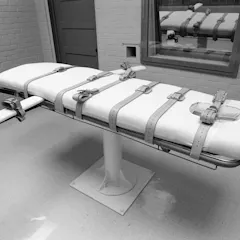
The Supreme Court has ruled that executing the innocent does not violate the Constitution, but some states allow people convicted of crimes to bring actual innocence claims.
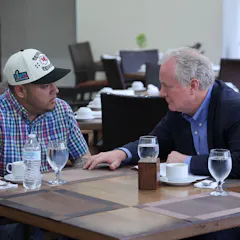
The Trump administration claims that judges’ orders in the cases of immigrants deported to a prison in El Salvador intrude on the president’s right to conduct foreign policy.
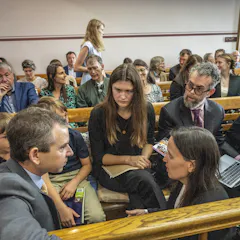
Dating back centuries, a legal principle declares certain natural resources must be protected by the government for present and future generations to benefit from.
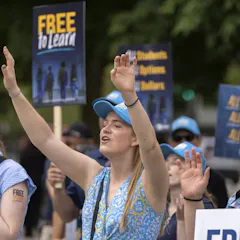
The Supreme Court heard oral arguments in Oklahoma Statewide Charter School Board v. Drummond on April 30, 2025.
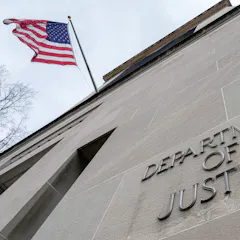
Some Department of Justice attorneys have recently been fired or have resigned, refusing to follow directives from the Trump administration that they felt violated the law, legal ethics or both.
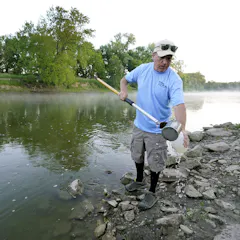
These aren’t abstract problems. They’re happening right now, in real communities, to real people.
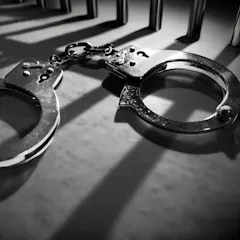
Habeas corpus – a Latin phrase meaning ‘you shall have the body’ – protects any person, whether citizen or not, from being illegally confined. It’s a crucial element of US law.
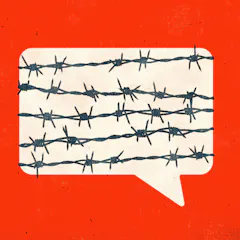
The Trump administration says it can deport noncitizen students that create foreign security threats. The Supreme Court might ultimately decide the limits of these residents’ free speech.
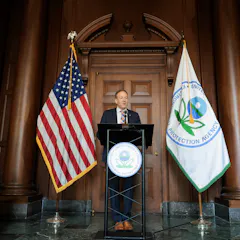
Some restrictions prevent loosening of existing environmental standards for clean air and water. Other rules can be changed – though only through a challenging and multistep democratic process.
‘It’s one big show of contempt for the court,’ says a former federal judge about the Trump administration’s handling of two cases related to its deportation of noncitizens to an El Salvador prison.
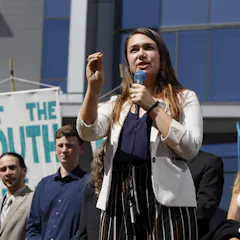
In the battle to slow climate change, local and state governments, as well as citizens, have taken to the courts. Their results have varied, but the cases keep coming.
Judge James Boasberg’s order stops short of holding any government officials in contempt, but leaves open the possibility for these sanctions.
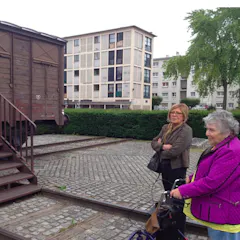
Even when companies do not face legal liability, public pressure can help force a reckoning with complicity in genocide, slavery and other atrocities.
Top contributors
-

Professor of American Civics, University of Tennessee
-
Joseph Panzer Chair in Education and Research Professor of Law, University of Dayton
-
William Nelson Cromwell Professor of Jurisprudence and Political Science, Amherst College
-
Professor of Legal Studies and Political Science, UMass Amherst
-
Professor of Law, University of Virginia
-
Associate Professor of Political Science, College of Charleston
-
Professor of Law, George Washington University
-
Associate Professor of American History and Politics, University of East Anglia
-
Associate Professor of Law, Quinnipiac University
-
Professor of Law and Adjunct Professor of Political Science, Wayne State University
-
Professor of Law and Director of the Center for Professional Ethics, Case Western Reserve University
-
Professor of Law Emeritus, Vermont Law & Graduate School
-
President, Dickinson College
-
Associate Professor of Philosophy and Law, Wayne State University; Institute for Humane Studies
-
Professor of Law, University of Richmond