
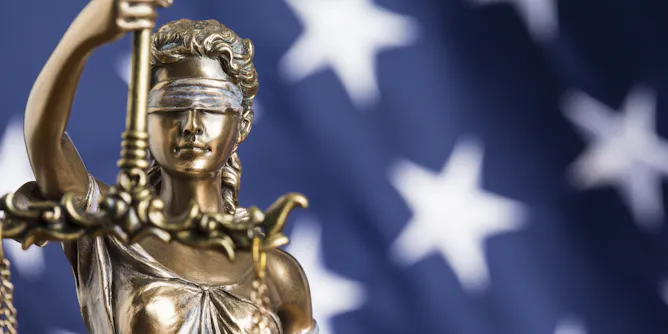
The meaning and application of due process has become a crucial issue in the US, most often with respect to the Trump administration’s migrant deportation efforts.
Articles on US Supreme Court
Displaying 141 - 160 of 958 articles
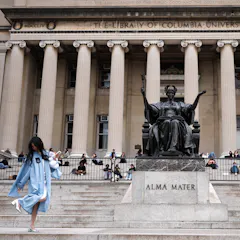
While Columbia University can afford to pay the government $200 million in order to unfreeze federal grants and contracts it was awarded, many other universities and colleges could not.

Hiding ICE attorneys’ names in immigration court proceedings violates a fundamental principle that has protected Americans for centuries: open courts.
The public typically finds out about the Supreme Court from the news media. And the way reporters have covered the court has recently changed – dramatically.
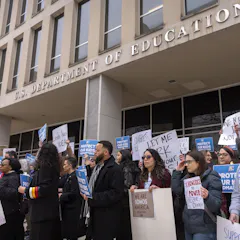
The justices overruled a lower court that had paused the Trump administration’s plan to fire over 1,300 workers.
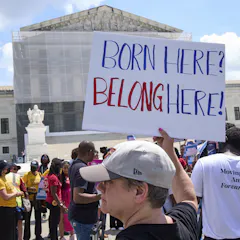
The Supreme Court can still invalidate the newest national injunction and allow the order to go into effect anywhere it is not currently barred from doing so. That would create administrative chaos, the authors write.
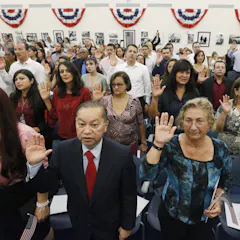
In 1967, the Supreme Court said the government usually cannot take away citizenship without a person’s consent.

Historically, the aggressive use of polygraphs in government is associated with weakening morale and diminished information flow.

What is the purpose of US District Courts
and Court of Appeals, and why do some courts have multiple judges and others have only one?
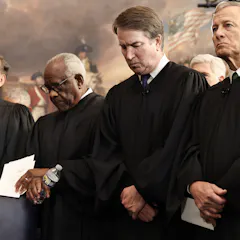
A recent judgment by the US Supreme Court calls into question the separation of powers established by the constitution.
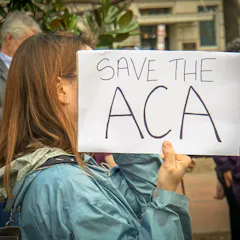
The justices ruled that a key preventive health task force has authority because it is appointed by the Health and Human Services secretary. Some experts worry that RFK Jr. could politicize it.

SCOTUS decision in Mahmoud v. Taylor, one of its blockbuster cases from 2025, largely rested on two parental rights cases from 1925 and 1972.
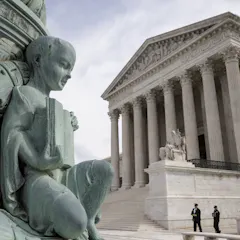
Kids face risks online, but whether and how the law can protect them is a thorny issue. The Supreme Court weighed in to say states can try with age-gating – essentially requiring ID at the online door.

The Supreme Court just made it harder for judges to block presidential policies nationwide, but lawmakers hold the key to changing that.
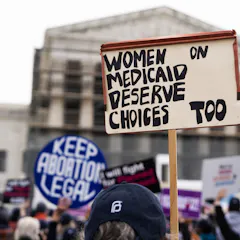
The ruling limits the rights of Medicaid patients to choose their own health care provider. It could have consequences far beyond South Carolina.

Increasing limits on abortion are boosting demand for contraception. But access to family planning is shrinking in many states, and access to highly effective forms of contraception is at risk.
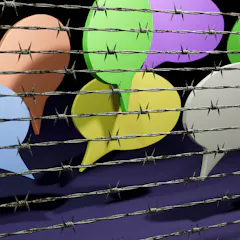
A unanimous case decided by the US Supreme Court in 2024 could protect the First Amendment rights to free expression of many of the organizations targeted by the Trump administration.
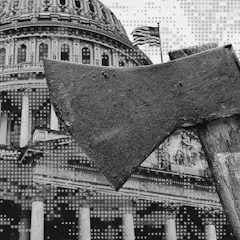
Can the president fire leaders of more than 50 independent agencies overseen by Congress because he wants to? The Supreme Court may say yes, upending decades of constitutional law.
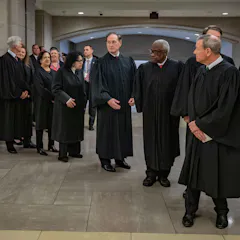
Public trust in the US legal system and the rule of law could be undermined further by recent events.

Mahmoud v. Taylor stems from some families’ efforts to excuse their children from lessons that use storybooks with LGBTQ+ characters.
Top contributors
-

Professor of American Civics, University of Tennessee
-
Joseph Panzer Chair in Education and Research Professor of Law, University of Dayton
-
William Nelson Cromwell Professor of Jurisprudence and Political Science, Amherst College
-
Professor of Legal Studies and Political Science, UMass Amherst
-
Professor of Law, University of Virginia
-
Associate Professor of Political Science, College of Charleston
-
Professor of Law, George Washington University
-
Associate Professor of American History and Politics, University of East Anglia
-
Associate Professor of Law, Quinnipiac University
-
Professor of Law and Adjunct Professor of Political Science, Wayne State University
-
Professor of Law and Director of the Center for Professional Ethics, Case Western Reserve University
-
Professor of Law Emeritus, Vermont Law & Graduate School
-
President, Dickinson College
-
Associate Professor of Philosophy and Law, Wayne State University; Institute for Humane Studies
-
Professor of Law, University of Richmond