
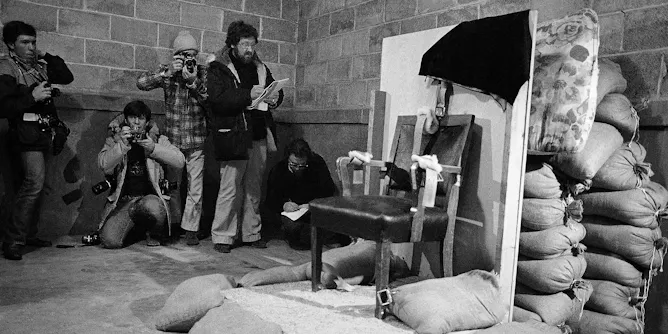
In early December, Americans will consider whether they can stomach an execution by firing squad and whether the US should be carrying out executions at all.
Articles on US Supreme Court
Displaying 1 - 20 of 958 articles
If Republicans attempt to confirm a nominee, they will trigger a historic fight and hand Democrats the justification needed to reshape the high court.
Donald Trump’s presidency has seen unprecedented executive power, meaning Democratic gains could have limited impact on oil prices and tariffs.
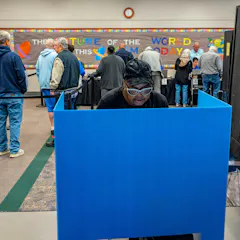
Both Democrat and Republican states are changing the boundaries of voting districts, often along racial llines.
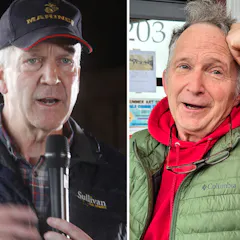
A crucial US Senate election in Alaska is the latest target among many Trump administration efforts this year to assert unconstitutional control over federal election administration by states.
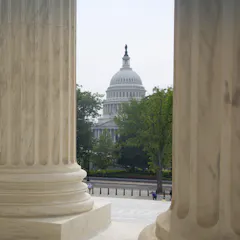
If Republicans attempt to confirm a nominee, they will trigger a historic fight and hand Democrats the justification needed to reshape the high court.

St. Mary Catholic Parish v. Roy is one of many cases in which religious schools have challenged the wall between church and state.
The Supreme Court’s decision to hear two assault weapons cases caps a multi-decade dispute over restricting assault weapons that extends far beyond legal arguments.
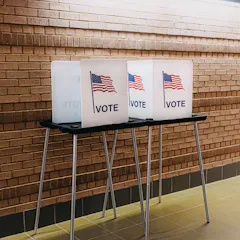
Ohio, North Carolina and Michigan have open seats on their state supreme court, and these hotly contested races will influence how those courts rule in several high-stakes cases.
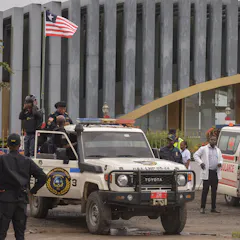
In the 1800s, West Africa became a focal point for efforts to remove Black people from America. The arrival of free people later gave the country its name.
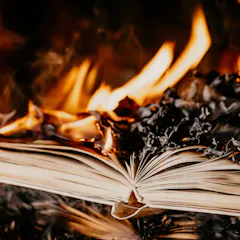
The battle over the novel offers a window into America’s long-running fight over what students should be allowed to read.
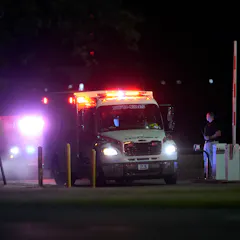
The constitutional prohibition of cruel and unusual punishment has shaped legal discourse around failed executions, but courts have not stopped states from attempting to execute the same person again.
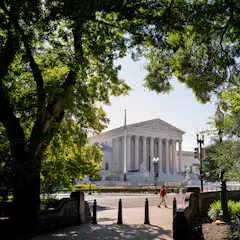
When the Supreme Court hears arguments in St. Mary Catholic Parish v. Roy, Colorado will defend antidiscrimination laws for the fourth time in 10 years.
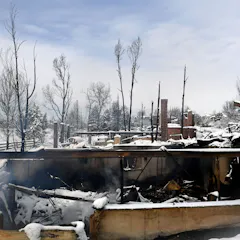
If fossil fuel companies misled the public about the dangers of their products, should they be required to pay for damages from climate-related disasters?
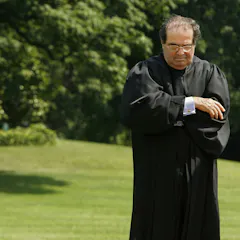
A majority of Supreme Court justices follow originalism, the mode of constitutional interpretation championed by late Justice Antonin Scalia. A former Scalia law clerk explains what originalism means.
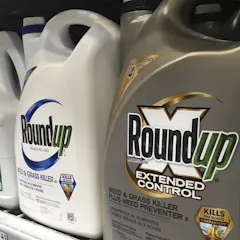
The U.S. Supreme Court’s decision on glyphosate relieves the sellers of hundreds of pesticides from obligations to warn customers about potential dangers.

The US legal system often fails to provide counsel for millions of Americans in civil cases. Generic and law-specific AI models can help address this justice gap of unmet legal needs.

A midterm election is coming. In the face of wavering voter trust – some of it driven by forces outside their control – what can election officials actually do to keep elections credible?
An election law scholar explains the president’s effort to dramatically limit mail voting ahead of the midterm elections – and why the court decided to block it.
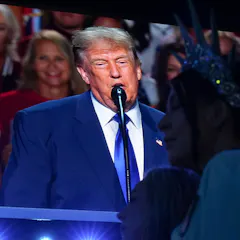
Bribery involves offering money to a particular person, but Trump did not make his $5,000 offer to any single voter or set of voters.
Top contributors
-

Professor of American Civics, University of Tennessee
-
Joseph Panzer Chair in Education and Research Professor of Law, University of Dayton
-
William Nelson Cromwell Professor of Jurisprudence and Political Science, Amherst College
-
Professor of Legal Studies and Political Science, UMass Amherst
-
Professor of Law, University of Virginia
-
Associate Professor of Political Science, College of Charleston
-
Professor of Law, George Washington University
-
Associate Professor of American History and Politics, University of East Anglia
-
Associate Professor of Law, Quinnipiac University
-
Professor of Law and Adjunct Professor of Political Science, Wayne State University
-
Professor of Law and Director of the Center for Professional Ethics, Case Western Reserve University
-
Professor of Law Emeritus, Vermont Law & Graduate School
-
President, Dickinson College
-
Associate Professor of Philosophy and Law, Wayne State University; Institute for Humane Studies
-
Professor of Law, University of Richmond