
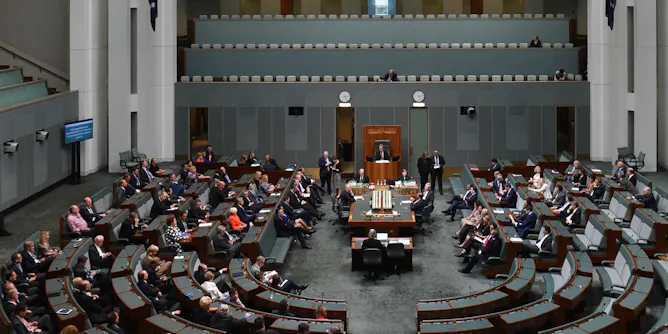
The number of members of the House of Representatives is variable. It is a result of a formula given in the Constitution.
Articles on US Senate
Displaying 361 - 380 of 425 articles
The High Court regarded none of Bob Day’s arguments in his challenge to Senate voting reforms as having any merit.

7-Eleven’s decision to take charge of the compensation process for underpaid workers highlights the problems with voluntary commitments and underlines the need for increased legal accountability.
What is a double-dissolution election? How does it differ from an ordinary election? And why the rush after the budget?
To what extent would the ABCC and Registered Organisations bills actually deal with union corruption or criminality if passed?
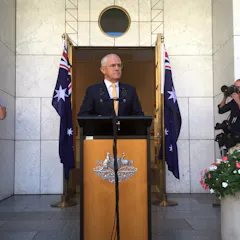
After many weeks of speculation, the government has laid down the challenge for the Senate and smoothed the path for a double-dissolution election.
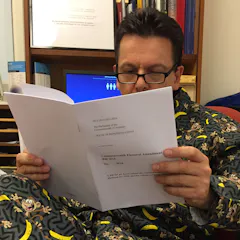
After a marathon debate the Senate has passed the government’s comprehensive rewriting of the upper house voting system, designed to limit the prospect of “micro” players being elected.
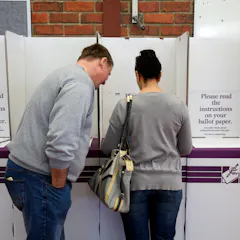
What do Australians need to know when they go to vote for their senators in this year’s federal election?
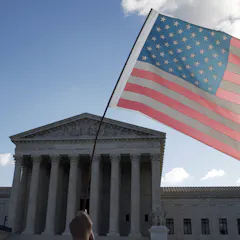
You’re not imagining it: the Supreme Court has gotten more polarized politically than in years past, thanks to fewer moderates in the Senate.
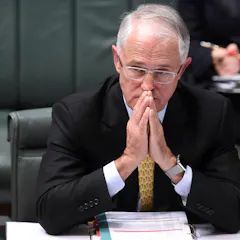
With internal party ructions and an unco-operative Senate to manage, Malcolm Turnbull needs a convincing election win to be able to govern as he wants to.
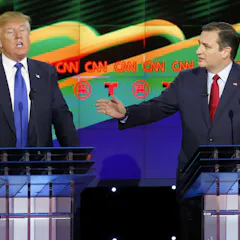
The leading GOP candidates all claim one of their top priorities will be to repeal Obamacare. An architect of the original law outlines the thorny – but plausible – path to repeal.
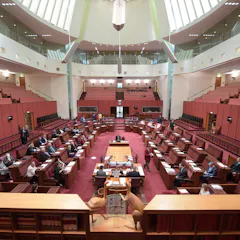
A suggested constitutional challenge to the Senate reforms through the High Court is unlikely to succeed.
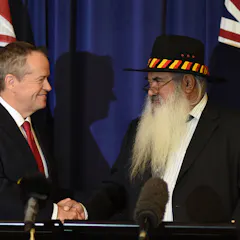
Pat Dodson, the father of reconciliation, is set to become a Labor senator for Western Australia following Joe Bullock’s surprise announcement that he is quitting.
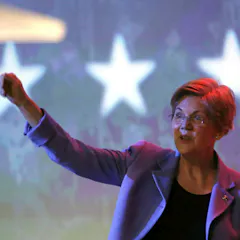
Neither Democratic candidate for president has gotten the endorsement of Massachusetts’ junior senator. Here’s a look at Elizabeth Warren’s long game playbook.
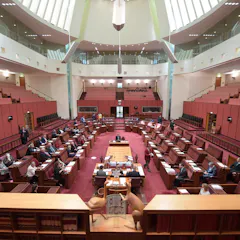
A former official of the Australian Electoral Commission, Michael Maley, has attacked the government’s planned reform of Senate voting as internally inconsistent.
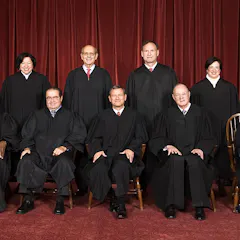
The last time a president nominated a Supreme Court justice during his last year in office was in the tumultuous year of 1968. It didn’t go well.
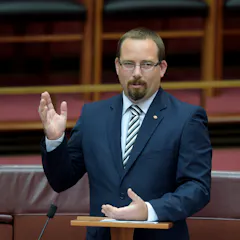
Australia’s political system would be better off with more ordinary people and fewer career party politicians in the Senate. It would thus be more representative of ordinary Australians, not less.
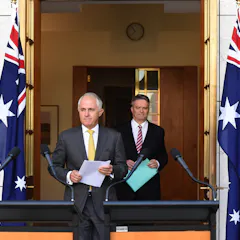
What are the government’s proposed changes to the way the Senate is elected? And how will they affect us as voters?
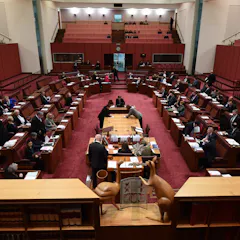
Those who do understand the Senate voting system have the potential to wield some influence both in its conduct and in debates about how it might be reformed.
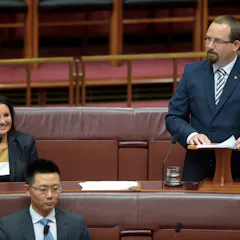
While the government boasts about engaging the community on the tax issue, it has avoided public debate as it seeks to muster the numbers for voting changes that would have sweeping implications for the…
Top contributors
-

Professorial Fellow, University of Canberra
-
Associate Professor of Political Science, Boise State University
-
Election Analyst (Psephologist) at The Conversation; and Honorary Associate, School of Mathematics and Statistics, The University of Melbourne
-
Senior Lecturer, Department of Languages and Linguistics, La Trobe University
-
Senior Lecturer, School of Political and Social Inquiry, Monash University
-
Associate Professor of Political Science, Westminster College
-
Associate Professor in Law and Public Policy, University of Oxford
-
Professor of Political Science, University of Florida
-
Professor of law and ethics, Georgia State University
-
Associate Professor of Political Science, Rochester Institute of Technology; Institute for Humane Studies
-
Distinguished Fellow in Law and Government, Dickinson Law, Penn State
-
Professor in The Division of Global Affairs and The Department of Political Science, Rutgers University - Newark
-
Professor of Political Science, Drake University
-
Professor of Politics, University of California, Santa Cruz
-
Associate Professor in Politics and International Relations, School of Social Sciences, Monash University