
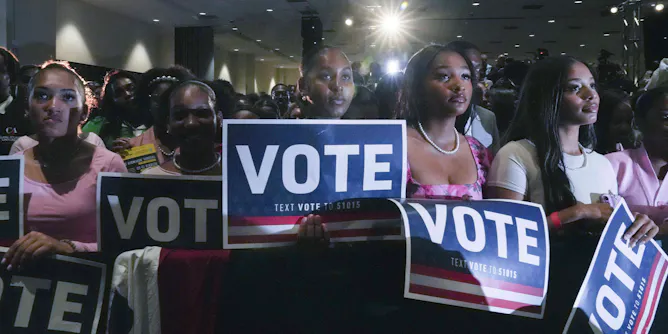
A record number of women and women of color was just elected to serve in state and national offices. When young people see politicians who look like them, it shifts who they imagine can lead.
Articles on US Senate
Displaying 1 - 20 of 425 articles

Survey data suggests that Republicans’ connections with an unpopular AI industry contributed to their poor showing at the polls.
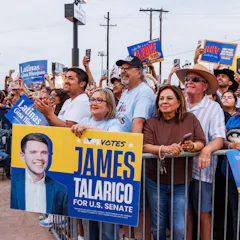
Midterm election results do not necessarily mean voters have changed their party loyalties. Instead, it may reflect an electorate increasingly willing to hold both parties accountable.

Republicans lost across the board in the midterms – whether they had super PAC support or not. Does that mean that super PAC spending doesn’t matter as much as we’ve been told?
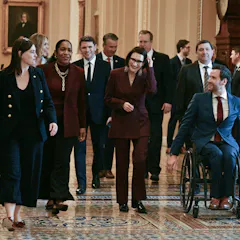
The future of the newly ascendant Democratic party has been projected onto who gets elected to lead the party in Congress. But the party’s direction and agenda is more complex than that.
If Republicans attempt to confirm a nominee, they will trigger a historic fight and hand Democrats the justification needed to reshape the high court.
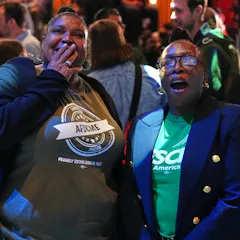
About 86% of Black Michiganders voted for Abdul El-Sayed for US Senate, according to preliminary data.
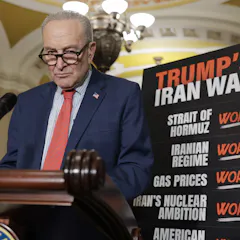
Democrats now are in a much stronger position to force Trump to end the Iran war. But playing their strongest card could backfire.
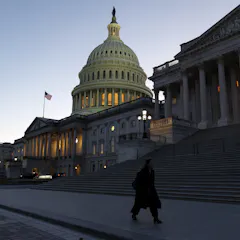
After two years of almost unbridled executive power under the Trump administration, the Democrats now control both houses of Congress.

Election Day turned into a massive rebuke of President Donald Trump: a blue wave not seen in 20 years that was built on transforming the economy and rising prices into a central line of attack.
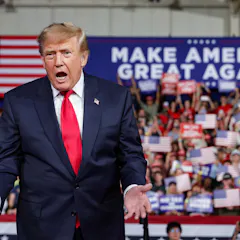
Donald Trump’s presidency has seen unprecedented executive power, meaning Democratic gains could have limited impact on oil prices and tariffs.

A crucial US Senate election in Alaska is the latest target among many Trump administration efforts this year to assert unconstitutional control over federal election administration by states.
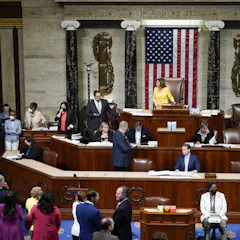
Incumbents can still reap electoral rewards when federal money reaches their districts, even if they opposed the bill that provided it.

The line between political favoritism and effective representation is remarkably thin. Why is access to public money so dependent on the political influence of individual legislators?
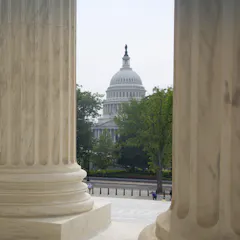
If Republicans attempt to confirm a nominee, they will trigger a historic fight and hand Democrats the justification needed to reshape the high court.
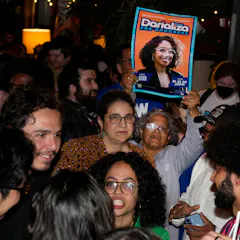
What role might DSA-affiliated candidates play if they win election to Congress in the midterms and the Democrats gain a majority in the House of Representatives?

Though Graham’s appointment may seem unusual, political inheritance has never been fully absent from American democracy.
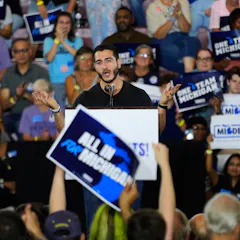
Progressive Abdul El-Sayed will face Republican nominee Mike Rogers this November.
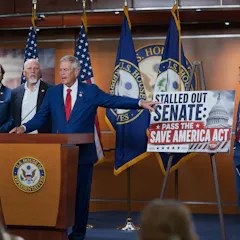
Republicans hold both chambers and publicly back the president’s signature bill that would curtail mail-in voting and enforce strict voter ID laws. Here, a public policy and politics scholar explains why it still isn’t law.
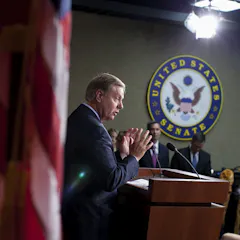
Sen. Graham repeatedly moved in the direction South Carolina and Republican politics were headed rather than where they had been.
Top contributors
-

Professorial Fellow, University of Canberra
-
Associate Professor of Political Science, Boise State University
-
Election Analyst (Psephologist) at The Conversation; and Honorary Associate, School of Mathematics and Statistics, The University of Melbourne
-
Senior Lecturer, Department of Languages and Linguistics, La Trobe University
-
Senior Lecturer, School of Political and Social Inquiry, Monash University
-
Associate Professor of Political Science, Westminster College
-
Associate Professor in Law and Public Policy, University of Oxford
-
Professor of Political Science, University of Florida
-
Professor of law and ethics, Georgia State University
-
Associate Professor of Political Science, Rochester Institute of Technology; Institute for Humane Studies
-
Distinguished Fellow in Law and Government, Dickinson Law, Penn State
-
Professor in The Division of Global Affairs and The Department of Political Science, Rutgers University - Newark
-
Professor of Political Science, Drake University
-
Professor of Politics, University of California, Santa Cruz
-
Associate Professor in Politics and International Relations, School of Social Sciences, Monash University