
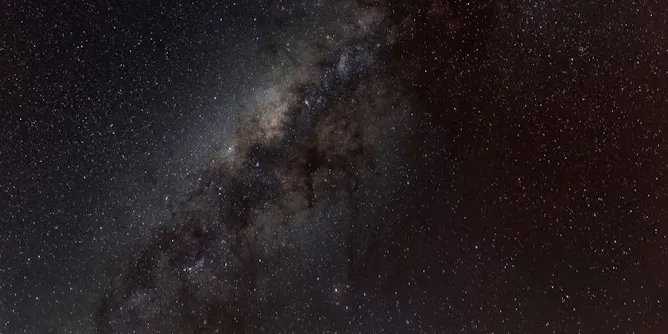
An astronomer explains why space looks so dark despite containing 200 billion trillion stars.
Articles on Universe
Displaying 61 - 80 of 189 articles
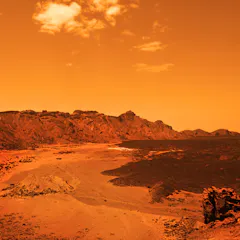
Planetary analogues are sites on Earth that are so extreme that they replicate those of celestial bodies in our solar system.

An astronomer and ‘black hole historian’ explains how the parts of the universe black holes grow in might influence how quickly they become bright, supermassive objects.
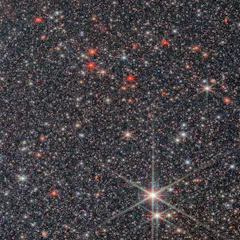
A new hypothesis suggests that the universe may be twice as old as we had believed. Observations from the James Webb Space Telescope provide new information on the rate of the universe’s expansion.
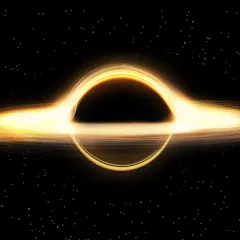
Black holes are known for pulling in all kinds of stuff – including light. Here’s how that actually works.
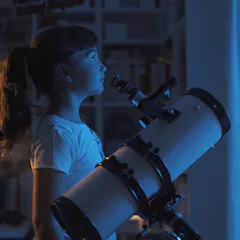
To find out what is beyond space, a good place to start would be to figure out where space – our universe – ends.
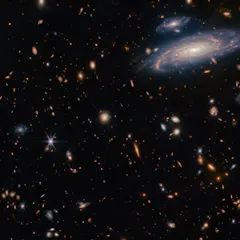
The darkness of the night sky seems so obvious as to need no explanation – yet it has intrigued and baffled scientists for centuries.
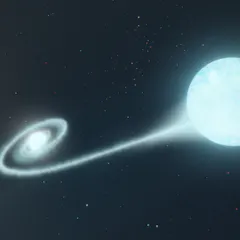
Our Sun will likely go out quietly – but not all such stars do. A new radio detection of a supernova can help us better understand these cosmic cataclysms.
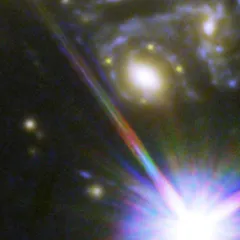
Different measures of the rate of the Universe’s expansion give different results – and a new measurement technique only makes matters more complicated.
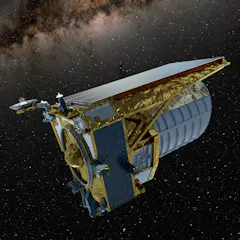
A spacecraft set to launch this year will throw a spotlight on the mysterious ‘dark side’ of the universe.
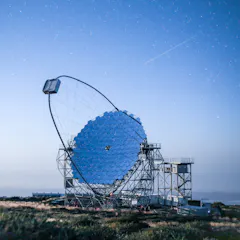
The most energetic events in the universe shower us with unbelievably energetic particles of light. Capturing these can help us to solve some enticing cosmic mysteries.
🎧 Listen to the trailer for Great Mysteries of Physics, a new podcast.
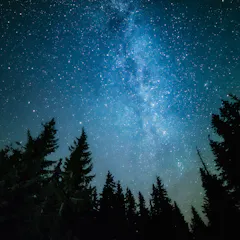
People travel hundreds or thousands of miles and spend a fortune to see the night sky in all its splendor. But we are literally blocking out the cosmic beauty above our homes.
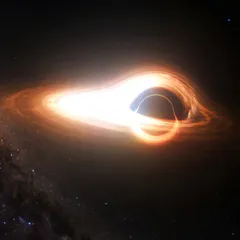
While we can’t see inside a black hole, we can spot the intensely bright glowing disc that surrounds one. Now, we might better understand why these discs appear to ‘twinkle’.
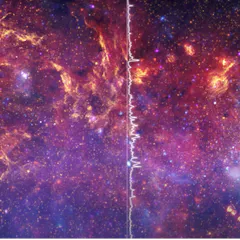
Since ancient times, the stars have been set to music. Modern technology now enables scientists to convert images of space into real compositions.
Nothing is harder to find than you might think.
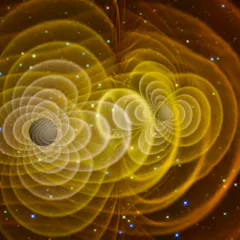
To understand this question, we need to travel back in time.

A year on since the historic launch of the most powerful infrared telescope in human history, we admire and explore some of the best images it delivered in 2022.

It has been one year since the launch of the James Webb Space Telescope and six months since the first pictures were released. Astronomers are already learning unexpected things about the early universe.
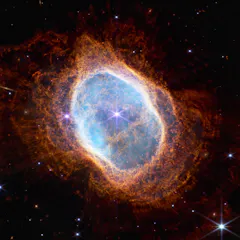
Astronomers have unpacked the mystery of how one star’s death created the nebula NGC3132 – never before seen in such detail.
Top contributors
-

Professor of Astrophysics, University of Sydney
-
Associate Professor in Astronomy, Monash University
-
Associate Dean of Innovation and Engagement, Swinburne University of Technology
-
ARC Laureate Fellow & Distinguished Professor, Centre for Astrophysics & Supercomputing, Swinburne University of Technology
-
Emeritus Professor of Cosmology and Astrophysics, Institute of Astronomy, University of Cambridge
-
Senior Curator (Astronomy), Museums Victoria Research Institute; The University of Melbourne
-
Senior Lecturer in Physics, Western Sydney University
-
Professor, The University of Queensland
-
Pro Vice-Chancellor Flagship Initiatives, Swinburne University of Technology
-
Reader in Astrophysics, UCL
-
Professor (Astrophysics), University of Southern Queensland
-
Cosmologist, University of Tasmania
-
Professor, Macquarie University
-
John Curtin Distinguished Professor (Radio Astronomy), Curtin University
-
Professor of Astronomy & Astrophysics, University of California, Santa Cruz