
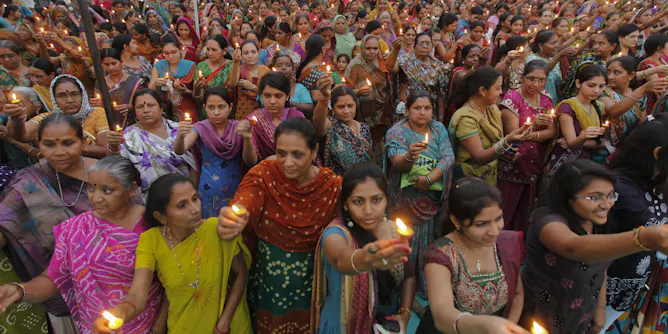
Racial violence has its parallels in other forms of violence in India. The prejudice runs across multiple channels from caste, region, religion to gender.
Articles on Tanzania
Displaying 321 - 340 of 351 articles

More and more Africans are becoming citizen scientists – and the benefits are huge both for them as individuals and for science on the continent.
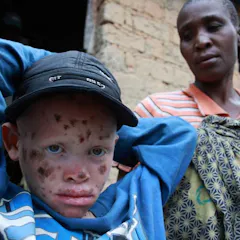
Children with albinism are teased and physically bullied by classmates who don’t understand their condition. They withdraw from learning – and many ultimately leave school early.

A new study shows an amazingly symbiotic relationship between the community and police in Nigeria: 70% of survey respondents claim that collaboration has brought safety to their communities.

Countries in the East African Community should take time to reflect afresh on what an economic partnership with the EU should look like.
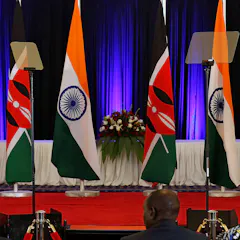
Narendra Modi’s first trip to Africa has widely been heralded as a success, but his brand of diplomacy has left the most pressing issues for the continent unaddressed.
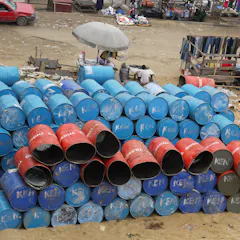
It is important to nurture local companies and increase domestic participation in Africa’s emerging oil economies.

Vast reserves of crucial helium have been found in Tanzania. Here’s how the scientists did it.
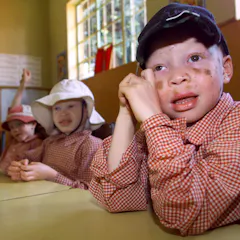
In Tanzania, where albinism is common, there’s plenty that ordinary teachers can do to support students with albinism – much of it quite simple.
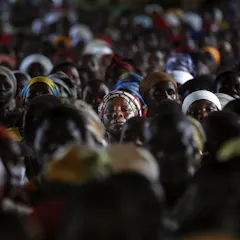
East Africa is dealing with drought, famine, political instability – and hundreds of thousands of people in search of safety.
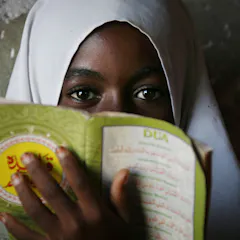
When girls know that they have access to hygienic, safe sanitary products they are less likely to skip school while menstruating.
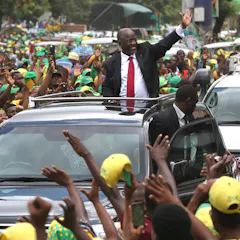
Good governance and accountability are high on the agenda of Tanzanian President John Pombe Magufuli.

New initiative with old handsets halves rates of the disease in southern Tanzania – and is being applied to other conditions, too.

Child labour in Tanzania is driven largely by poverty. More must be done to keep children in school so their skills aren’t lost to the economy in the long run.
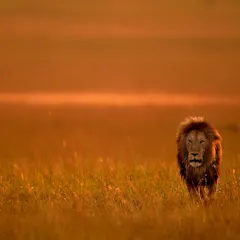
Forget fences and international agreements. This five-year study in the Serengeti has found the way forward.
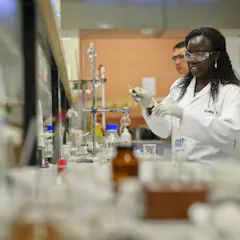
Africa has deep-rooted problems: poverty, disease, corruption and war. Could these be solved through mathematical science?
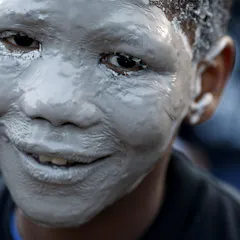
Human population groups worldwide are highly homogeneous genetically. They are in fact 99.5% similar and their anatomical features vary in an uncorrelated fashion over the landscape.
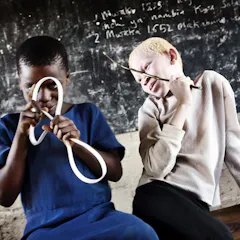
Children living with albinism are very vulnerable to attack, kidnapping, mutilation and murder. In Tanzania, fear is keeping many children away from school and costing them an education.
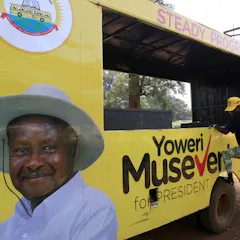
Regular changes of government through free and fair elections that reflect the wishes of the majority of citizens are a critical component of democratisation. But how significant are polls in Africa?
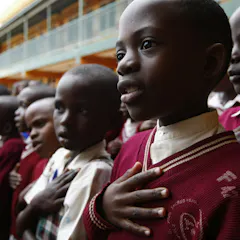
More and more children are attending primary school in Kenya, Uganda and Tanzania. But there are worryingly large gaps in their learning.
Top contributors
-

Researcher, United States International University
-
Lecturer, Tumaini University Makumira
-
Assistant professor, University of Sussex
-
Post-Doctoral Research Fellow, SARChI in Higher Education and Human Development Research Group, University of the Free State
-
PhD Candidate, Department of Political Science and Public Administration, University of Nairobi
-
Senior Lecturer in Politics and International Relations, University of East London
-
Professor of Democracy, University of Birmingham
-
Research Associate Plant Systematics, Bayreuth University
-
Associate Professor of International Studies, University of Nottingham
-
Lecturer in Wildlife Conservation
-
Professor of French and Critical Disability Studies, Lancaster University
-
Asso. Professor in Anthropology, University College London, UCL
-
Professor of Disease Ecology and Public Health, University of Glasgow
-
Senior Lecturer in Social Work, Australian Catholic University
-
Researcher, SAMRC/Centre for Health Economics and Decision Science- PRICELESS SA, University of the Witwatersrand