
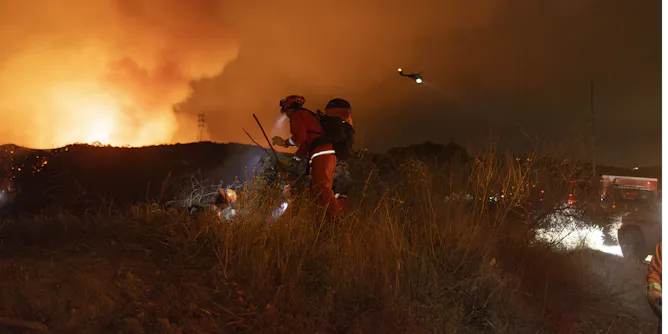
Humans have become a geologic force by cooking the planet – using fire on a scale that is altering land, water, air and ecosystems.
Articles on Southern California
Displaying all articles
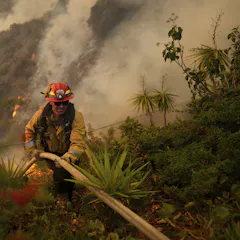
It’s vital to understand how climate drivers played out before and during the LA wildfire emergency – because many Australian cities face the same climate risks.
Fires can make drinking water, and the water pipes and tanks themselves, unsafe. A researcher who has worked with communities after several wildfires explains why, and what to do.
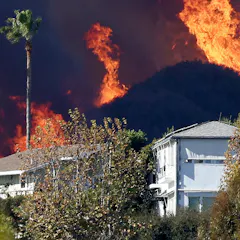
The state is seeing a sharp water divide this year, with lots of rain in the north while the south has stayed dry. A hydrologist explains what’s happening.
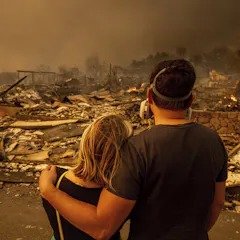
Where people live today also makes a difference when it comes to fire risk.

For decades, big-box retailers have evaded federal regulation of the pollution their operations generate. But a new air emission rule in Southern California could become a model for state controls.
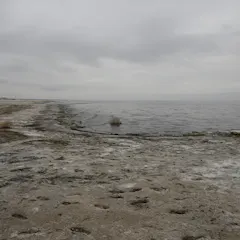
Fifty years ago, the Salton Sea was a draw for boaters and fishermen; today it’s an ecological time bomb. Two water experts who served on a state review panel describe its proposed rescue plan.

The state’s Democratic governor held off an attempt to oust him by some margin. His victory provides a pathway for the national party, and a reminder of the mobilizing power of the state.
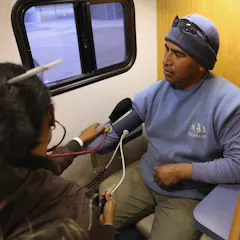
In the wake of COVID-19, researchers can become trusted figures of authority who can re-appropriate their networks, skills and knowledge to better the lives of vulnerable populations.
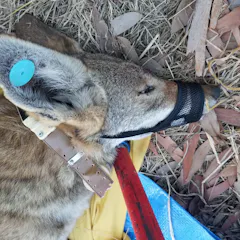
Biologists capture and collar coyotes in urban Los Angeles in order to study the effectiveness of ‘hazing’ as a wildlife management tool.
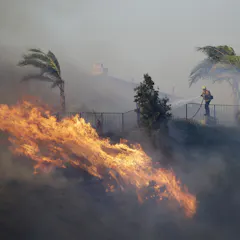
Two fire researchers argue that recent fires in Northern and Southern California show why health and social equity need to be part of fire preparedness.
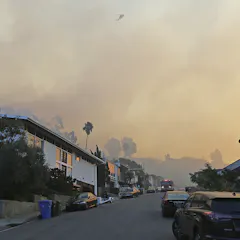
With wildfires continuing to rage across southern California, a fire researcher says lowering fire risk means reconsidering where and how we build our communities.
Top contributors
-

Wildfire Specialist, University of California Cooperative Extension; Adjunct Professor at the Bren School, University of California at Santa Barbara, University of California, Santa Barbara
-
Professor of Environmental Studies, University of California, Santa Cruz
-
Assistant Professor of History, University of Northern Iowa
-
Executive Director, Pat Brown Institute for Public Affairs, California State University, Los Angeles
-
Regents Professor Emeritus and Morris K. Udall Professor of Law & Public Policy Emeritus, University of Arizona
-
Assistant Professor, Department of Social Medicine Population and Public Health, University of California, Riverside
-
Scientist and Director of Research Communication for the Arizona Water Innovation Initiative, Arizona State University
-
Human-Wildlife Interactions Advisor, University of California, Division of Agriculture and Natural Resources
-
Research Ecologist, USGS; Adjunct Professor, University of California, Los Angeles
-
Senior Research Hydrologist, University of California, San Diego
-
Professor of Civil, Environmental and Ecological Engineering, Purdue University
-
Adjunct Professor of Environmental Geography, CQUniversity Australia
-
Emeritus Professor of Life Sciences, Arizona State University