
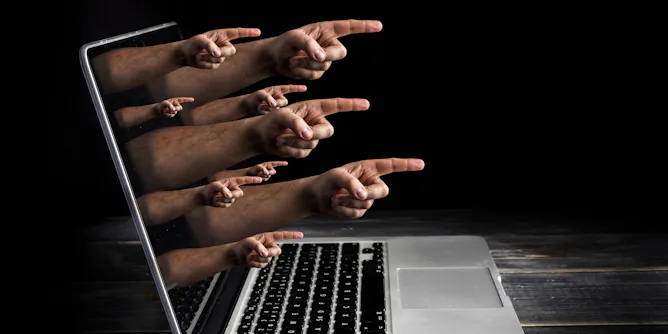
Hysterical narratives promoting fear among some Americans may be more effective at sparking violence than hate speech is. Social media companies are expected to guard against both.
Articles on Social media and democracy
Displaying 41 - 60 of 77 articles

Scholars and skeptics warned about Facebook long before its founder was even born. Technology companies keep asking for more and more data and proving they can’t be trusted.
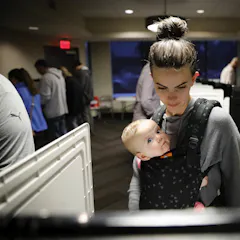
Protecting democracy requires more than just technical solutions. It includes education, critical thinking and members of society working together to agree on problems and find solutions.

Amazon, Facebook and Google have lofty goals for their effects on global society. But people around the world are still waiting for the positive results. Here’s what the tech giants could do.
Measuring Twitter bots’ effects on the opinions of real people can yield surprising results about what makes them influential.

Twitter and Facebook have said they will take steps to fight hate and abuse on their sites, but they have not yet adequately addressed the problem.

The U.S. is not the only country worried about foreign influence over its elections. Australia is concerned too, and taking steps Americans could learn from.

Almost every online deception, fraud and scam – even propaganda and misinformation campaigns – begins with a fake social media profile. How do fakers get real people to agree to be friends?

A 90-minute presentation in 1968 showed off the earliest desktop computer system. In the process it introduced the idea that technology could make individuals better – if government funded research.

Russia is trying to create social tension in the US to boost its own strength on the world stage. That includes targeting society itself.
Effective political campaigns use three main online strategies; research identifies which of them is most effective.
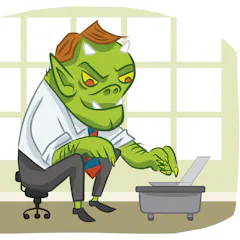
Some behaviors might help tell propaganda-spewing trolls apart from regular internet users, but the main protection is for people to think more critically about online information.
Google News does not differentiate search results according to users’ politics – but it does favor mainstream news sites, which are seen as leaning left, and doesn’t clearly disclose how its algorithms work.
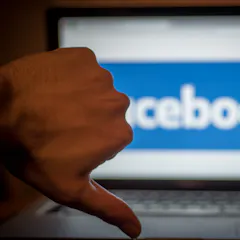
Facebook users may be flagging news as fake just because they disagree with it.
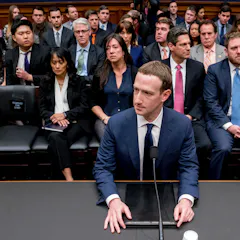
The strengths of social media are also its weaknesses. Facebook must acknowledge that it has transformed from a startup company into a powerful social force.
The social network is stopping researchers accessing its data – with significant consequences.

While they may talk about ‘free speech,’ businesses make decisions about their content based on a very different set of principles.
Three trends suggest people in less developed nations – who are coming online in greater numbers – use and trust the internet very differently those in more developed economies.
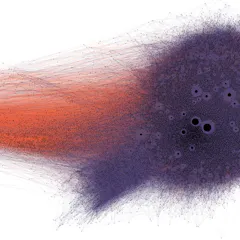
Information on social media can be misleading because of biases in three places – the brain, society and algorithms. Scholars are developing ways to identify and display the effects of these biases.

A snap poll intended to boost the Turkish president’s power has stirred up online opposition to his increasing authoritarianism.
Top contributors
-

Dean of Global Business, The Fletcher School, Tufts University
-
Associate Professor of Communications (Social Media), Syracuse University
-
Professor of Informatics and Computer Science, Indiana University
-
Professor of Business Law and Ethics, Indiana University
-
Associate Professor of Communication, Wayne State University
-
Associate Professor of Communication and Media Studies, Pace University
-
Professor of Public Administration and Policy, American University School of Public Affairs
-
Professor of Communication Studies, American University School of Communication
-
Professor of Media Studies, Queensland University of Technology
-
Professor of Information Systems, Michigan State University
-
Postdoctoral Researcher, Max Planck Institute of Geoanthropology
-
Associate professor, Edinburgh Napier University
-
Professor of Journalism, Goldsmiths, University of London
-
Director of Research, Academic Development and Innovation at the Center on Terrorism, Extremism and Counterterrorism, Middlebury College
-
Associate Professor of Operations Management, MIT Sloan School of Management