

In 1999, ahead of World Trade Organisation protests, a group of Australian activists created the first open internet publishing platform. This technology is the basis of the internet we know today.
Articles on Social media and democracy
Displaying 21 - 40 of 77 articles
Members of the research team that wrote the software that unmasked thousands of Twitter bots explain the next phase of their work: getting the public involved in the fight against disinformation.
The Russians won’t be alone in spreading disinformation in 2020. Their most likely imitator will be Iran. Also, Instagram could get even more infected with intentional misinformation than it has been.
There’s no way an independent assessor will be able to actually monitor how Facebook might violate or abuse users’ privacy in key ways.

Facebook serves as a gatekeeper of the information diets of more than 200 million Americans and 2 billion users worldwide.

Advocates and opponents of breaking up Facebook, Google and other technology giants are falling prey to some serious misconceptions.

People know about Facebook’s problems, but assume they are largely immune – even while they imagine that everyone else is very susceptible to influence.

Rather than revealing an advertiser targeted you by your phone number or email address, Facebook may tell you it showed you a particular ad because you like Facebook. That’s not much help.
The Mueller report reveals that some U.S. citizens helped Russian government agents organize real-life events, aiding Russia’s propaganda campaign. Don’t be like them.

India’s parliamentary elections, now underway, will show how social media is affecting Indian society and government.

Even governments in democracies with strong traditions of rule of law find themselves tempted to abuse these new abilities.
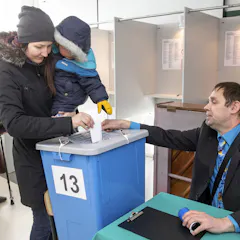
An Estonian cybersecurity leader explains how her country defends itself, its society and its elections from Russian interference.

Of course people need ethics. But the current troubles in the technology industry are not evidence of an ethics crisis; it is a public-policy crisis.

Children can’t handle watching livestreamed massacres – and adults shouldn’t have to.
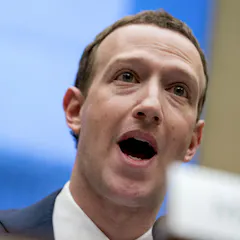
Facebook has been acting irresponsibly and selfishly, and promising to do better without actually improving. But that’s not the whole story: The company has some positive qualities, too.
Facebook users no longer see the site as a confidant. They’re struggling with how to deal with a messy codependence – and whether to just break up and move on with healthier friends.
Protect yourself from hackers, trolls, bots, social media executives and programmers in need of ethics training.
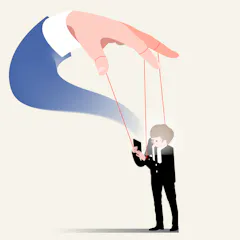
Academic research highlights the dangers – personal and societal – of giving too much time and attention to social media.
Without much delay, Facebook and Twitter could make significant changes to limit political manipulation and propaganda. Will they? And will users ask it of the social media giants?
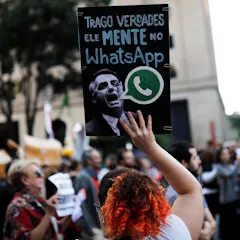
Facebook retired its ‘Move fast and break things’ slogan – perhaps because, as new research from Brazil confirms, democracy is among the things left broken by online misinformation and fake news.
Top contributors
-

Dean of Global Business, The Fletcher School, Tufts University
-
Associate Professor of Communications (Social Media), Syracuse University
-
Professor of Informatics and Computer Science, Indiana University
-
Professor of Business Law and Ethics, Indiana University
-
Associate Professor of Communication, Wayne State University
-
Associate Professor of Communication and Media Studies, Pace University
-
Professor of Public Administration and Policy, American University School of Public Affairs
-
Professor of Communication Studies, American University School of Communication
-
Professor of Media Studies, Queensland University of Technology
-
Professor of Information Systems, Michigan State University
-
Postdoctoral Researcher, Max Planck Institute of Geoanthropology
-
Associate professor, Edinburgh Napier University
-
Professor of Journalism, Goldsmiths, University of London
-
Director of Research, Academic Development and Innovation at the Center on Terrorism, Extremism and Counterterrorism, Middlebury College
-
Associate Professor of Operations Management, MIT Sloan School of Management