
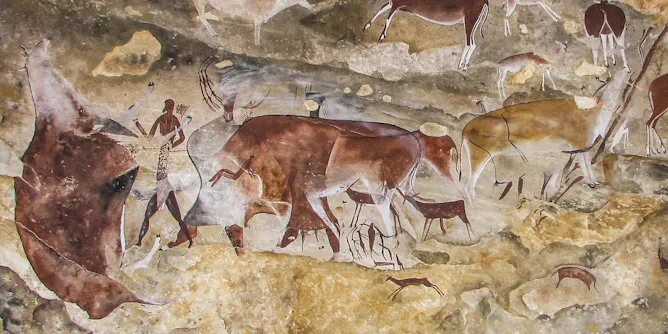
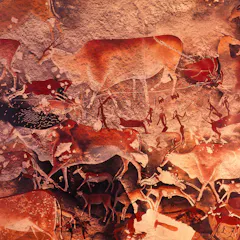
The team from Wits University returned to a well-known ceiling panel in the Maloti-Drakensberg mountains, armed with new knowledge about the beliefs of the San people who made the paintings.
Articles on San
Displaying 21 - 35 of 35 articles
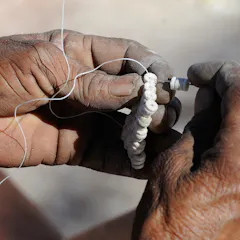
A survey of San ostrich eggshell beads - a common find at archaeological sites - paints a bigger picture of hunter-gatherers, herders and shifting cultural tradition.
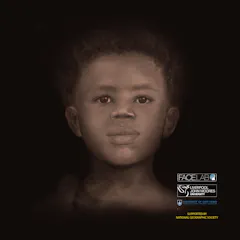
Through science, art and technology, we are able to reconstruct the faces of the dead based on their remains. The researcher who did this work for descendants in Sutherland explains the process.

When the University of Cape Town discovered skeletons in its archive that had been unethically obtained and used, they set about restoring justice to the bones and the community they came from.
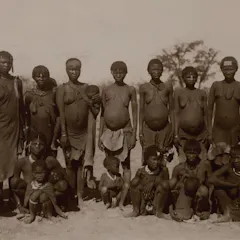
Contrary to the colonial view, Bushmen of southern Africa had a complex and meaningful practice of dress.

Inclusive innovation processes could be extremely valuable to low-income and disadvantaged communities in South Africa.

Marginalised Namibians should be encouraged to take up cameras to document their lives – on their own terms.

The early use of poison is one more indicator of an advanced repertoire of behavioural and technological traits that have characterised our species from the earliest times.

Despite the noble goals of the new South Africa and its ideals of racial harmony, racial tensions remain a major problem in the country. Prejudice and bigotry persists even in universities.

The rooibos industry has been accompanied by dispossession and adversity stretching back over centuries.

For a global audience, the movie ‘A United Kingdom’ provides a topical account of race relations. The love story is likely to revitalize the popular viewpoint of Botswana as a national success story.

Human population groups worldwide are highly homogeneous genetically. They are in fact 99.5% similar and their anatomical features vary in an uncorrelated fashion over the landscape.
Formlings are representations of flying termites and their underground nests. They are associated with botantical subjects considered by the San to have great spiritual significance.

It may have been a cultural tradition to use tempera paint that contained traces of milk on bodies according to a discovery at Sibudu Caves in KwaZulu Natal.
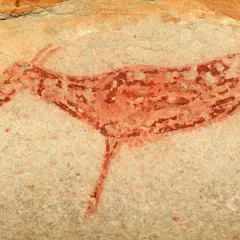
The San are caught between a rock and an art place. While they face an uncertain future, myths and meaning come under the spotlight in a new book.
Top contributors
-

Associate professor, University of Johannesburg
-
Senior Researcher, University of the Witwatersrand
-
Research Associate, African Centre for Coastal Palaeoscience, Nelson Mandela University
-
Extraordinary Professor, Department of Political Sciences, University of Pretoria
-
Professor in Biological Anthropology, Division of Clinical Anatomy and Biological Anthropology, University of Cape Town
-
Research Associate, University of the Witwatersrand
-
Postdoctoral research fellow, University of the Witwatersrand
-
Emeritus professor, University of the Witwatersrand
-
Research Fellow in Archaeology, University of Oslo
-
Professor in Geological Sciences, University of Cape Town
-
Honorary Professor, School of Geography, Archaeology and Environmental Studies, University of the Witwatersrand
-
Emeritus Professor, University of Cape Town
-
Associate professor in Vertebrate Palaeontology, University of the Witwatersrand
-
NRF Accredited & Senior Researcher; Lead Coordinator of the South-South Educational Collaboration & Knowlede Interchange Initiative, Cape Peninsula University of Technology
-
Project Manager, International Rock Art Collaboration, Rock Art Research Institute, School of Geography, Archaeology and Environmental Studies, University of the Witwatersrand