

As AI begins to create knowledge, universities must confront the question of what knowledge production is. Indigenous perspectives provide valuable insights.
Articles on Indigenous knowledge
Displaying 1 - 20 of 174 articles

Effective environmental policy requires early relationship-building, trust, shared goals, clear communication and long-term funding.

Indigenous knowledge has pushed scientists’ boundaries.

Requirements for documentation such as citizenship and status cards can disadvantage people whose relationships with their respective nations have been disrupted.

People restoring Africa’s ecosystems need climate services that combine forecasts with Indigenous knowledge and information about land, water and livelihoods.

Early childhood is an important stage where children develop curiosity, values and problem-solving skills.
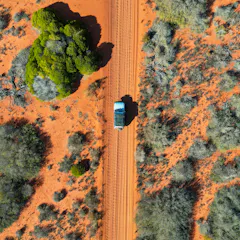
Climate change is disproportionately affecting remote First Nations communities – as three experts explain.
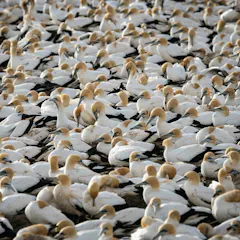
The use of artificial intelligence tools is among the top emerging issues in biodiversity conservation.

Climate change is threatening sheep farming in South Africa’s Drakensberg. Farmers are adapting but need mountain infrastructure, better climate warnings and vets.
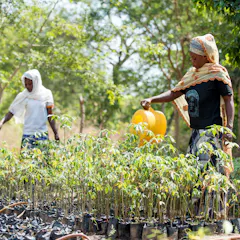
Ghana’s community conservation areas protect forests and wildlife while supporting rural livelihoods, but weak laws and funding threaten their future.
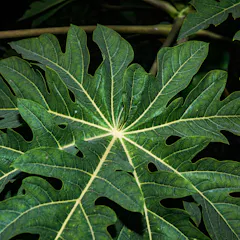
Without systematic documentation, traditional plants’ uses could be lost or excluded from mainstream medical discourse.

A new VR tool is bringing Country to the classroom.
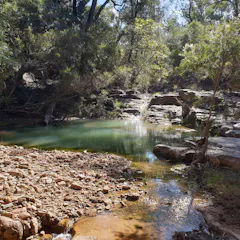
For too long, Indigenous perspectives have not been heard in groundwater science. We must work together to protect Australia’s precious groundwater.

Long ago, people identified fossils in their environment and explained them within their own cultural framework. This was early citizen science.

The Amadiba community in South Africa holds fast to traditional farming. They have also withstood pressure to mine their land.

Indigenous forest management practices can help control wildfires’ frequency and severity, while also restoring people’s connections to the land.

Rooibos herbal tea was first farmed by Indigenous South Africans who were forced off their land during apartheid.
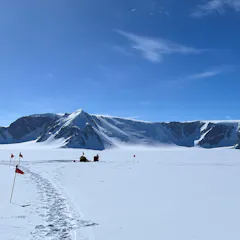
The Māori language describes 12 distinct types of snow. Researchers are identifying them in Antarctica as part of a project that connects Western science with Indigenous knowledge.

New research examines the reasons for the decline of small mammals in Australia’s tropical savannas and identifies the most effective practical solutions.
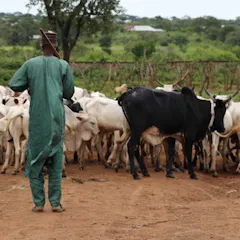
Blending livelihood strategies based on what works at different times in specific environments has been key to human survival for thousands of years.
Top contributors
-

Research Associate, African Centre for Coastal Palaeoscience, Nelson Mandela University
-
Clive Thompson is a Friend of The Conversation.
Research Associate, African Centre for Coastal Palaeoscience, Nelon Mandela University; Research Associate, Research Associate, Centre for Transformative Regulation of Work, University of the Western Cape
-
Professor, North-West University
-
Professor, UNSW
-
Senior Scientia Lecturer (Research), UNSW
-
Professor, University of Oxford
-
Professor of Science, University of Technology Sydney
-
Sean Ulm is a Friend of The Conversation.
Director, ARC Centre of Excellence for Indigenous and Environmental Histories and Futures, James Cook University
-
Founder of Msit No’kmaq
-
Professor of Environmental Geography, Royal Holloway, University of London
-
Professor, Environment and Development Sociology, The University of Queensland
-
Associate Professor, Singapore Management University
-
Associate professor in Vertebrate Palaeontology, University of the Witwatersrand
-
Professor of Philosophy of Science, Durham University
-
Distinguished Professor of Curriculum Studies, Stellenbosch University