
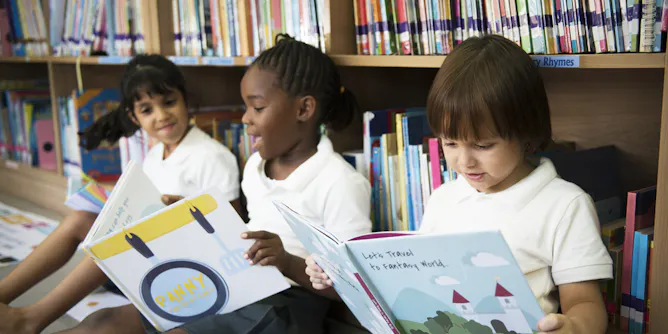
Literacy researchers analyze cross-Canada favourite books for kindergarten to Grade 2 readers, and suggest great “gritty” reads that can help normalize conversations surrounding failure and growth.
Articles on Reading
Displaying 341 - 360 of 504 articles
There’s a worry some students don’t get enough opportunity to enjoy silent reading in schools. Here’s some advice on how to change that.

Early experiences sharing and developing positive connections, language and communication set the stage for home reading to start children on the path to literacy.

A technique developed for teachers and tutors can work if followed by the child’s loved ones.

Based on the current body of evidence, the use of coloured filters should not be recommended as a dyslexia treatment, nor be provided through publicly funded bodies.

A book nest - or nook - is a cost-friendly way to model and enjoy literacy with your preschooler that invites their creative involvement and offers space for positive connections to grow.
When it comes to reading, choosing the books your child reads, forcing them to read at certain times and asking them questions about their books are all big no nos.

Instead of expecting parents to help kids stay sharp during the summer, schools should offer more programming, a literacy instructor argues.
It would be wiser to spend money on policies that allow teachers to teach in ways that nurture children’s sense of belonging and making sure children are not hungry when they are trying to learn.

Here’s to the good/bad women leading the world of fiction.

Forget challenges, adults should be taking a leaf out of children’s books when it comes to their reading habits.

Sharing a book together doesn’t stop being important once a child learns to read.

Reading and writing may have evolved thanks to a natural ability of the brain’s visual cortex to process geometrical shapes.

Shared reading has many benefits. Among them, it can help your child develop a bigger vocabulary.
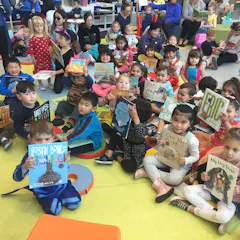
Children from minority groups rarely see themselves reflected in the books they read. This can negatively impact their sense of identity and their literacy levels.

Are the stacks of books in your library still alive? Why keep them if they are not? Why does our attachment to the printed word not waver in the face of its digital counterpart?
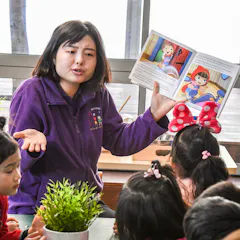
If schools and policy-makers want to boost children’s literacy, they should invest in teacher librarians.

In Australian picture books, family representation has been overwhelmingly traditional. But this may be changing.
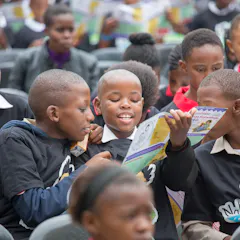
Parents often see reading as “school business” - something that teachers are responsible for.
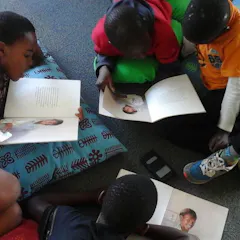
Reading involves more than decoding letter-sound relationships and making meaning from isolated texts.
Top contributors
-

Associate Professor, University of Southern Denmark
-
Associate Professor in Language, Literacy and TESL, University of Canberra
-
Sessional Tutor, Charles Sturt University
-
Honorary Associate in Creative Writing, The Open University
-
Professor of Reading and Children’s Development, The Open University
-
Associate Professor of Postcolonial and Global Literatures, Nottingham Trent University
-
Chancellor's Professor, Psychology, Carleton University
-
Professor Emerita of Linguistics, American University
-
Senior Lecturer, Writing, Department of Media and Communication, Swinburne University of Technology
-
Lecturer in Publishing, Edinburgh Napier University
-
Deputy CEO (Research), Australian Council for Educational Research
-
Associate Professor in Department of English Literature, Anglia Ruskin University
-
Professional Learning and Development Facilitator in Literacy Education, Te Kunenga ki Pūrehuroa – Massey University
-
Researcher in TESOL & Language Literacy Education, University of Notre Dame Australia
-
Associate Professor of Early Childhood Education, University of Maryland, Baltimore County