
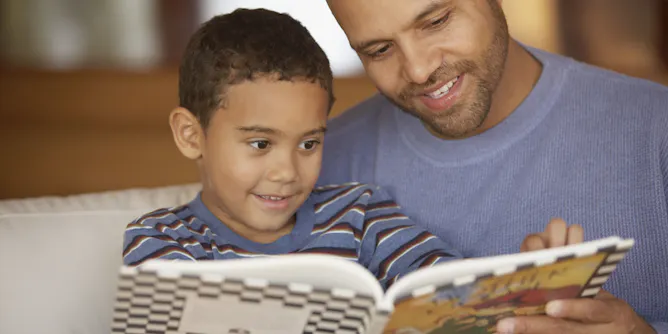
Books can help children develop a sense of identity. But when characters of color are portrayed negatively, that can send a wrong message to kids.
Articles on Reading
Displaying 301 - 320 of 504 articles
Children who may not want to read for pleasure can be influenced to take it up.
Penny dreadfuls told real stories of murder and mayhem to 19th-century audiences seeking escape from city life. True crime podcasts have a lot in common with them.

Results from the world’s longest running large-scale international assessment of maths and science show Australia has significantly improved in Year 8 maths and science, and Year 4 science.
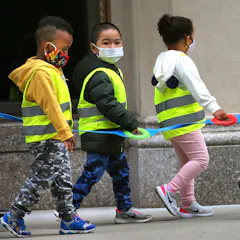
Kids ages 3 to 6 may be missing out on important social, emotional and behavioral lessons during at-home learning.
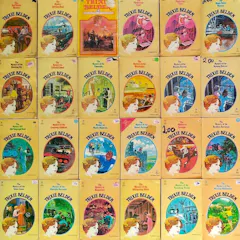
Trixie Belden wasn’t as pretty as her best friend, or a cool as Nancy Drew. But she had a ‘mental computer’ for solving mysteries and a non-judgmental moral core.

The story of child poverty in 1980s Glasgow speaks to current concerns across the UK.
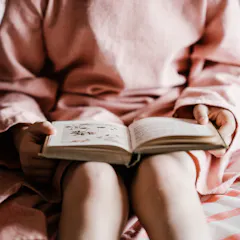
Alice Pung’s family escaped Pol Pot to settle in Australia. In suburban Melbourne, as her mum worked in the dark, back shed, she discovered books — and what the world could be.
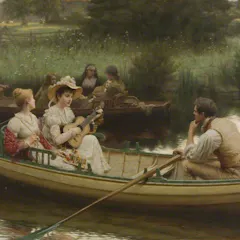
During the second world war, people found solace in the formulaic narratives of historical romances and during the pandemic they could once again provide readers comfort.

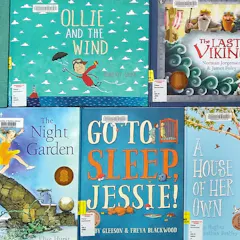
Here are some books that will make reading time more enjoyable for children and the adults reading to or with them.
A study shows there is a lack of ethnic and other diversity in award-winning early childhood picture books. This means our children are still getting a narrow window of the world.

From reading more to re-reading safe favourites, there are early signs that the COVID-19 has influenced how and what we are reading.
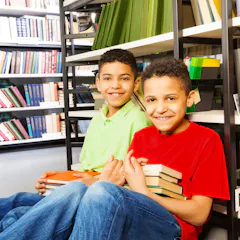
We know teacher librarians support children’s literacy. But school libraries play a more diverse role, including supporting students’ well-being.
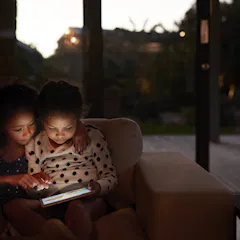
If families embrace reading as fun and routine and teachers work more closely than before with the families of their students, it’s possible that remote learning won’t be a huge obstacle to literacy.

To “warm up” a book, use the K-W-L strategy: Talk with your child about what you both KNOW about the subject, what you WONDER and afterwards, what you’ve LEARNED.
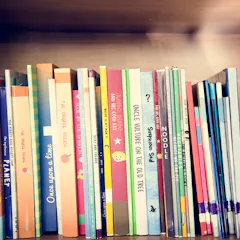
With 52% of 15-year-olds now saying they read only if they have to, experts say a new way of teaching literacy is overdue.
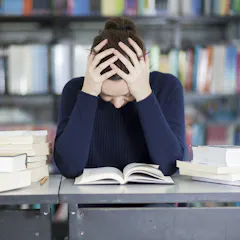
Great stories move and they challenge. They draw attention to diverse social and cultural issues and to the transformative potential of empathy. But they can be difficult too.
Sci-fi, fantasy and rom-coms: books with LGBTQIA+ characters are as diverse as their readers.

Books where loving someone from the other side of the tracks is about better understanding ourselves and the world we live in.
You don’t have to understand or even like every poem you read.
Top contributors
-

Associate Professor, University of Southern Denmark
-
Associate Professor in Language, Literacy and TESL, University of Canberra
-
Sessional Tutor, Charles Sturt University
-
Honorary Associate in Creative Writing, The Open University
-
Professor of Reading and Children’s Development, The Open University
-
Associate Professor of Postcolonial and Global Literatures, Nottingham Trent University
-
Chancellor's Professor, Psychology, Carleton University
-
Professor Emerita of Linguistics, American University
-
Senior Lecturer, Writing, Department of Media and Communication, Swinburne University of Technology
-
Lecturer in Publishing, Edinburgh Napier University
-
Deputy CEO (Research), Australian Council for Educational Research
-
Associate Professor in Department of English Literature, Anglia Ruskin University
-
Professional Learning and Development Facilitator in Literacy Education, Te Kunenga ki Pūrehuroa – Massey University
-
Researcher in TESOL & Language Literacy Education, University of Notre Dame Australia
-
Associate Professor of Early Childhood Education, University of Maryland, Baltimore County