
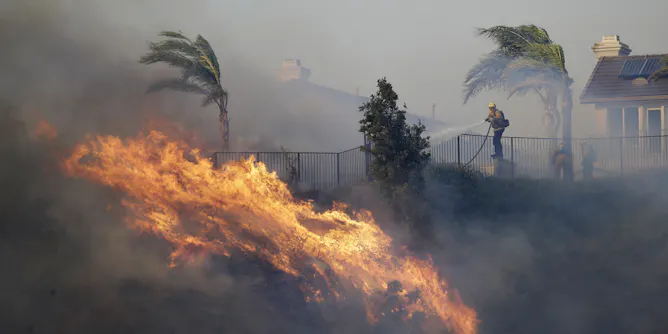
Two fire researchers argue that recent fires in Northern and Southern California show why health and social equity need to be part of fire preparedness.
Articles on Public safety
Displaying 61 - 80 of 86 articles
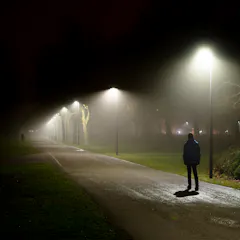
Bright lighting alone does not make a space feel safe. It can blind and disorientate and create dark shadows at the edges. Tellingly, ‘unsafe’ places had much higher illuminance than ‘safe’ places.
New South Wales now has a minister for public spaces, a nod to their importance to the life of a city. But not all is well with public spaces and some issues demand the minister’s attention.
As they return to classes, a survey finds nearly half of female tertiary students in Melbourne don’t feel safe using public transport at night. And 79% have been sexually harassed or victimised.
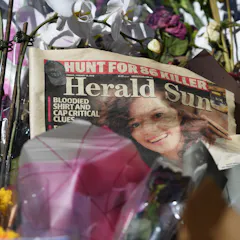
Murders of women in public spaces by strangers are not commonplace. And murders in Australia in general are on the decline. Compared to many countries, Australia is a safe place.

Governments can help citizens protect their own cybersecurity by providing practical advice and meaningful support.
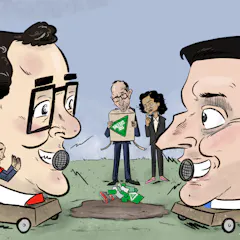
With just days to go before the election, Labor is making a last-minute appeal to voters to stay in power, while the Liberals are pressing for change.

Design principles, known as ‘crime prevention through environmental design’, are used all over the world to make cities safer. But some of these principles can be discriminatory and hostile.
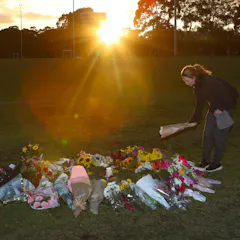
Australia has guidelines for designing safe parks, but the stories of many women show these are not enough. We must involve women in co-designing these shared public spaces.
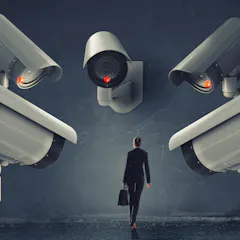
As CCTV cameras become more widespread, it’s becoming more difficult for people to protect their locational privacy in public.

Ultimately, most regulatory interventions in nightlife precincts are about imposing particular ideas of social and moral order not only within these spaces but also in the city more broadly.
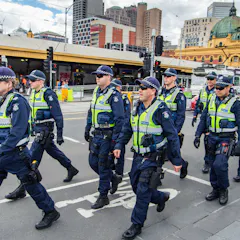
Security in cities can make some people feel safe while excluding others. New ways of planning and policing public space are needed to ensure cities are safe and accessible for all.

Australian cities generally minimise negative attributes such as crime, segregation and violence, but developing positive attributes such as inclusivity appears more challenging.

The benefits of walking are widely promoted, but most Australian communities still aren’t walker-friendly. Young people, who rely heavily on walking to get around, are clear about what has to change.

Ceredigion County Council in Wales claims it had no choice. What do the experts say?
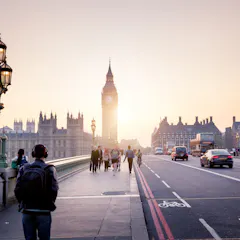
The clock change’s impact on commuter numbers highlights the need to use street lighting more effectively.
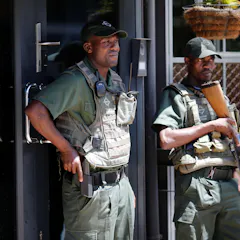
The future of private security is beset by many challenges and what forms of regulation would be required to align it with the public interest.
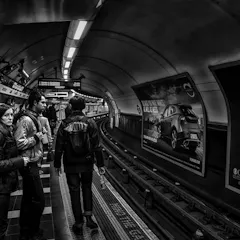
Most women feel unsafe when using public transport. Instead of gender segregation, researchers suggest gender-sensitive design could be a better way to ensure safety for all.

A widely publicised study that cast doubt on the safety of milk formula was misleading, based on dubiously reported studies and may have serious consequences.
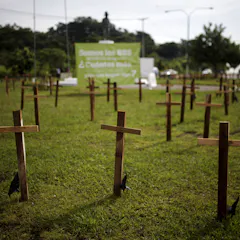
Latin America’s murder rate is the highest in the world, accounting for one in every four homicides on the planet.
Top contributors
-

Associate Professor and Principal Fellow in Urban Risk and Resilience, The University of Melbourne
-
Director, XYX Lab, and Professor, Faculty of Art, Design and Architecture, Monash University
-
Associate Professor in Criminal Justice and Criminology, Bond University
-
Research Fellow in Public Health, The University of Queensland
-
Professor, Institute for Health and Sport, Victoria University
-
Professor of Urban Geography, University of Sydney
-
Professor, UNSW Beach Safety Research Group, School of Biological, Earth & Environmental Sciences, UNSW
-
Professor of Physics, Clemson University
-
NHMRC Research Fellow, School of Population Health and Co-founder UNSW Beach Safety Research Group, UNSW
-
Associate Professor of Physics and Electronics, Hunan University
-
Principal Research Fellow, School of Engineering, RMIT University
-
Senior Lecturer, School of Health & Social Development, Deakin University
-
Senior Lecturer in Wildlife, University of Salford
-
Honorary Fellow in Criminology, The University of Melbourne
-
Founding Director, Georgia International Law Enforcement Exchange (GILEE) and Professor Emeritus of Criminal Justice, Andrew Young School of Policy Studies, Georgia State University