
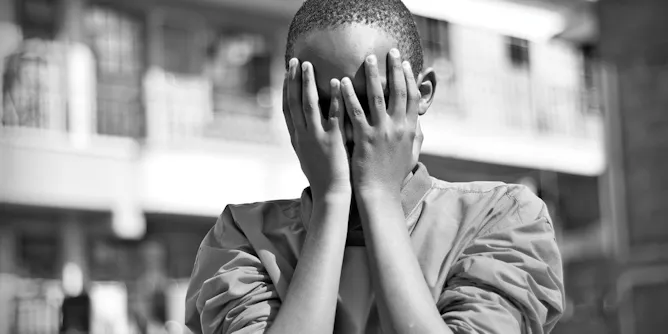
School mental health programmes must address both emotional wellbeing and structural pressures such as poverty, stigma and exclusion.
Articles on Psychology
Displaying 21 - 40 of 2386 articles

New research - it’s one of the largest studies of emotional intelligence to date

Modern AI owes its existence to both cognitive and computer science. What you envision as its origin story can influence how you understand what large language models can do.

Ever felt a sudden wave of cringe toward someone you were actually into – congratulations, you’ve caught ‘the ick’.

Can AI-human connections ever meet the psychological criteria of attachment – the relationships that hold people’s lives together?

Fame as an important affect on how the game is played.

Across ages, genders, cultures and conditions, crowds always walk in a counter-clockwise spiral.

People with rigid thinking patterns who prefer routine and order may be drawn to extremist groups’ black-and-white solutions. But autism itself is not the problem.

Arteta’s tactics include delaying the players’ meals, unexpectedly changing their travel plans, and making dressing rooms hotter.

Some people with obsessive-compulsive disorder have experienced traumatic events as children, and develop a deeply held fear of who they are or might become.

The ‘dark triad’ is made up of narcissism, Machiavellianism and psychopathy.

How prepared are you for an emergency?

Transformation in South Africa’s institutions of higher education has been slow and uneven.

Trypophobia is more than an internet meme. It is a genuine psychological experience that can range from mild discomfort to significant distress.

An Anishinaabe storyteller and healer from Serpent River First Nation shares Ojibwe teachings on suffering, acceptance and Ceremony as ways of connecting Indigenous healing wisdom with psychological practice.

Different types of thoughts are meaningfully tied to our emotional well-being. By understanding these connections, we can identify new ways to support and improve our mental health.

It might seem like a weird thing to do, but more than two-thirds of people have talked in their sleep at some point.

Memories are dynamic, not fixed. Even if what you’re remembering about your own experience isn’t quite how it all happened, those memories serve important roles.

We overestimate how much other people notice our own behaviour and any social missteps.

A CIA veteran explains that a polygraph campaign is not likely to eliminate leaks, but it may divert investigative energy from essential security priorities.
Top contributors
-

Professor of Psychology, The University of Melbourne
-
Professor of Psychology, Edge Hill University
-
Senior Lecturer in Psychology, Leeds Beckett University
-
Professor of Psychology, Monmouth University
-
Professor of Cognitive Psychology and Director of the Institute for Climate Risk and Response, UNSW
-
Cornelia H. Dudley Professor of Psychology, Knox College
-
Associate Professor in Clinical Psychology and Neuropsychology, Trinity College Dublin
-
Professor of the Psychology of Time, Liverpool John Moores University
-
Associate Professor, School of Psychology, UNSW
-
Associate Professor, Centre for Positive Health Sciences, RCSI University of Medicine and Health Sciences
-
Chair of Cognitive Psychology, University of Bristol
-
Professor of Consumer Psychology, Anglia Ruskin University
-
Professor, Melbourne School of Psychological Sciences, The University of Melbourne
-
Senior Lecturer in the School of Psychology, University of Lincoln
-
Professor of Social Psychology, Anglia Ruskin University