
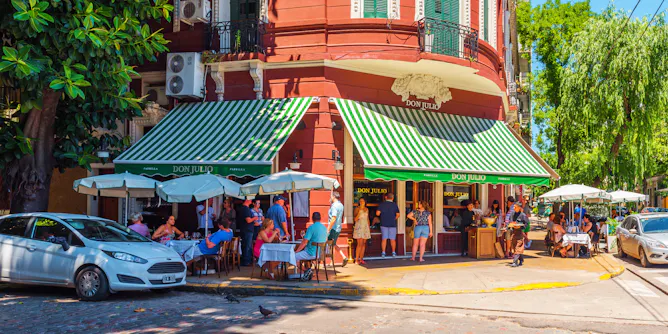
Rampant inflation and stagnant wages have led to a record low in the level of Argentina’s beef consumption.
Articles on Poverty
Displaying 141 - 160 of 1040 articles
South Africans would have wanted to hear President Cyril Ramaphosa spell out how the unity government will address poverty and unemployment.

Addressing the high UPF consumption among adolescents is crucial, as dietary habits formed during this period can persist into adulthood.

One in 4 American households is at risk of losing power because of the high cost of energy. Over 30% of those disconnections are in summer, when heat gets dangerous.
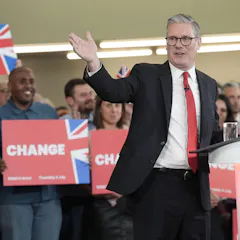
The new government is facing some very thorny challenges where progress will be tricky – and costly.

Kenya is not an isolated case. Twenty-one countries are receiving IMF support.

In a major homelessness ruling, the Supreme Court holds that cities and municipalities can punish people for sleeping outside, even when they have nowhere else to go.
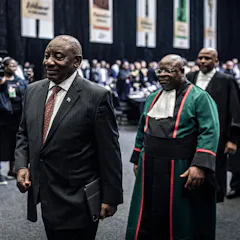
South Africa’s more plural political space might bring in new voices that generate better economic policies.
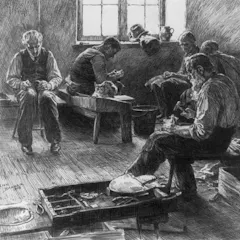
Amid rising unemployment, inflation and poverty in the 1830s, Philadelphia taxpayers believed welfare scammers were bleeding coffers dry. Poor lists from 1829 show they were wrong.

People under the age of 18 should be banned from buying energy drinks. There is good evidence to support this measure.
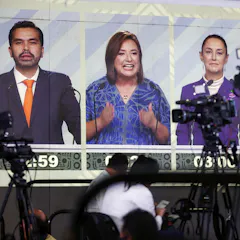
Mexico will elect its first woman president on Sunday.

Israel will withhold Palestinian tax revenues from the Palestinian Authority ‘until further notice’, and not for the first time.

New research challenges the conventional wisdom that those who enjoy some form of employment and strong support networks are more inclined to attach themselves to a set geography.
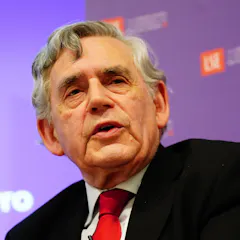
Targeting benefits at the most vulnerable sounds like good sense – but a wider support system could be more effective at tackling poverty.
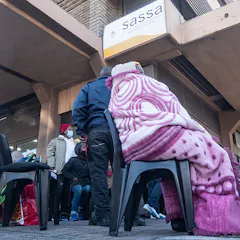
Many grant recipients are young, unemployed, and not necessarily loyal to the governing ANC like older generations.

South Africa’s civil service has failed to implement policies to eradicate poverty, inequality and unemployment.

The study provides reason for optimism about the effects of minimum wage policies on poverty.
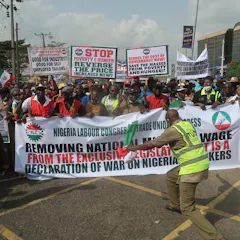
Increasing the minimum wage is a temporary fix. Upgrading the skills of Nigerian workers is the surest way of boosting their wages.

The extreme levels of poverty endured by economically inactive people (as highlighted in the government’s own data) are a direct result of deliberate political choices to continually erode benefits.
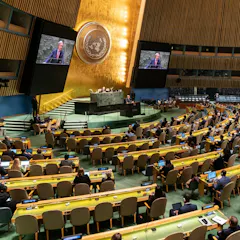
Can the Sustainable Development Goals (SDGs) help replace traditional growth measures like GDP?
Top contributors
-

Professor of Economics & Business, Allegheny College
-
Professor of Social Development Studies, University of Johannesburg
-
Professor of Political Studies, University of Johannesburg
-
Senior Fellow, Department of Agricultural Economics, Stellenbosch University
-
Director of the Roy McKenzie Centre for the Study of Families and Children, Te Herenga Waka — Victoria University of Wellington
-
Professor, Sol Plaatje University
-
Professor, Crawford School of Public Policy, Australian National University
-
Pro Vice-Chancellor, Climate, Sustainability and Inequality and Director, Southern Centre for Inequality Studies, University of the Witwatersrand
-
DSTI/NRF Research Chair in Welfare and Social Development, University of Johannesburg
-
Honorary Research Fellow, City Political Economy Research Centre, City St George's, University of London
-
Dean of the Faculty of Economic and Management Sciences, University of Pretoria
-
Distinguished Research Fellow, Human Sciences Research Council
-
Professorial Fellow and Co-Director, HILDA Survey, Melbourne Institute of Applied Economic and Social Research, The University of Melbourne
-
Senior Research Fellow, World Institute for Development Economics Research (UNU-WIDER), United Nations University
-
Professor of Economics, Fordham University