

As the year ends, New Zealand has done well in important global measures of success. But closer to home, the numbers often told a different story.
Articles on Poverty
Displaying 381 - 400 of 1040 articles
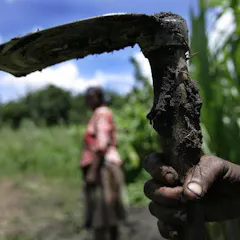
Eliminating the divide between commercial agriculture (mainly white) and subsistence farming (mainly black) requires effective public policy and the right incentives.

Should the U.S. help low-income households afford water service, as it does with heating and groceries? Chile does. An economist explains how it works there and how it could work here.
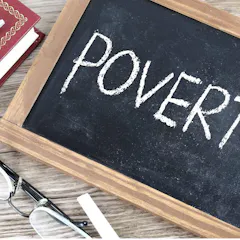
Ghanaian postcolonial intellectuals viewed terms such as development, neo-colonialism, self-reliance, and indigeneity as central to discussions of global inequalities.
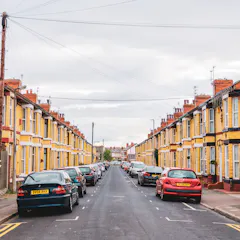
Britain’s economic system is built on inequality. Few governments have attempted to rectify this.
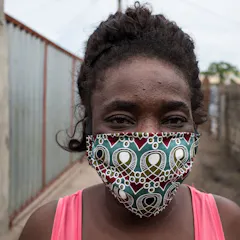
Study shows that agriculture, one of the most important sectors, did not decline in 2020 compared to its historical trend. Service sectors were hit hard in each of the five countries.
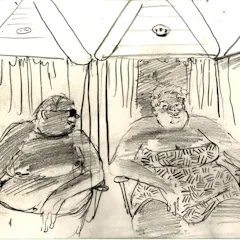
These ten drawing show the realities of life at the English seaside in 2021.
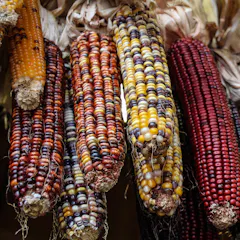
Our food systems are failing to feed all of us.
In this episode of Don’t Call Me Resilient, we pick apart what is broken and ways to fix it with two women who battle food injustice.
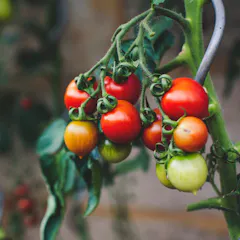
The COVID-19 pandemic has highlighted the problem of food insecurity for many people, especially racialized and Indigenous households.
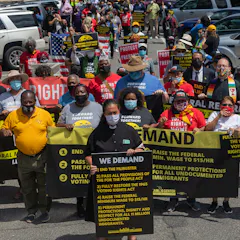
Millions of Americans struggle to pay their bills each month, despite earning wages well above the federal poverty line and holding multiple jobs.

The unanticipated popularity of the Korean show ‘Squid Game’ highlights our relationship to debt and capitalism, but the contradictions extend beyond the show itself.
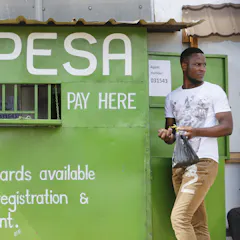
We spoke to poor M-Pesa customers in Kenya who said it had changed their lives.

Public investments in benefit programs could save tens of thousands of children from being victims of child abuse and have important later-life effects on child welfare and overall health.

There’s a crucial need to connect the most vulnerable people with public services in order to tackle systemic poverty and disadvantage. An integrated approach is key.
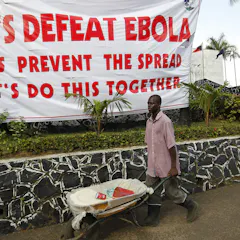
President Alpha Condé’s pursuit of mining interests during the Ebola crisis may have foreshadowed his demise as he tightened his grip over power and plundered the state’s wealth.
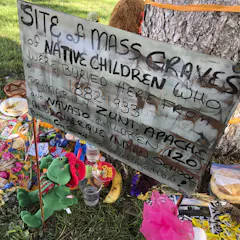
For Indigenous Peoples Day, a scholar of Native American studies explains why understanding the tragic history of Indian boarding schools is important for healing to take place.
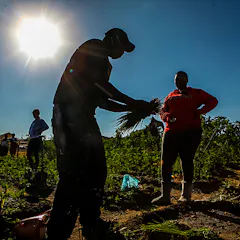
Most farmers experienced reduced demand and lower prices for their produce. There were also disruptions to production.
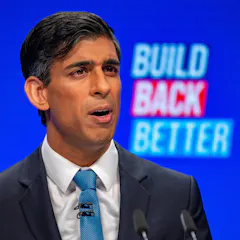
The temporary increase to benefits was a lifeline for families during the pandemic.
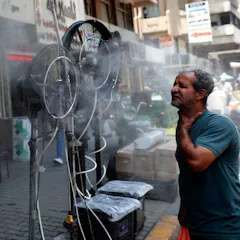
Hot, humid population centers are becoming epicenters of heat risk as climate changes worsens. It’s calling into question the conventional wisdom that urbanization uniformly reduces poverty.
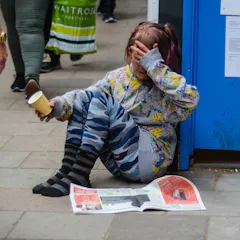
Being on universal credit affects people in more ways than just financial.
Top contributors
-

Professor of Economics & Business, Allegheny College
-
Professor of Social Development Studies, University of Johannesburg
-
Professor of Political Studies, University of Johannesburg
-
Senior Fellow, Department of Agricultural Economics, Stellenbosch University
-
Director of the Roy McKenzie Centre for the Study of Families and Children, Te Herenga Waka — Victoria University of Wellington
-
Professor, Sol Plaatje University
-
Professor, Crawford School of Public Policy, Australian National University
-
Pro Vice-Chancellor, Climate, Sustainability and Inequality and Director, Southern Centre for Inequality Studies, University of the Witwatersrand
-
DSTI/NRF Research Chair in Welfare and Social Development, University of Johannesburg
-
Honorary Research Fellow, City Political Economy Research Centre, City St George's, University of London
-
Dean of the Faculty of Economic and Management Sciences, University of Pretoria
-
Distinguished Research Fellow, Human Sciences Research Council
-
Professorial Fellow and Co-Director, HILDA Survey, Melbourne Institute of Applied Economic and Social Research, The University of Melbourne
-
Senior Research Fellow, World Institute for Development Economics Research (UNU-WIDER), United Nations University
-
Professor of Economics, Fordham University