

Campaigns designed to help us cut back on alcohol don’t always reach those most at risk of harm. Here’s what we should be doing instead.
Articles on Poverty
Displaying 61 - 80 of 1040 articles
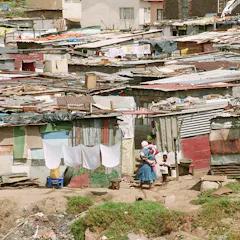
Boosting education and skills training as well as improving transport and strengthening social protection would help people out of extreme poverty.

President Yoweri Museveni’s effort to stop evictions didn’t address underlying problems, but it enhanced his political legitimacy.

Mental health is not just connected to what’s inside our head. The environment around us can play a part – either supporting wellbeing or driving a decline.
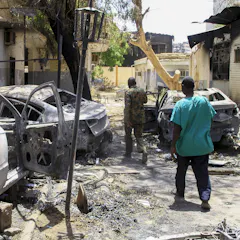
If the conflict endures, the value of Sudan’s economy will contract by up to 42% – with 7 million more people falling into poverty.

While young people who spent the first year of their lives in public housing started with higher levels of behaviour difficulties, by 12 they had closed the gap.
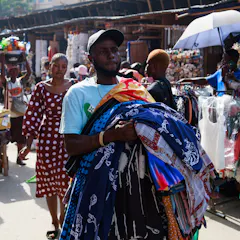
Nigeria’s economy grew but poverty worsened, especially in the rural areas. The country needs a radical shift in its economic policy approach to reduce poverty.
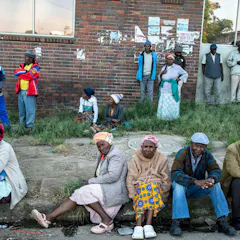
South Africa should back care for older people with real investment and action.
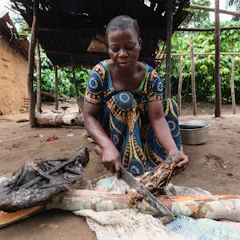
As many as three-quarters of emerging infectious diseases originate from wildlife.

When people reflect on how their actions shape the future, they are more likely to support solutions to present-day issues like poverty and inequality.

Past experience suggests that adding work requirements to Medicaid will strip health services from millions of American without increasing employment.

Interviews with female prisoners in WA show many struggled with violence, drugs, alcohol, poverty and homelessness from an early age.

Money and budgeting skills are undeniably important. But financial literacy education can’t ignore the broader economic structures that influence students’ lives.

The Canadian Food Policy Advisory Council offers lessons for strengthening democracy and building participatory governance mechanisms in Canada and beyond.

Media coverage often focuses on those fleeing their country as refugees, while internally displaced people remain less visible and beholden to national governments.
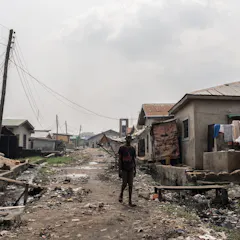
Forced eviction is not a solution to the growth of slums.
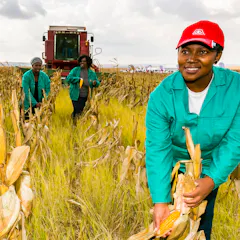
Investing more in agriculture, especially with external financing, offers the biggest gains in raising incomes and reducing poverty.
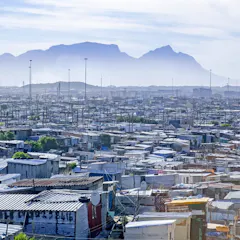
Economic modelling suggests that a basic income grant for all individuals aged between 18 and 59 could significantly reduce poverty and inequality in South Africa.

Relying on GDP, inflation or unemployment is an inadequate way to monitor the health of the economy.
A study of about 1 million girls in Indonesia suggests government programs can be effective in reducing the number of child brides.
Top contributors
-

Professor of Economics & Business, Allegheny College
-
Professor of Social Development Studies, University of Johannesburg
-
Professor of Political Studies, University of Johannesburg
-
Senior Fellow, Department of Agricultural Economics, Stellenbosch University
-
Director of the Roy McKenzie Centre for the Study of Families and Children, Te Herenga Waka — Victoria University of Wellington
-
Professor, Sol Plaatje University
-
Professor, Crawford School of Public Policy, Australian National University
-
Pro Vice-Chancellor, Climate, Sustainability and Inequality and Director, Southern Centre for Inequality Studies, University of the Witwatersrand
-
DSTI/NRF Research Chair in Welfare and Social Development, University of Johannesburg
-
Honorary Research Fellow, City Political Economy Research Centre, City St George's, University of London
-
Dean of the Faculty of Economic and Management Sciences, University of Pretoria
-
Distinguished Research Fellow, Human Sciences Research Council
-
Professorial Fellow and Co-Director, HILDA Survey, Melbourne Institute of Applied Economic and Social Research, The University of Melbourne
-
Senior Research Fellow, World Institute for Development Economics Research (UNU-WIDER), United Nations University
-
Professor of Economics, Fordham University