

There have been instances of heavy metals pollution in Nigeria that led to public health crisis.
Articles on Pollution
Displaying 341 - 360 of 660 articles
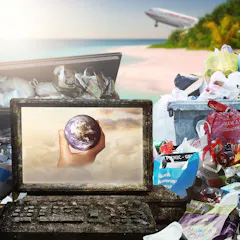
Making environmentally friendly choices is complex: here’s a guide to help you at home or out shopping.
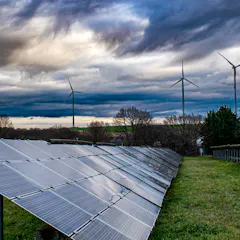
Without community involvement and ownership, renewable energy projects are doomed to fail over the long term.

As the climate changes, the ocean is also changing. And that’s putting our health at risk.
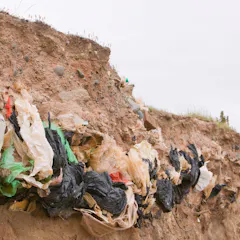
Killer whales among the animals at risk from a ‘second wave’ of pollutants, as coasts erode and sea levels rise.
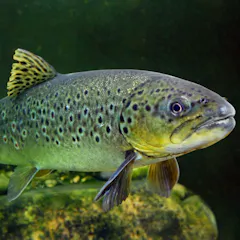
Chemicals in drugs can be excreted unchanged, infiltrating waterways via sewage and effluent.
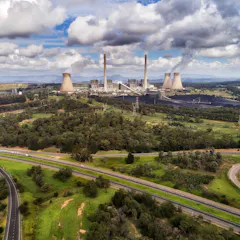
New research found power stations in the Latrobe Valley emit around 10 times more mercury than power stations in the Hunter Valley. The stark difference has a lot to do with regulations.
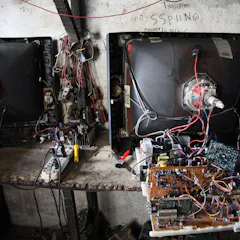
There is an urgent need for legislation dealing specifically with electronic waste in Nigeria.

Oil spills, cracked buildings and pollution. Just some of the environmental effects of Kenya’s massive railway project.

A study showed that, on average, more greenery around primary schools was associated with better NAPLAN scores. Higher exposure to traffic-related pollution was associated with poorer scores.
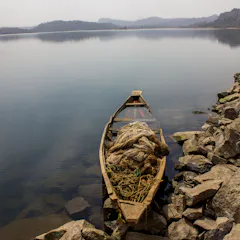
The Nigerian government must shore up efforts to stop the pollution of aquatic environments.
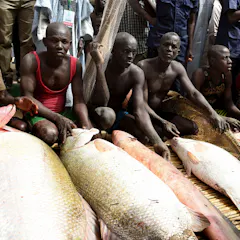
Nigeria must address illegal fishing, which depletes the country’s fish stocks, undermines livelihoods and pushes people into poverty.
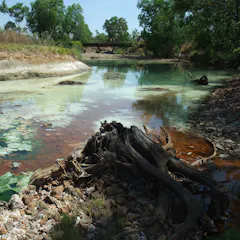
In last week’s budget, the federal government allocated money to restore the local environment around the mine. But it didn’t disclose how much.

International law bars nations from causing environmental harms in other states. Should that include sending thousands of refugees over the border in search of food, water and shelter?

Legumes have a superpower: they can convert nitrogen in the air into a form plants can use to grow.

While most areas experienced a reduction in air pollution in response to lockdown measures, other areas saw only small improvements or even an air quality deterioration.
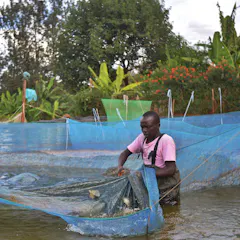
Aquaculture is a growing source of healthy protein for millions of people around the world, but there are big differences between farming fish on land and at sea.
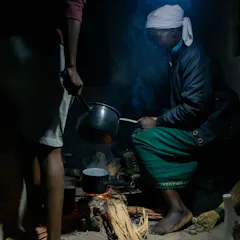
The COVID-19 pandemic risks reversing progress made to increase access to affordable, reliable and sustainable domestic energy sources in Kenya.
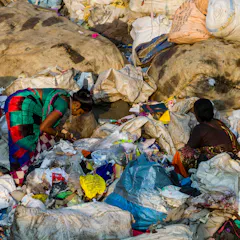
Cultural sensibilities around feminine hygiene products are contributing to a growing environmental crisis.
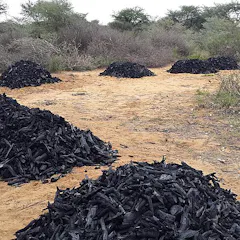
Attempts to formalise charcoal production have been largely unsuccessful.
Top contributors
-

Honorary Professor, School of Natural Sciences, Macquarie University
-
Associate Professor in Environmental Science, Western Sydney University
-
Professor, UNSW Law & Justice and UNSW Institute for Climate Risk & Response, UNSW
-
Professor of Environmental Science, University of South Africa
-
ARC Future Fellow and Associate Professor in Climate Science, ARC Centre of Excellence for 21st Century Weather, The University of Melbourne
-
Emeritus Professor of Medicine, Adelaide University
-
Senior Principal Research Scientist, Environment, CSIRO
-
Senior Research Fellow at the Stockholm Environment Institute, University of York
-
Professor, Obafemi Awolowo University
-
Professorial Fellow, ARC Centre of Excellence for Coral Reef Studies, James Cook University
-
Professor of Biology, University of Portsmouth
-
Professor, Australian National University
-
Associate Professor, Australian National University
-
Postdoctoral research fellow, University of the Ryukyus, Okinawa Japan, Madonna University, Nigeria
-
Associate Professor and Water Management Expert, University of South Africa